Parliament Panel Reviews Draft Electricity Amendment Bill 2025
ECONOMY & POLICY

Parliament Panel Reviews Draft Electricity Amendment Bill 2025

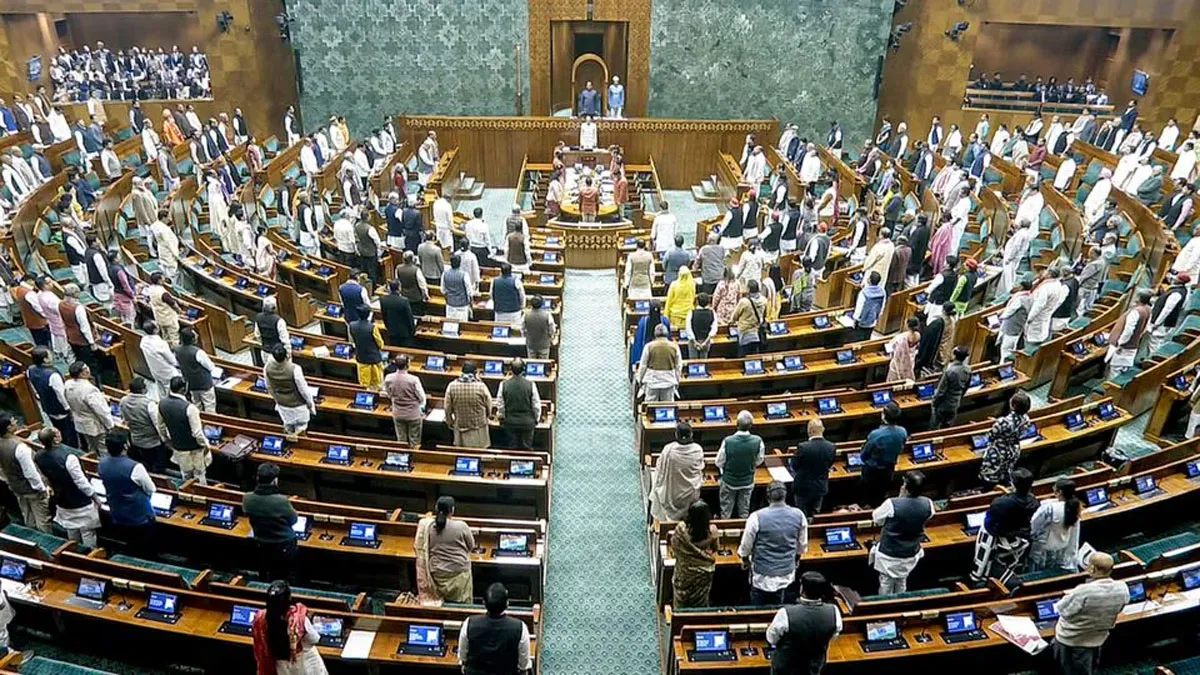
The Parliamentary Consultative Committee for the Ministry of Power met in New Delhi on 18 December 2025 to discuss proposals under the Draft Electricity (Amendment) Bill, 2025, which has been released for stakeholder consultation. The meeting was chaired by Union Minister for Power and Housing and Urban Affairs Manohar Lal and was attended by Members of Parliament from the Lok Sabha and Rajya Sabha across political parties.

Addressing the committee, the minister said the draft Bill is of national importance as it seeks to strengthen the legislative framework of India’s power sector in line with the vision of Viksit Bharat @ 2047. He noted that while the Electricity Act, 2003 enabled significant progress across the sector, persistent financial stress—particularly in power distribution—remains a key challenge. The Bill proposes measures to mandate cost-reflective tariffs and empower regulatory commissions to act suo motu when utilities delay tariff filings. He clarified that state governments may continue to provide subsidies to priority consumer groups such as domestic and agricultural users, with no increase in costs for these consumers, ensuring that financial discipline and consumer welfare progress together.

The minister said the Bill also aims to enhance the competitiveness of Indian industry by reducing distortions arising from cross-subsidies and surcharges. Lower and more rational electricity costs would support industrial growth, employment generation and global competitiveness, particularly for MSMEs. Another provision would allow State Electricity Regulatory Commissions, in consultation with state governments, to exempt DISCOMs from supplying electricity to large consumers, who may procure power from alternative sources at competitive rates after providing reasonable notice. This, he said, would reduce fixed-cost burdens on DISCOMs and benefit smaller consumers.

On clean energy, Manohar Lal emphasised that increasing the share of non-fossil electricity is a collective responsibility. The Bill proposes a minimum obligation for the use of non-fossil power and enables renewable capacity addition through market mechanisms, alongside DISCOM procurement, to ensure adequate and cost-competitive supply while easing financial pressure on utilities. He added that the government remains committed to improving ease of living and ease of doing business, with provisions aimed at better consumer services, reduced compliance burdens and a more conducive business environment.

To strengthen regulatory governance, the draft Bill proposes expanding the strength of the Appellate Tribunal for Electricity to manage rising caseloads, incorporating Right-of-Way provisions directly into the Act, and enabling distribution network sharing to avoid duplication and lower costs for consumers. The minister said concerns around privatisation, tariff hikes or adverse impacts on employees are unfounded, and assured that appropriate regulatory and policy safeguards will protect all stakeholders.

The Bill also envisages the establishment of an Electricity Council to promote cooperative federalism and national consensus on power sector reforms. The minister assured members that farmers would receive reasonable compensation for land used for laying electricity lines, noting that the Ministry of Power has already issued guidelines linking compensation to market rates.

Members of Parliament offered suggestions on various provisions and appreciated the ministry’s efforts to build a future-ready power sector. Concluding the meeting, Manohar Lal thanked participants for their inputs and sought support for finalising and passing the Bill in Parliament.

The Parliamentary Consultative Committee for the Ministry of Power met in New Delhi on 18 December 2025 to discuss proposals under the Draft Electricity (Amendment) Bill, 2025, which has been released for stakeholder consultation. The meeting was chaired by Union Minister for Power and Housing and Urban Affairs Manohar Lal and was attended by Members of Parliament from the Lok Sabha and Rajya Sabha across political parties. Addressing the committee, the minister said the draft Bill is of national importance as it seeks to strengthen the legislative framework of India’s power sector in line with the vision of Viksit Bharat @ 2047. He noted that while the Electricity Act, 2003 enabled significant progress across the sector, persistent financial stress—particularly in power distribution—remains a key challenge. The Bill proposes measures to mandate cost-reflective tariffs and empower regulatory commissions to act suo motu when utilities delay tariff filings. He clarified that state governments may continue to provide subsidies to priority consumer groups such as domestic and agricultural users, with no increase in costs for these consumers, ensuring that financial discipline and consumer welfare progress together. The minister said the Bill also aims to enhance the competitiveness of Indian industry by reducing distortions arising from cross-subsidies and surcharges. Lower and more rational electricity costs would support industrial growth, employment generation and global competitiveness, particularly for MSMEs. Another provision would allow State Electricity Regulatory Commissions, in consultation with state governments, to exempt DISCOMs from supplying electricity to large consumers, who may procure power from alternative sources at competitive rates after providing reasonable notice. This, he said, would reduce fixed-cost burdens on DISCOMs and benefit smaller consumers. On clean energy, Manohar Lal emphasised that increasing the share of non-fossil electricity is a collective responsibility. The Bill proposes a minimum obligation for the use of non-fossil power and enables renewable capacity addition through market mechanisms, alongside DISCOM procurement, to ensure adequate and cost-competitive supply while easing financial pressure on utilities. He added that the government remains committed to improving ease of living and ease of doing business, with provisions aimed at better consumer services, reduced compliance burdens and a more conducive business environment. To strengthen regulatory governance, the draft Bill proposes expanding the strength of the Appellate Tribunal for Electricity to manage rising caseloads, incorporating Right-of-Way provisions directly into the Act, and enabling distribution network sharing to avoid duplication and lower costs for consumers. The minister said concerns around privatisation, tariff hikes or adverse impacts on employees are unfounded, and assured that appropriate regulatory and policy safeguards will protect all stakeholders. The Bill also envisages the establishment of an Electricity Council to promote cooperative federalism and national consensus on power sector reforms. The minister assured members that farmers would receive reasonable compensation for land used for laying electricity lines, noting that the Ministry of Power has already issued guidelines linking compensation to market rates. Members of Parliament offered suggestions on various provisions and appreciated the ministry’s efforts to build a future-ready power sector. Concluding the meeting, Manohar Lal thanked participants for their inputs and sought support for finalising and passing the Bill in Parliament.

Next Story
Real Estate

Modon, Related, Panepinto form JV for Harborside 4 in Jersey City

Abu Dhabi-based Modon Holding PSC has formed a joint venture with US real estate major Related Companies and Jersey City-based Panepinto Properties to develop Harborside 4, a 54-storey luxury residential tower on a prime waterfront site in downtown Jersey City, New Jersey.Under the partnership, Modon will hold a majority equity stake alongside Related and Panepinto, marking another step in the group’s strategy to scale and diversify its global real estate portfolio. The project will be developed on one of the last remaining premium waterfront parcels in the city.Designed by Handel Architects..

Next Story
Infrastructure Urban

P+Ex and Post-Tensioning Institute partner to drive sustainability

P+Ex, the Center of Excellence for Concrete Preservation and Service Life Extension, has announced a strategic partnership with the Post-Tensioning Institute (PTI) aimed at advancing sustainability, durability, and resilience in the built environment.The collaboration brings together P+Ex’s expertise in concrete preservation, repair, and service life extension with PTI’s global leadership in post-tensioning technology. Through this alliance, the two organisations will work to advance best practices in durability-focused design for new structures, while also promoting effective repair, reha..

Next Story
Infrastructure Energy

India’s Largest 2,000 MW Subansiri Hydro Project Turns Operational

India’s largest hydropower project, the 2,000 MW Subansiri Lower Hydroelectric Project, has finally become operational with the commissioning of its first unit, marking a major milestone after nearly 20 years of development marked by delays, protests and cost escalation.The 250 MW Unit-2 of the project, located on the Subansiri River at Gerukamukh on the Assam–Arunachal Pradesh border, was virtually inaugurated from New Delhi by Union Minister of Power Manohar Lal Khattar. The event was attended by Pankaj Agarwal, Secretary (Power), and Bhupender Gupta, Chairman and Managing Director, Nati..

Advertisement

Subscribe to Our Newsletter

Get daily newsletters around different themes from Construction world.

STAY CONNECTED

Advertisement

Advertisement

Advertisement

Advertisement

Open In App