Rosatom Delivers Nuclear Fuel for Kudankulam Unit 3
ECONOMY & POLICY

Rosatom Delivers Nuclear Fuel for Kudankulam Unit 3

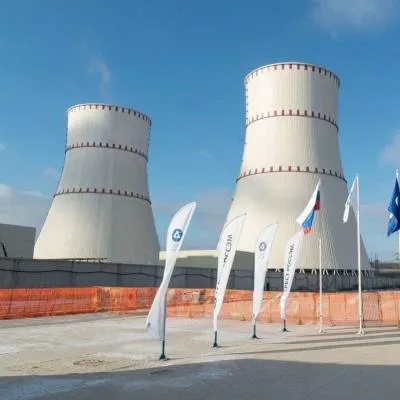
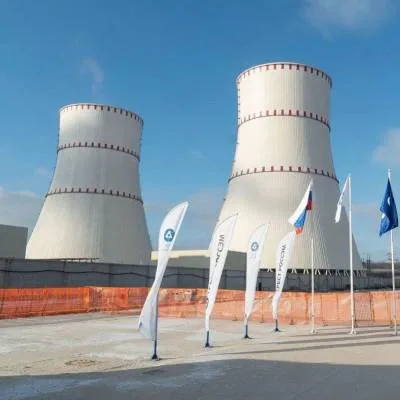
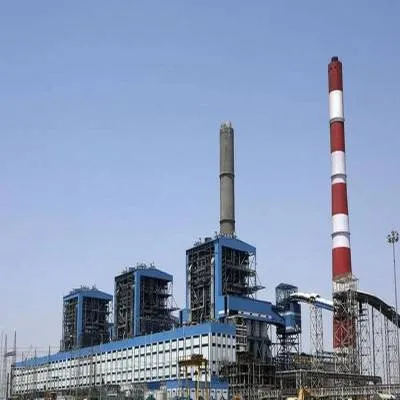
Rosatom has recently supplied nuclear fuel for the initial loading of the VVER-1000 reactor core at Unit 3 of the Kudankulam Nuclear Power Plant, marking a key milestone in the second stage of the Russian-designed nuclear power project in southern India.
The fuel was supplied by Rosatom’s Nuclear Fuel Division, managed by TVEL, and manufactured at the Novosibirsk Chemical Concentrates Plant. The delivery includes the initial reactor load along with reserve fuel assemblies and is part of a long-term contract covering the entire operational life of Units 3 and 4.
Building on operational experience from Units 1 and 2, Russian and Indian engineers have implemented advanced fuel solutions to improve efficiency and reliability. Since 2022, the plant has been using TVS-2M nuclear fuel, which features a rigid design, next-generation anti-debris filters and higher uranium content. These enhancements have enabled the extension of fuel cycles from 12 to 18 months, reducing outage frequency and increasing electricity generation.
Units under the second stage of the Kudankulam project will be the first VVER-1000 reactors globally to begin operations with an 18-month fuel cycle from initial launch. This achievement reflects sustained technical collaboration between Rosatom and Indian partners, drawing on best practices implemented at similar reactors in Russia and China.
Located in Tamil Nadu, the Kudankulam Nuclear Power Plant comprises six VVER-1000 units with a total installed capacity of 6,000 MW. Units 1 and 2 were commissioned in 2013 and 2017, while Units 3 to 6 are currently under construction. The project’s technical customer is the Nuclear Power Corporation of India, with Rosatom’s Engineering Division serving as the general designer and equipment supplier. All new units comply with the latest International Atomic Energy Agency safety standards.      

Rosatom has recently supplied nuclear fuel for the initial loading of the VVER-1000 reactor core at Unit 3 of the Kudankulam Nuclear Power Plant, marking a key milestone in the second stage of the Russian-designed nuclear power project in southern India.The fuel was supplied by Rosatom’s Nuclear Fuel Division, managed by TVEL, and manufactured at the Novosibirsk Chemical Concentrates Plant. The delivery includes the initial reactor load along with reserve fuel assemblies and is part of a long-term contract covering the entire operational life of Units 3 and 4.Building on operational experience from Units 1 and 2, Russian and Indian engineers have implemented advanced fuel solutions to improve efficiency and reliability. Since 2022, the plant has been using TVS-2M nuclear fuel, which features a rigid design, next-generation anti-debris filters and higher uranium content. These enhancements have enabled the extension of fuel cycles from 12 to 18 months, reducing outage frequency and increasing electricity generation.Units under the second stage of the Kudankulam project will be the first VVER-1000 reactors globally to begin operations with an 18-month fuel cycle from initial launch. This achievement reflects sustained technical collaboration between Rosatom and Indian partners, drawing on best practices implemented at similar reactors in Russia and China.Located in Tamil Nadu, the Kudankulam Nuclear Power Plant comprises six VVER-1000 units with a total installed capacity of 6,000 MW. Units 1 and 2 were commissioned in 2013 and 2017, while Units 3 to 6 are currently under construction. The project’s technical customer is the Nuclear Power Corporation of India, with Rosatom’s Engineering Division serving as the general designer and equipment supplier. All new units comply with the latest International Atomic Energy Agency safety standards.      

Next Story
Infrastructure Transport

MMRDA advances 250 m on Orange Gate–Marine Drive tunnel

The Mumbai Metropolitan Region Development Authority (MMRDA) has completed 250 m of underground tunnelling for the Orange Gate–Marine Drive Urban Road Tunnel using India’s largest slurry shield tunnel boring machine (TBM) deployed for an urban road project.The project involves twin tunnels extending over 7 km beneath critical transport corridors, including Central Railway, Western Railway and Metro Line 3. The work requires high-precision engineering to navigate densely developed urban infrastructure.Once completed, the tunnel is expected to reduce travel time between Orange Gate and Marin..

Next Story
Infrastructure Urban

Hindustan Zinc Pays Rs 188.46 Billion in FY26

Hindustan Zinc contributed Rs 188.46 billion to the public exchequer in FY 2025-26, according to its 9th Tax Transparency Report. The contribution, equivalent to 46 per cent of the company’s revenue, included direct and indirect taxes, government royalties, dividends to the Government of India, withholding taxes and other statutory levies.The company’s five-year cumulative contribution to the exchequer stood at Rs 915.72 billion. In FY26, Hindustan Zinc reported revenue of Rs 408.44 billion, EBITDA of Rs 221.62 billion and profit after tax of Rs 138.32 billion. It also achieved its highest..

Next Story
Infrastructure Urban

World of Concrete India 2026 Opens in Mumbai

Informa Markets in India will host the 12th edition of World of Concrete India 2026 from 3–5 June 2026 at the Bombay Exhibition Centre, Mumbai. The specialised B2B exhibition will bring together manufacturers, suppliers, contractors, developers, architects, consultants, infrastructure companies, project leaders and government stakeholders.The event is expected to feature over 350 brands and more than 18,000 trade professionals. It will cover concrete and cement, dry mortar, precast technologies, formwork, construction chemicals, industrial and commercial flooring, scaffolding, safety solutio..

Advertisement

Subscribe to Our Newsletter

Get daily newsletters around different themes from Construction world.

STAY CONNECTED

Advertisement

Advertisement

Advertisement