Yadav Calls For Sustainable, Climate-Resilient Real Estate
ECONOMY & POLICY

Yadav Calls For Sustainable, Climate-Resilient Real Estate

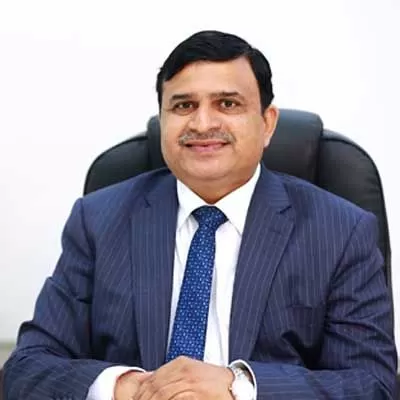
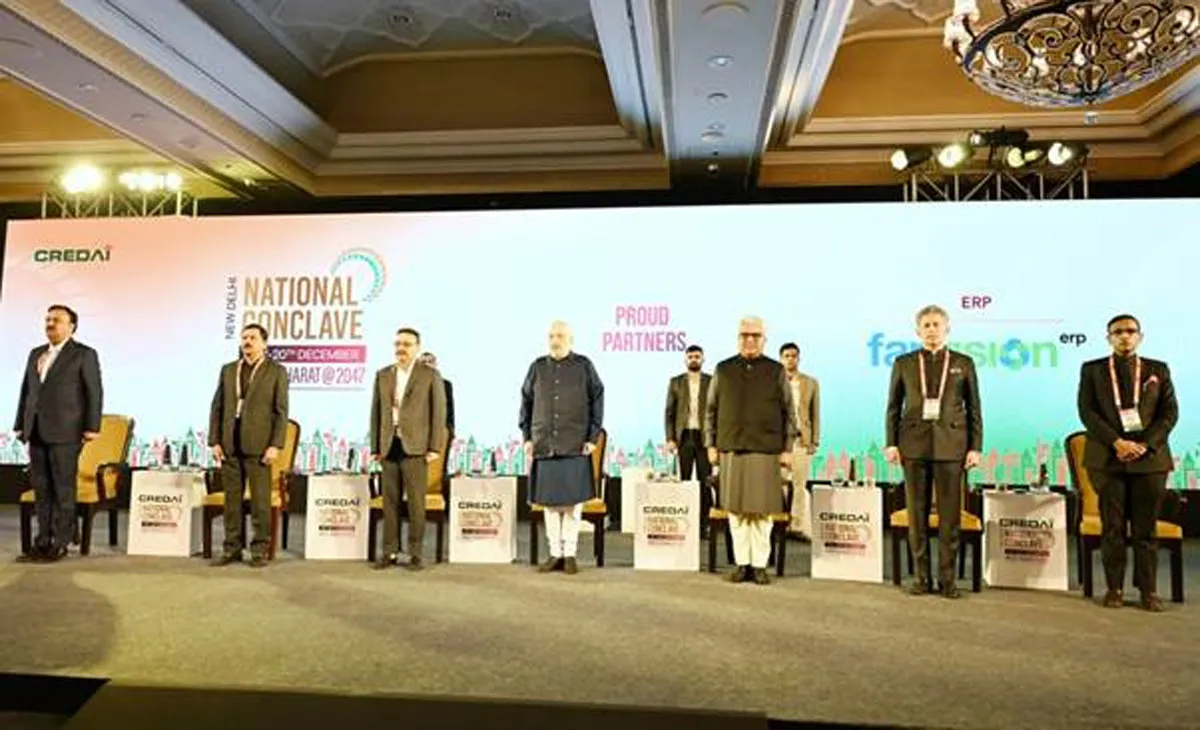
Union Minister for Environment, Forest and Climate Change Bhupender Yadav on Thursday highlighted the real estate sector’s role as a key nation-building force while addressing the Confederation of Real Estate Developer Associations of India National Conclave 2025 in New Delhi. The event was attended by Union Minister for Home Affairs and Cooperation Amit Shah as the Chief Guest. Yadav said that as India works towards the goal of Viksit Bharat by 2047, urban planning and construction must focus on inclusive, resilient and sustainable growth, with environmental considerations embedded at the earliest stages of development.

The Minister stressed that development and environmental protection are complementary objectives that must advance together. Highlighting the sector’s influence on energy consumption, water use, waste generation, air quality and urban heat, he said real estate will play a central role in achieving India’s climate commitments, including the Net Zero target by 2070. Sustainability, he added, is no longer optional but the foundation of future-ready development. With climate change increasingly affecting cities, he called for climate-resilient planning, including flood-resilient layouts, heat-adaptive building materials, expanded green cover and sustainable mobility solutions.

Yadav outlined reforms undertaken by the Ministry to modernise environmental governance, such as strengthening environmental clearance mechanisms, expanding digital and technology-driven systems, adopting a risk-based regulatory approach, advancing Mission LiFE and the Green Credit Programme, and reinforcing air and water quality frameworks in urban areas. He assured industry stakeholders that the government seeks to reward efficient compliance while acting firmly against violations, noting that ease of doing business cannot come at the cost of environmental safeguards, nor should environmental protection result in avoidable delays.

Encouraging the sector to take the lead, the Minister urged developers to adopt energy-efficient designs, renewable energy, water-positive developments, circular construction practices and green buildings, which he said would create long-term value for cities and citizens. Acknowledging CREDAI’s engagement, Yadav reiterated that industry bodies are partners in national development and reaffirmed the government’s commitment to sustainable urbanisation, regulatory reform and collaborative governance to ensure Indian cities grow in harmony with nature.

Union Minister for Environment, Forest and Climate Change Bhupender Yadav on Thursday highlighted the real estate sector’s role as a key nation-building force while addressing the Confederation of Real Estate Developer Associations of India National Conclave 2025 in New Delhi. The event was attended by Union Minister for Home Affairs and Cooperation Amit Shah as the Chief Guest. Yadav said that as India works towards the goal of Viksit Bharat by 2047, urban planning and construction must focus on inclusive, resilient and sustainable growth, with environmental considerations embedded at the earliest stages of development. The Minister stressed that development and environmental protection are complementary objectives that must advance together. Highlighting the sector’s influence on energy consumption, water use, waste generation, air quality and urban heat, he said real estate will play a central role in achieving India’s climate commitments, including the Net Zero target by 2070. Sustainability, he added, is no longer optional but the foundation of future-ready development. With climate change increasingly affecting cities, he called for climate-resilient planning, including flood-resilient layouts, heat-adaptive building materials, expanded green cover and sustainable mobility solutions. Yadav outlined reforms undertaken by the Ministry to modernise environmental governance, such as strengthening environmental clearance mechanisms, expanding digital and technology-driven systems, adopting a risk-based regulatory approach, advancing Mission LiFE and the Green Credit Programme, and reinforcing air and water quality frameworks in urban areas. He assured industry stakeholders that the government seeks to reward efficient compliance while acting firmly against violations, noting that ease of doing business cannot come at the cost of environmental safeguards, nor should environmental protection result in avoidable delays. Encouraging the sector to take the lead, the Minister urged developers to adopt energy-efficient designs, renewable energy, water-positive developments, circular construction practices and green buildings, which he said would create long-term value for cities and citizens. Acknowledging CREDAI’s engagement, Yadav reiterated that industry bodies are partners in national development and reaffirmed the government’s commitment to sustainable urbanisation, regulatory reform and collaborative governance to ensure Indian cities grow in harmony with nature.

Next Story
Resources

Jyoti Structures Launches Heat Safety Drive Across Sites

Jyoti Structures (JSL) has strengthened heat safety measures across its project sites and manufacturing facilities as temperatures rise across India. The company has implemented a Summer Safety Plan covering all transmission line projects to address risks related to heat stress, dehydration and worker fatigue.The initiative includes rescheduling work away from peak afternoon temperatures, provision of drinking water, ORS and lemon-salt solutions, and installation of rest shelters near work areas. Daily toolbox talks, worker health monitoring, first-aid preparedness, emergency transport arrange..

Next Story
Real Estate

MHADA Declares 82 Buildings Most Dangerous in Central and South Mumbai

The Maharashtra Housing and Area Development Authority (MHADA) has declared 82 buildings as most dangerous across Central and South Mumbai and has appealed to residents to vacate immediately. The list, prepared after structural assessments by the authority, identifies buildings judged to pose imminent risk to occupants and to passersby. Local civic bodies have been asked to coordinate evacuations and to make arrangements for temporary shelter and rehabilitation for displaced households. Officials said the authority prioritised buildings with visible structural distress, severe cracking, tiltin..

Next Story
Infrastructure Transport

Damage Reported At Halwara Airport Terminal After First Rains

Severe damage was reported at the terminal of Halwara Airport during the first major rain spell of the season, prompting immediate concern among aviation and local authorities. Images from the site showed water ingress and visible deterioration of the terminal interior, affecting passenger areas and ancillary services. The airport authority suspended certain operations temporarily to assess structural safety and ensure passenger wellbeing. Preliminary inspections have prioritised electrical systems and roof seals to prevent further water ingress. State aviation officials ordered a formal inqui..

Advertisement

Subscribe to Our Newsletter

Get daily newsletters around different themes from Construction world.

STAY CONNECTED

Advertisement

Advertisement

Advertisement