- Home
- Building Material
- Steel
- We have invested in excess of $4 billion in R&D over the past five years
We have invested in excess of $4 billion in R&D over the past five years
Advancements in machine and equipment designs have affected operating parameters and, thus, the requirement for lubricating greases.
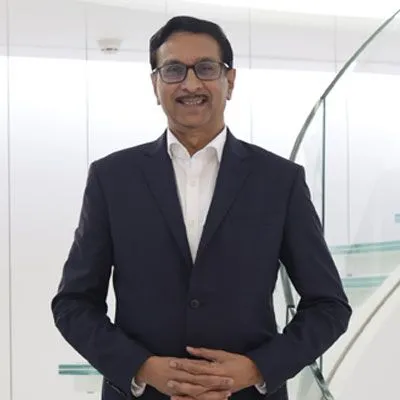
As operating parameters like speed, load and temperature vary significantly based upon the equipment, it is practically impossible for a single grease to handle all diversified applications. Thus, a solutions-oriented lubrication programme can play an important role in advancing productivity in mining operations. ExxonMobil Lubricants, with a balanced portfolio of state-of-the-art, well-proven, high-performance lubricants and greases, caters to the needs of many industrial sectors -including metals, cement, construction, mining, power generation, general manufacturing, plastics, food and beverage, pulp and paper - all backed by technology leadership and industry expertise. The company participated at the 18th National Lubricating Grease Institute (NLGI) - India Chapter´s Annual Conference and showcased its expertly formulated comprehensive range of greases available in India. Shankar Karnik, General Manager Industrial, ExxonMobil Lubricants Pvt Ltd; Umut Urkun, Global Grease Marketing Advisor, ExxonMobil Fuels & Lubricants; and Imtiaz Ahmed, Asia Pacific Mobil SHC Brand Manager, ExxonMobil Lubricants Pvt Ltd, discuss trends and what the company has to offer, in conversation with SERAPHINA D´SOUZA.
Please share an overview of the lubricants market in India.
Karnik: India has certainly overtaken Japan to become the core biggest lubricant market in the world. Another significant trend or factor that we see is that in most matured markets, you typically see a percentage mix of 60:40 between automotive and industrial lubricants. In India, we are somewhere around 45:55 when it comes to lubricants in these key sectors. There is significant scope of improvement for the automotive side. Industry lubricants will grow at a much higher rate than the industry growth rate. Both sectors will grow significantly and that is exciting for us.
From the sectors you cater to, which is your prime focus at present and from where is the maximum demand?
Karnik: In terms of available potential, manufacturing offers the biggest returns on volume, simply because manufacturing is the biggest in terms of the industry spread in the country. This is closely followed by energy, mining, cement and petrochem, metals like steel, etc.
We are strongly focusing on mining. Increased FDI and private players and corporates have been showing interest in mining, and that brings about an increase in high-capacity machinery and expertise to mine efficiently. And that is the key trend. New technology and higher specific output performing equipment will eventually lead to higher efficiency of mining itself. This is of interest to us, because that is where high-performance lubricants are required to sustain enhanced productivity.
How are your products formulated to provide distinct potential advantages in severe conditions, especially as one would see in the mining industry?
Karnik: Operators in the mining sector have to balance multiple concerns as they try to enhance operational safety and keep their machinery running at peak performance, even when it is subjected to extreme temperatures and heavy loads. To help address these issues, it is essential to work closely with mining customers to develop a solutions-focused approach to help protect and maintain equipment across its entire operation. This can be done by leveraging comprehensive lubricant technologies and service solutions, helping companies enhance safety, achieving environmental care-related goals, and maximising productivity. Lubricant programmes and services, when delivered from a solutions-oriented approach, can play an important role in advancing productivity in mining operations.
Urkun: Our comprehensive portfolio of oils and greases combines with robust services to offer holistic solutions for mining operators. The benefits offered have been widely acknowledged by successful mining operators located across the world. The technology leadership embodied in our greases, along with the application expertise of our engineers, can help mines address safety exposure, mitigate environmental touch and support the desire to be more productive.
Is there any kind of analysis you offer to monitor lubricant and equipment conditions and avoid unscheduled breakdown and cost repair?
Karnik: Absolutely. That´s the core of our offerings. The promise is to re-enhance productivity, improve safety and ensure environmental protection. So, the productivity side of our offering is all about improving total cost of ownership. That includes a detailed study of the equipment, operation and the operating environment basically to understand the customer´s equation and demand. That´s a part of the analysis we offer. Without this equation, there is no offering. It´s important to know what we are going to do as a company to improve the customer´s productivity.
How do your lubricants help reduce energy consumption in the industrial sector?
Karnik: Technically, the key factor or the key property of the lubricant that impacts energy consumption is what we call the traction coefficient. This is the inner-end fluid friction, which is a part of the formulation. For oil to sheer itself from the application area, it consumes energy; and that results in oil itself heating up. Overall, it brings about lower energy consumption. If the oil has a property of low traction coefficient, it brings about signification improvement or conservation in energy. That´s typically in a gearbox or a bearing application. If you look at hydraulics, the churning happens in the pump element, so oils that are more sheer-stable have a better chance of delivering energy-efficiency. Our energy-efficient range of products has exactly these properties; that is inherent in the base oil, which forms the most important component of lubricating oil. You can attempt energy-efficiency through certain additives but that does not sustain. So, you need the right technology to produce the right kind of base oil to deliver that kind of energy-efficiency.
What is the reduction rate of energy consumption your products offer as compared to others?
Karnik: In a typical gearbox or a bearing application, the statistical energy-efficiency saving is up to about 3.6 per cent. Our Mobil SHC 600 series of oil is one of the products that deliver up to about 3.6 per cent, while hydraulic oil Mobil DTE 10 Excel™ Series delivers about 6-6.7 per cent pump efficiency, which is significant in a hydraulic application. Then, we have synthetic gas engine oil called the Mobil SHC Pegasus series, which has demonstrated 1.5 per cent fuel economy in gas engines, that have run up to 18,000 plus hours in continuous operation, which basically enhances oil life by six times and delivers energy-efficiency benefit through 1.5 per cent. And, 1.5 per cent in a gas engine that runs 24/7 is significant; it is huge.
Tell us about the unique properties of your offerings.
Ahmed: In modern machinery design and construction, machines function under severe operating conditions with the expectation of increased productivity and less downtime.
This has made it difficult for conventional lithium greases to satisfactorily fulfil these requirements. In light of this fact, high-performance greases like lithium complex and calcium sulfonate are the best candidates for the said applications. While lithium complex greases have an excellent compatibility with the most widely used lithium greases, calcium sulfonate greases are also moderately compatible. Lithium complex greases, generally, possess good stability, high-temperature characteristics and water resistance properties that meet the needs of a wide variety of heavy duty applications and operating conditions. They provide balanced load-carrying capability across a spectrum of loads, speeds and temperatures.
Which products do you plan to introduce in India?
Ahmed: We will have new products available. There is one coming up that is mostly for the oil and gas industry - the Mobil EAL Hydraulic series is a line of environmentally aware hydraulic oils. This product has been launched in Europe; in Asia, it may take some time.
How have you been ensuring efficient synthetic lubricants over the years in your product range to keep up the quality of your products?
Urkun: We always assess the performance of our lubricants; we work with the OEMs, EVs, and then depending on that particular application, we work on the next generation of products. We have global processes for maintaining manufacturing quality. From the grease perspective, we have a limited number of suppliers and equipment types; so we have processes optimised to give the same quality around the globe. If we have a product name, it has the same quality all over. So, we have one product and one quality system all over the world.
What has your investment in R&D been like over the years?
Karnik: Globally, technology investment is the very key of our existence. And, the company has invested in excess of $4 billion in R&D over the past five years. And, an equivalent of about 20 per cent of our total workforce is involved in technological activities.
Please share three USPs that keep you ahead of the rest.
Karnik: Technology leadership, application expertise and risk evaluation!
To share your feedback, write in at feedback@ConstructionWorld.in

- Shankar Karnik, General Manager Industrial, ExxonMobil Lubricants Pvt Ltd Advancements in machine and equipment designs have affected operating parameters and, thus, the requirement for lubricating greases. As operating parameters like speed, load and temperature vary significantly based upon the equipment, it is practically impossible for a single grease to handle all diversified applications. Thus, a solutions-oriented lubrication programme can play an important role in advancing productivity in mining operations. ExxonMobil Lubricants, with a balanced portfolio of state-of-the-art, well-proven, high-performance lubricants and greases, caters to the needs of many industrial sectors -including metals, cement, construction, mining, power generation, general manufacturing, plastics, food and beverage, pulp and paper - all backed by technology leadership and industry expertise. The company participated at the 18th National Lubricating Grease Institute (NLGI) - India Chapter´s Annual Conference and showcased its expertly formulated comprehensive range of greases available in India. Shankar Karnik, General Manager Industrial, ExxonMobil Lubricants Pvt Ltd; Umut Urkun, Global Grease Marketing Advisor, ExxonMobil Fuels & Lubricants; and Imtiaz Ahmed, Asia Pacific Mobil SHC Brand Manager, ExxonMobil Lubricants Pvt Ltd, discuss trends and what the company has to offer, in conversation with SERAPHINA D´SOUZA. Please share an overview of the lubricants market in India. Karnik: India has certainly overtaken Japan to become the core biggest lubricant market in the world. Another significant trend or factor that we see is that in most matured markets, you typically see a percentage mix of 60:40 between automotive and industrial lubricants. In India, we are somewhere around 45:55 when it comes to lubricants in these key sectors. There is significant scope of improvement for the automotive side. Industry lubricants will grow at a much higher rate than the industry growth rate. Both sectors will grow significantly and that is exciting for us. From the sectors you cater to, which is your prime focus at present and from where is the maximum demand? Karnik: In terms of available potential, manufacturing offers the biggest returns on volume, simply because manufacturing is the biggest in terms of the industry spread in the country. This is closely followed by energy, mining, cement and petrochem, metals like steel, etc. We are strongly focusing on mining. Increased FDI and private players and corporates have been showing interest in mining, and that brings about an increase in high-capacity machinery and expertise to mine efficiently. And that is the key trend. New technology and higher specific output performing equipment will eventually lead to higher efficiency of mining itself. This is of interest to us, because that is where high-performance lubricants are required to sustain enhanced productivity. How are your products formulated to provide distinct potential advantages in severe conditions, especially as one would see in the mining industry? Karnik: Operators in the mining sector have to balance multiple concerns as they try to enhance operational safety and keep their machinery running at peak performance, even when it is subjected to extreme temperatures and heavy loads. To help address these issues, it is essential to work closely with mining customers to develop a solutions-focused approach to help protect and maintain equipment across its entire operation. This can be done by leveraging comprehensive lubricant technologies and service solutions, helping companies enhance safety, achieving environmental care-related goals, and maximising productivity. Lubricant programmes and services, when delivered from a solutions-oriented approach, can play an important role in advancing productivity in mining operations. Urkun: Our comprehensive portfolio of oils and greases combines with robust services to offer holistic solutions for mining operators. The benefits offered have been widely acknowledged by successful mining operators located across the world. The technology leadership embodied in our greases, along with the application expertise of our engineers, can help mines address safety exposure, mitigate environmental touch and support the desire to be more productive. Is there any kind of analysis you offer to monitor lubricant and equipment conditions and avoid unscheduled breakdown and cost repair? Karnik: Absolutely. That´s the core of our offerings. The promise is to re-enhance productivity, improve safety and ensure environmental protection. So, the productivity side of our offering is all about improving total cost of ownership. That includes a detailed study of the equipment, operation and the operating environment basically to understand the customer´s equation and demand. That´s a part of the analysis we offer. Without this equation, there is no offering. It´s important to know what we are going to do as a company to improve the customer´s productivity. How do your lubricants help reduce energy consumption in the industrial sector? Karnik: Technically, the key factor or the key property of the lubricant that impacts energy consumption is what we call the traction coefficient. This is the inner-end fluid friction, which is a part of the formulation. For oil to sheer itself from the application area, it consumes energy; and that results in oil itself heating up. Overall, it brings about lower energy consumption. If the oil has a property of low traction coefficient, it brings about signification improvement or conservation in energy. That´s typically in a gearbox or a bearing application. If you look at hydraulics, the churning happens in the pump element, so oils that are more sheer-stable have a better chance of delivering energy-efficiency. Our energy-efficient range of products has exactly these properties; that is inherent in the base oil, which forms the most important component of lubricating oil. You can attempt energy-efficiency through certain additives but that does not sustain. So, you need the right technology to produce the right kind of base oil to deliver that kind of energy-efficiency. What is the reduction rate of energy consumption your products offer as compared to others? Karnik: In a typical gearbox or a bearing application, the statistical energy-efficiency saving is up to about 3.6 per cent. Our Mobil SHC 600 series of oil is one of the products that deliver up to about 3.6 per cent, while hydraulic oil Mobil DTE 10 Excel™ Series delivers about 6-6.7 per cent pump efficiency, which is significant in a hydraulic application. Then, we have synthetic gas engine oil called the Mobil SHC Pegasus series, which has demonstrated 1.5 per cent fuel economy in gas engines, that have run up to 18,000 plus hours in continuous operation, which basically enhances oil life by six times and delivers energy-efficiency benefit through 1.5 per cent. And, 1.5 per cent in a gas engine that runs 24/7 is significant; it is huge. Tell us about the unique properties of your offerings. Ahmed: In modern machinery design and construction, machines function under severe operating conditions with the expectation of increased productivity and less downtime. This has made it difficult for conventional lithium greases to satisfactorily fulfil these requirements. In light of this fact, high-performance greases like lithium complex and calcium sulfonate are the best candidates for the said applications. While lithium complex greases have an excellent compatibility with the most widely used lithium greases, calcium sulfonate greases are also moderately compatible. Lithium complex greases, generally, possess good stability, high-temperature characteristics and water resistance properties that meet the needs of a wide variety of heavy duty applications and operating conditions. They provide balanced load-carrying capability across a spectrum of loads, speeds and temperatures. Which products do you plan to introduce in India? Ahmed: We will have new products available. There is one coming up that is mostly for the oil and gas industry - the Mobil EAL Hydraulic series is a line of environmentally aware hydraulic oils. This product has been launched in Europe; in Asia, it may take some time. How have you been ensuring efficient synthetic lubricants over the years in your product range to keep up the quality of your products? Urkun: We always assess the performance of our lubricants; we work with the OEMs, EVs, and then depending on that particular application, we work on the next generation of products. We have global processes for maintaining manufacturing quality. From the grease perspective, we have a limited number of suppliers and equipment types; so we have processes optimised to give the same quality around the globe. If we have a product name, it has the same quality all over. So, we have one product and one quality system all over the world. What has your investment in R&D been like over the years? Karnik: Globally, technology investment is the very key of our existence. And, the company has invested in excess of $4 billion in R&D over the past five years. And, an equivalent of about 20 per cent of our total workforce is involved in technological activities. Please share three USPs that keep you ahead of the rest. Karnik: Technology leadership, application expertise and risk evaluation! To share your feedback, write in at feedback@ConstructionWorld.in

Related Stories
Gold Stories
Asian Energy Services Q1 FY27 PAT Rises 129 Per Cent
Asian Energy Services Limited reported a 129 per cent year-on-year rise in net profit to Rs 128 million for Q1 FY27, compared with the corresponding quarter last year.Revenue increased 135 per cent year-on-year to Rs 2.71 billion, supported by continued momentum across its services business, disciplined execution and contributions from domestic and international operations. EBITDA grew 81 per cent year-on-year during the quarter.As of June 30, 2026, the company’s standalone order book stood at Rs 17.54 billion, with around 60 per cent coming from oil and gas services and 40 per cent from min..
BioBTX to Build First Commercial-Scale Circular Chemicals Plant
Dutch circular chemistry technology developer BioBTX is building what it says will be the world’s first commercial-scale plant to convert mixed plastic waste into high-quality aromatic chemicals using its proprietary Integrated Catalytic Cracking Process (ICCP) technology.The facility will be built at Chemical Park Delfzijl on the northern coast of the Netherlands and is expected to create 35 jobs. Covestro, which has been a shareholder and strategic partner of BioBTX since 2024, holds a mid-single-digit million-euro investment in the company.BioBTX’s ICCP technology uses catalytic pyrolys..
Awfis Q1 FY27 PAT Jumps 140% as Revenue Rises 27%
Awfis Space Solutions reported a 140 per cent year-on-year rise in consolidated profit after tax (PAT) to Rs 240 million for Q1 FY27, compared with Rs 100 million in the corresponding quarter last year.Revenue from operations increased 27 per cent to Rs 4.25 billion from Rs 3.35 billion, while EBITDA rose 28 per cent to Rs 1.62 billion. EBITDA margin improved to 38.2 per cent from 37.8 per cent. Profit before tax increased 135 per cent to Rs 240 million.The company's co-working business recorded 27 per cent year-on-year growth, supported by demand from enterprises, Global Capability Centres (G..
Related Articles
Latest Updates
Recommended for you
Advertisement
Subscribe to Our Newsletter
Get daily newsletters around different themes from Construction world.
subscribe to the newsletter
Don't miss out on valuable insights and opportunities
to connect with like minded professionals