+
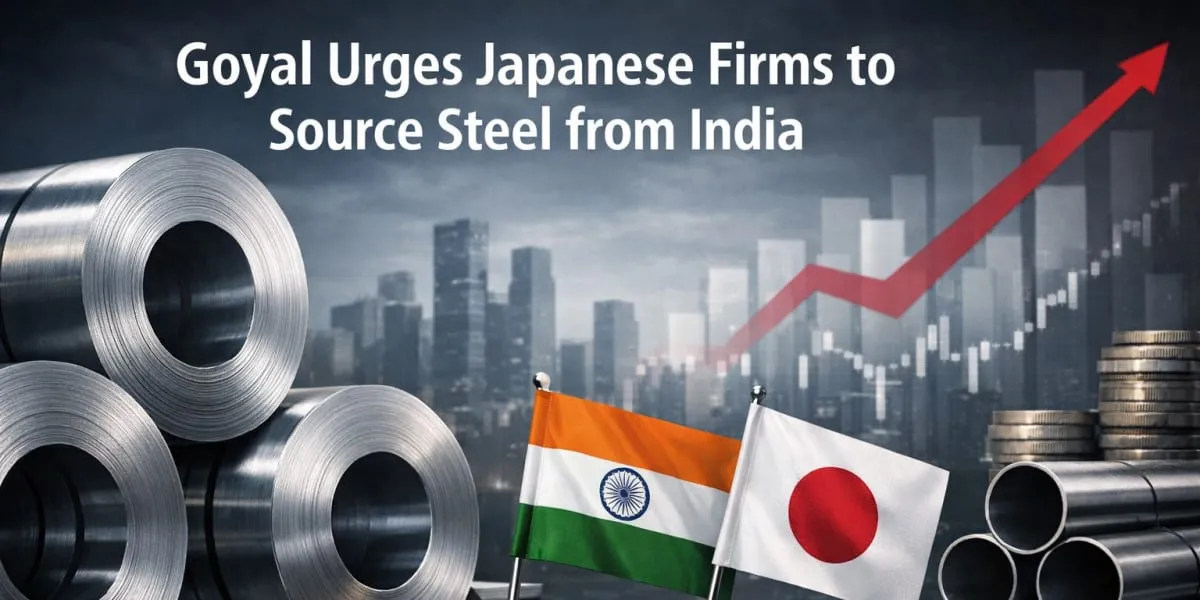
Goyal Urges Japanese Firms To Source Steel From India
Steel

Goyal Urges Japanese Firms To Source Steel From India

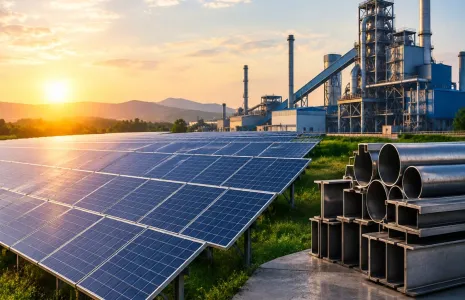
Piyush Goyal urged Japanese firms to source steel from India during a roundtable with business leaders, saying Indian manufacturers produce high quality products and that India imposed a measured safeguard duty on low grade steel compared with higher levies in other markets. He noted the United States has applied a 50 per cent duty while the United Kingdom and the European Union have imposed higher charges. He said India had confined protection to lower grades while allowing higher grades to be imported freely.

He recalled that India announced a safeguard duty on certain steel products in December 2025 for three years to curb dumping from countries such as China and to shield domestic manufacturers from a supply glut. The duty was initially imposed as a temporary 12 per cent levy in April 2025 and is in force until April 2028. The schedule set 12 per cent for the first year, reduced the rate to 11.5 per cent in the second year and will lower it to 11 per cent in the third year.

He emphasised that India remains a net importer of steel and that there is ample scope to expand and even double capacity as investments flow into the sector. He said investors seek protection against dumping when they commit funds and that measured trade remedies provide that assurance. He added that he had spent the last seven years urging Japanese industry to purchase competitively priced Indian steel that meets Japanese quality standards.

He expressed concern that it was unfair for foreign firms to expect protection from trade measures while not supporting Indian producers through sourcing. He suggested Japanese companies approach the Directorate General of Trade Remedies on anti dumping and safeguard duty matters and affirmed the measures were consistent with World Trade Organization rules. He is leading a 200-member delegation and will travel to Nagoya and Osaka to lead a roadshow with Chukeiren and the Nagoya Chamber of Commerce and Industry and to engage Aichi Prefecture leadership and major automotive and steel investors.

Piyush Goyal urged Japanese firms to source steel from India during a roundtable with business leaders, saying Indian manufacturers produce high quality products and that India imposed a measured safeguard duty on low grade steel compared with higher levies in other markets. He noted the United States has applied a 50 per cent duty while the United Kingdom and the European Union have imposed higher charges. He said India had confined protection to lower grades while allowing higher grades to be imported freely. He recalled that India announced a safeguard duty on certain steel products in December 2025 for three years to curb dumping from countries such as China and to shield domestic manufacturers from a supply glut. The duty was initially imposed as a temporary 12 per cent levy in April 2025 and is in force until April 2028. The schedule set 12 per cent for the first year, reduced the rate to 11.5 per cent in the second year and will lower it to 11 per cent in the third year. He emphasised that India remains a net importer of steel and that there is ample scope to expand and even double capacity as investments flow into the sector. He said investors seek protection against dumping when they commit funds and that measured trade remedies provide that assurance. He added that he had spent the last seven years urging Japanese industry to purchase competitively priced Indian steel that meets Japanese quality standards. He expressed concern that it was unfair for foreign firms to expect protection from trade measures while not supporting Indian producers through sourcing. He suggested Japanese companies approach the Directorate General of Trade Remedies on anti dumping and safeguard duty matters and affirmed the measures were consistent with World Trade Organization rules. He is leading a 200-member delegation and will travel to Nagoya and Osaka to lead a roadshow with Chukeiren and the Nagoya Chamber of Commerce and Industry and to engage Aichi Prefecture leadership and major automotive and steel investors.

Related Stories

Gold Stories
Next Story
Real Estate

BMC OC Amnesty Scheme Requires Key Approvals from Mumbai Societies

The Brihanmumbai Municipal Corporation (BMC) has clarified that housing societies applying under its Occupation Certificate (OC) amnesty scheme must possess key approvals linked to the original construction. The requirements include a valid Intimation of Disapproval (IOD), an approved building plan and a Commencement Certificate (CC), along with a No Objection Certificate (NOC) from the developer or original construction applicant. The Standard Operating Procedure (SOP) makes clear that the absence of an OC alone will not qualify a building for relief. Societies must establish that their build..

Next Story
Real Estate

Gurugram Emerges as Luxury Senior Living Hub

Gurugram is emerging as a potential hub for luxury senior living, supported by available land, healthcare infrastructure, connectivity and a concentration of affluent professionals, high-net-worth individuals and non-resident Indians. These factors could give the city an advantage over land-constrained metros such as Mumbai. A report by the Association of Senior Living India (ASLI) and JLL estimates that India’s organised senior living market could represent a $10.1 bn opportunity by 2030. The sector had about 25,050 organised units as of June 2026, while penetration stood at only 1.5 per ce..

Next Story
Real Estate

Corrosion Costs India’s Infrastructure Rs. 142 bn Annually

Corrosion costs India an estimated Rs. 1.42 tn annually, equivalent to 4.3 per cent of gross domestic product, according to a report by the Confederation of Indian Industry and the National Research Institute. Infrastructure accounts for Rs. 142 bn of the annual burden, making it the sector with the largest absolute cost among those examined. The report, presented at the CII Annual Infrastructure Summit 2026, said the infrastructure-sector cost equals about 2.9 per cent of the sector’s gross domestic product. It estimated that effective measures could generate maximum savings of Rs. 495.8 bn..

Advertisement

Subscribe to Our Newsletter

Get daily newsletters around different themes from Construction world.

STAY CONNECTED

Advertisement

SPECIAL OFFER
QR Code