




+
MSME Stainless Steel Units Seek QCO Reinstatement
Steel

MSME Stainless Steel Units Seek QCO Reinstatement

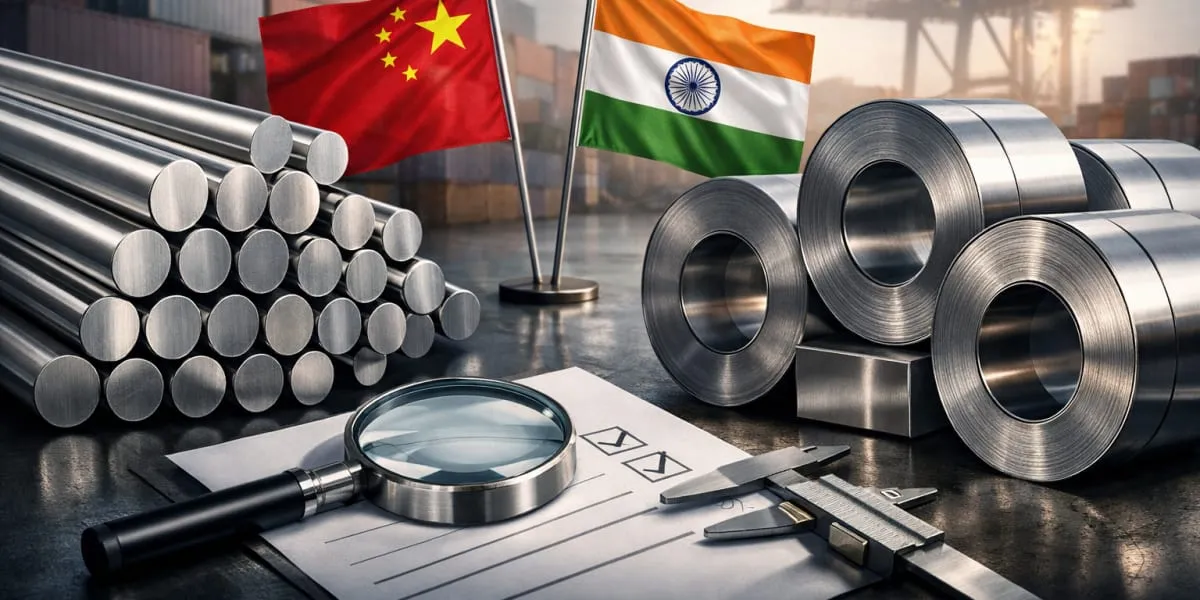
Micro, Small and Medium Enterprises (MSME) stainless steel units have petitioned the government for reinstatement of the Quality Control Order (QCO) as they report a sharp rise in imports from China that is undermining domestic production. The industry body said cheaper and inconsistent quality consignments are entering the market, depressing prices and eroding margins for local producers. Manufacturers argued that the absence of the QCO has left them vulnerable to unfair competition and non-compliant material that affects downstream supply chains. The plea frames reinstatement as a measure to protect Indian manufacturing capability and preserve employment in the sector.

The units are seeking clear standards and mandatory testing protocols under any reinstated order, noting that verification at import points would deter substandard consignments. They requested alignment of technical specifications with international norms while ensuring practical compliance procedures for small operations. Industry representatives pressed for local testing infrastructure and certification mechanisms to be strengthened so that conformity assessment is timely and affordable. The interventions aim to restore a level playing field and reduce distortions caused by unfair pricing practices.

Sector analysts noted that prolonged import pressure has led to capacity under utilisation at smaller plants and squeezed margins across the value chain. Suppliers of raw stainless steel inputs and fabricators that feed construction and manufacturing segments reported slower order books and tighter cash flows. Trade associations said targeted regulatory measures, coupled with incentives for modernisation and quality enhancement, are aimed at reviving competitiveness. The appeal emphasises preservation of domestic capabilities rather than protection for its own sake.

The memorandum requests consultation with state and central agencies and a phased approach that balances consumer interest with industry sustainability. Stakeholders asked for transparent timelines for any compliance rollout and for capacity building to be supported through technical assistance and access to testing facilities. The industry communicated readiness to engage with regulators to refine specifications and to adopt quality systems that meet both domestic needs and export ambitions. The outcome will be watched closely by manufacturers across related sectors.

Micro, Small and Medium Enterprises (MSME) stainless steel units have petitioned the government for reinstatement of the Quality Control Order (QCO) as they report a sharp rise in imports from China that is undermining domestic production. The industry body said cheaper and inconsistent quality consignments are entering the market, depressing prices and eroding margins for local producers. Manufacturers argued that the absence of the QCO has left them vulnerable to unfair competition and non-compliant material that affects downstream supply chains. The plea frames reinstatement as a measure to protect Indian manufacturing capability and preserve employment in the sector. The units are seeking clear standards and mandatory testing protocols under any reinstated order, noting that verification at import points would deter substandard consignments. They requested alignment of technical specifications with international norms while ensuring practical compliance procedures for small operations. Industry representatives pressed for local testing infrastructure and certification mechanisms to be strengthened so that conformity assessment is timely and affordable. The interventions aim to restore a level playing field and reduce distortions caused by unfair pricing practices. Sector analysts noted that prolonged import pressure has led to capacity under utilisation at smaller plants and squeezed margins across the value chain. Suppliers of raw stainless steel inputs and fabricators that feed construction and manufacturing segments reported slower order books and tighter cash flows. Trade associations said targeted regulatory measures, coupled with incentives for modernisation and quality enhancement, are aimed at reviving competitiveness. The appeal emphasises preservation of domestic capabilities rather than protection for its own sake. The memorandum requests consultation with state and central agencies and a phased approach that balances consumer interest with industry sustainability. Stakeholders asked for transparent timelines for any compliance rollout and for capacity building to be supported through technical assistance and access to testing facilities. The industry communicated readiness to engage with regulators to refine specifications and to adopt quality systems that meet both domestic needs and export ambitions. The outcome will be watched closely by manufacturers across related sectors.

Related Stories

Gold Stories

Next Story
Infrastructure Urban

KONE Opens India's First Digital Experience Centre in Pune

KONE, a global elevator and escalator manufacturer, has inaugurated its first Digital Experience Centre (DEC) in India, located in Pune. The facility aims to showcase how artificial intelligence (AI), connectivity and data-driven technologies can enhance customer experiences and improve building operations.The centre was inaugurated by Jussi Herlin, Executive Vice Chair, KONE Corporation; Philippe Delorme, President and CEO, KONE; and Nandan Nilekani, Co-founder and Chairman of the Board, Infosys.Designed as an interactive customer environment, the facility demonstrates digital solutions cover..

Next Story
Infrastructure Urban

CII GreenCo Launches Circularity Guidelines for Indian Industry

The Confederation of Indian Industry (CII) GreenCo Council has launched the CII GreenCo Circularity Guidelines – Pilot Version at the 17th CII GreenCo Waste & Resource Management Summit 2026 in Chennai. The initiative aims to strengthen resource efficiency, waste reduction and circular economy practices across Indian manufacturing and process industries.The guidelines introduce a structured framework with circularity indices covering raw materials, consumables, packaging and other resource inputs. These indicators will help industries assess existing practices, identify opportunities to ..

Next Story
Infrastructure Energy

Global Electronics Association Launches IPC-1783-CO2E Standard

The Global Electronics Association has introduced IPC-1783-CO2E, a new international standard aimed at improving consistency, transparency and comparability in product carbon footprint reporting across the electronics manufacturing industry.The standard, titled International Standard for Data Collection and Reporting of CO2 Equivalent (CO2e) Emissions for the Electronics Manufacturing Supply Chain, provides industry-specific guidance for collecting, estimating and reporting carbon emissions data.With increasing regulatory requirements and customer expectations, electronics manufacturers face c..

Advertisement

Subscribe to Our Newsletter

Get daily newsletters around different themes from Construction world.

STAY CONNECTED

Advertisement

SPECIAL OFFER
QR Code