- Home
- Infrastructure Transport
- AVIATION & AIRPORTS
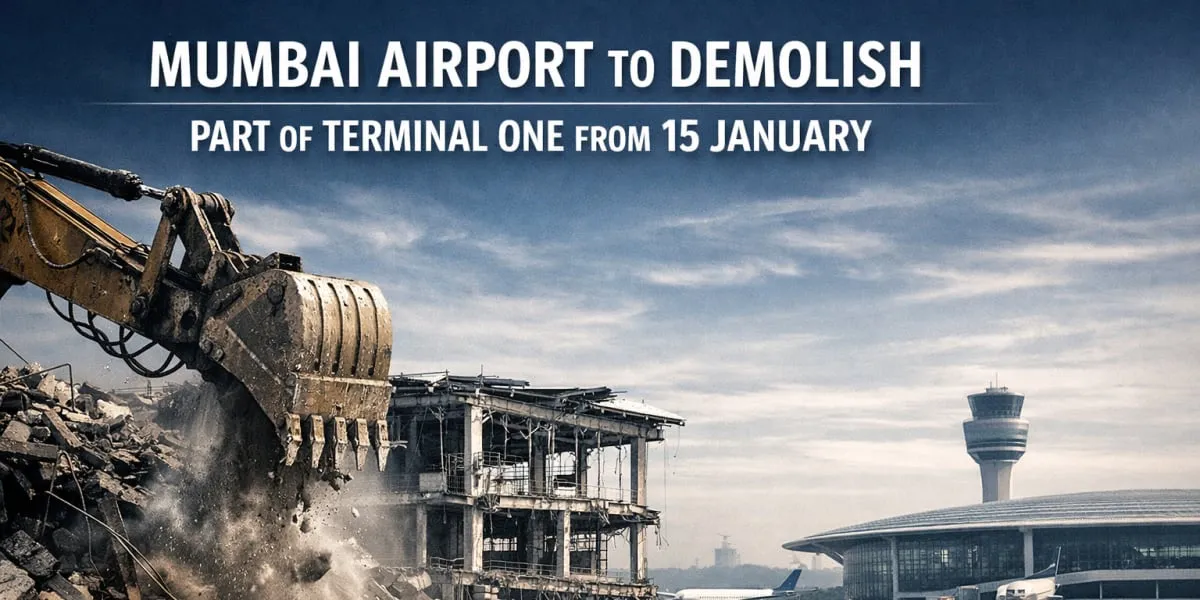
- Mumbai Airport to Demolish Part of Terminal One From 15 January
Mumbai Airport to Demolish Part of Terminal One From 15 January
Terminal one is nearly 80 years old and parts of it have already been demolished as redevelopment planning progresses. Terminal one and Terminal two have capacities to handle around 15 mn and 40 mn passengers respectively, and the first phase of the redevelopment will be limited to the north section of Terminal one-B catering to around five mn passengers per annum. The operator told the ministry that this restriction aims to ensure minimal impact on airline operations and passenger convenience.
As part of the operational plan, at least one-third of international air traffic movements will be shifted to Navi Mumbai International Airport from the first of October, with a subsequent movement of at least one-third of Terminal one traffic to Terminal two from 25 October. MIAL said it will provide about three-and-a-half months of transition assistance to airlines before demolition begins on 15 January. The operator has already initiated operational realignment, with Akasa Air moving its domestic operations from Terminal one to Terminal two from the first of August.
MIAL has engaged domestic and international carriers about partial transfers of flights between terminals and to Navi Mumbai and has proposed a Joint Transition Group chaired by the civil aviation secretary to coordinate stakeholders and limit passenger inconvenience. Both Mumbai and Navi Mumbai airports are owned by the Adani Group. There was no further comment from the operator in the letter.
Adani Group-operated Mumbai International Airport (MIAL) will begin partial demolition of the north section of Terminal one-B at Chatrapati Shivaji Maharaj International Airport from 15 January 2027, according to a letter to the civil aviation ministry. The operator has begun redistributing air traffic to Terminal two and to Navi Mumbai International Airport to facilitate the work. The airport, managed by Mumbai International Airport, currently has a capacity of over 50 million (mn) passengers and handles over 950 flight movements daily. Terminal one is nearly 80 years old and parts of it have already been demolished as redevelopment planning progresses. Terminal one and Terminal two have capacities to handle around 15 mn and 40 mn passengers respectively, and the first phase of the redevelopment will be limited to the north section of Terminal one-B catering to around five mn passengers per annum. The operator told the ministry that this restriction aims to ensure minimal impact on airline operations and passenger convenience. As part of the operational plan, at least one-third of international air traffic movements will be shifted to Navi Mumbai International Airport from the first of October, with a subsequent movement of at least one-third of Terminal one traffic to Terminal two from 25 October. MIAL said it will provide about three-and-a-half months of transition assistance to airlines before demolition begins on 15 January. The operator has already initiated operational realignment, with Akasa Air moving its domestic operations from Terminal one to Terminal two from the first of August. MIAL has engaged domestic and international carriers about partial transfers of flights between terminals and to Navi Mumbai and has proposed a Joint Transition Group chaired by the civil aviation secretary to coordinate stakeholders and limit passenger inconvenience. Both Mumbai and Navi Mumbai airports are owned by the Adani Group. There was no further comment from the operator in the letter.
Related Stories
Gold Stories
Modi Urges End-to-End Reforms for Infrastructure Projects
Prime Minister Narendra Modi on Tuesday called for continuous reforms across all stages of infrastructure project execution during the 53rd PRAGATI meeting. He asked ministries and state governments to adopt an end-to-end approach and a proactive work culture to ensure timely delivery. The meeting reviewed six key infrastructure projects in the railway, road and power sectors across nine states with a cumulative investment of Rs 300 billion (Rs 300 bn). Officials assessed projects on timelines, inter-agency coordination and resolution of pending issues. He said infrastructure projects should b..
GMR Airports Plans US$2 bn Expansion In Delhi And Hyderabad
GMR Airports plans a US$2 billion (bn) expansion of facilities at New Delhi and Hyderabad as part of a major modernisation drive. Hyderabad’s upgraded airport will be able to accommodate about 80 million (mn) passengers a year, more than double its current annual volume of 34 mn fliers. The company is India’s largest airport operator by number of fliers annually, while rival Adani Airport Holdings Ltd is the biggest by number of airports and is reported to be looking to invest US$15 bn to boost passenger capacity over the next five years. Executives indicated the build-outs in New Delhi an..
Related Articles
Latest Updates

Recommended for you
Advertisement
Subscribe to Our Newsletter
Get daily newsletters around different themes from Construction world.
subscribe to the newsletter
Don't miss out on valuable insights and opportunities
to connect with like minded professionals