Wings India 2026 Opens With Focus on Aviation Manufacturing
AVIATION & AIRPORTS

Wings India 2026 Opens With Focus on Aviation Manufacturing

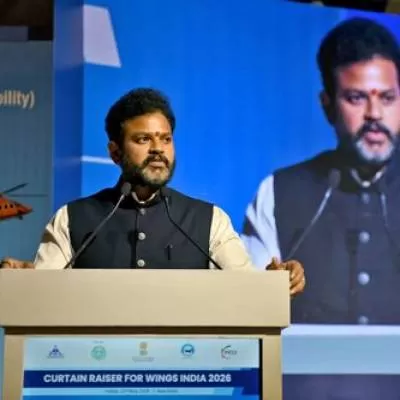
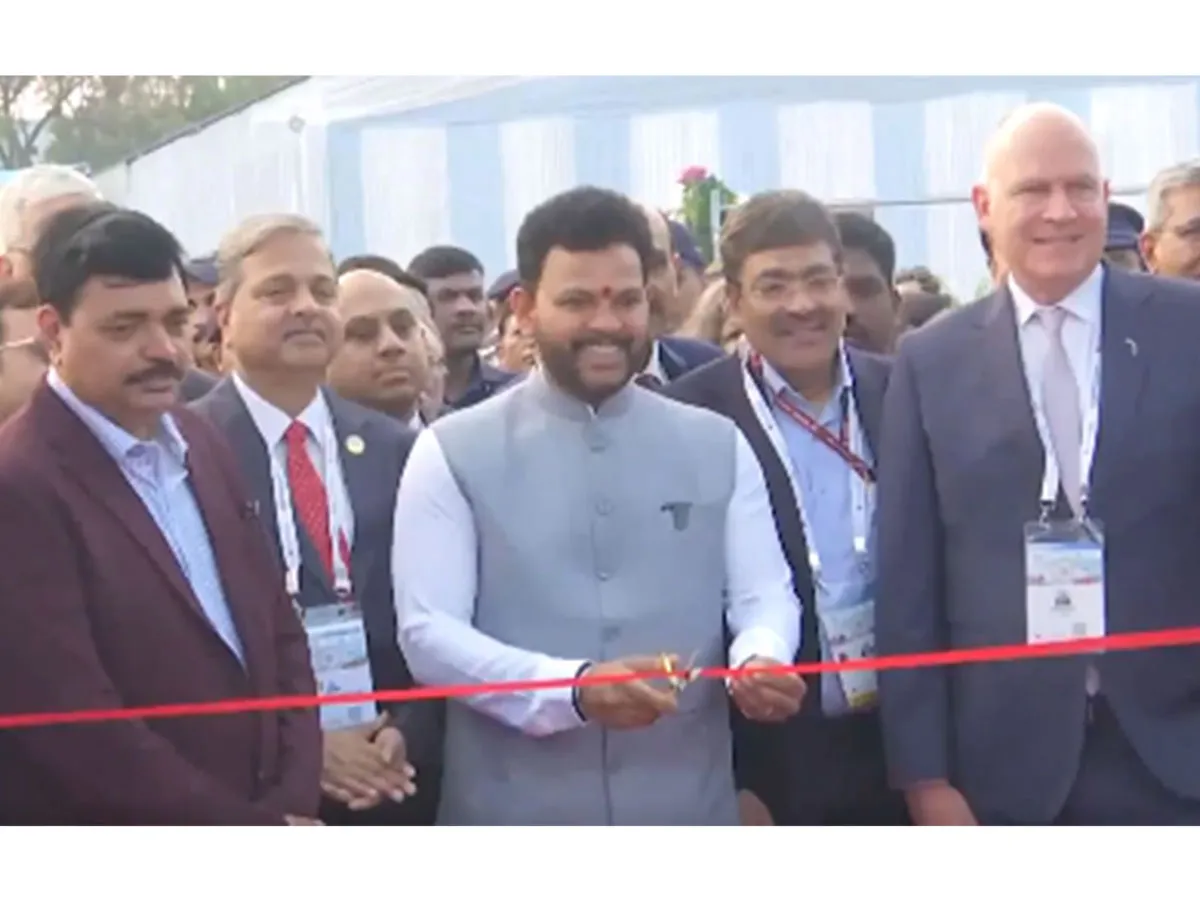
Union Civil Aviation Minister Ram Mohan Naidu Kinjarapu inaugurated Wings India 2026 at Begumpet Airport, marking the start of one of Asia’s largest aviation summits and bringing together stakeholders from across the global aviation ecosystem.

The biennial event runs until January 31 and serves as a key platform for dialogue on aviation policy, manufacturing, technology and investment. Speaking at the inauguration, Naidu described Wings India as the country’s most important aviation summit held every two years and among the largest in Asia. He also acknowledged the support of the Telangana government in hosting the event.

Highlighting the theme of the 2026 edition, the minister said the summit showcases India’s growing capabilities in civil aviation manufacturing and rising domestic demand. He noted that strengthening the manufacturing ecosystem remains a top priority for the government over the next decade, expressing confidence that India could emerge as a global exporter in civil aviation within the next 10–12 years.

Naidu also inaugurated the aircraft display at the venue, which includes a Boeing 787-9 aircraft configured for Air India. He described aircraft deliveries as one of the major bottlenecks in the aviation sector, adding that the induction of new aircraft would significantly boost India’s aviation industry and growth prospects.

On the sidelines of the summit, the minister held discussions with senior Airbus executives on integrating Indian micro, small and medium enterprises into global aviation supply chains. He met Wouter van Wersch, Executive Vice President International at Airbus, and Jurgen Westermeier, President and Managing Director of Airbus India and South Asia.

The discussions focused on strengthening collaboration between Airbus and Indian industry, particularly MSMEs, as India continues to position itself as a manufacturing and innovation hub for the global aerospace sector. Naidu said India has emerged as a convergence point for global original equipment manufacturers, innovation and investment, reflecting its expanding role in the international aviation ecosystem.

Union Civil Aviation Minister Ram Mohan Naidu Kinjarapu inaugurated Wings India 2026 at Begumpet Airport, marking the start of one of Asia’s largest aviation summits and bringing together stakeholders from across the global aviation ecosystem. The biennial event runs until January 31 and serves as a key platform for dialogue on aviation policy, manufacturing, technology and investment. Speaking at the inauguration, Naidu described Wings India as the country’s most important aviation summit held every two years and among the largest in Asia. He also acknowledged the support of the Telangana government in hosting the event. Highlighting the theme of the 2026 edition, the minister said the summit showcases India’s growing capabilities in civil aviation manufacturing and rising domestic demand. He noted that strengthening the manufacturing ecosystem remains a top priority for the government over the next decade, expressing confidence that India could emerge as a global exporter in civil aviation within the next 10–12 years. Naidu also inaugurated the aircraft display at the venue, which includes a Boeing 787-9 aircraft configured for Air India. He described aircraft deliveries as one of the major bottlenecks in the aviation sector, adding that the induction of new aircraft would significantly boost India’s aviation industry and growth prospects. On the sidelines of the summit, the minister held discussions with senior Airbus executives on integrating Indian micro, small and medium enterprises into global aviation supply chains. He met Wouter van Wersch, Executive Vice President International at Airbus, and Jurgen Westermeier, President and Managing Director of Airbus India and South Asia. The discussions focused on strengthening collaboration between Airbus and Indian industry, particularly MSMEs, as India continues to position itself as a manufacturing and innovation hub for the global aerospace sector. Naidu said India has emerged as a convergence point for global original equipment manufacturers, innovation and investment, reflecting its expanding role in the international aviation ecosystem.

Next Story
Real Estate

Union Budge: Infra-Led Urban Shift

The Union Budget FY27 reinforces infrastructure-led urbanisation as the backbone of India’s real estate and housing growth. Higher public capital expenditure, City Economic Regions, risk-mitigation mechanisms and REIT-led asset monetisation are being widely viewed as long-term enablers, even as the industry continues to seek sharper supply-side reforms and affordability-focused measures. Here are a few industry insights:Dr Niranjan Hiranandani, Chairman, NAREDCO & Hiranandani Group“The Union Budget 2026-27 is growth-oriented and stability-focused, supporting consumption and aiming to s..

Next Story
Infrastructure Urban

Budget 2026 Charts Path for Infrastructure-Led, Tech-Driven Growth

The Union Budget 2026–27 signals strong continuity in India’s macroeconomic strategy, anchored in elevated public capital expenditure, fiscal discipline, and a sharper focus on manufacturing, infrastructure, and regional development. With capital outlay pegged at ₹12.2 lakh crore and a fiscal deficit target of around 4.3 per cent, the Budget balances growth ambition with stability, offering long-term visibility to investors and project developers.A dominant theme is the centrality of infrastructure as a multiplier for economic expansion. Public capex now accounts for over 3.3 per cent of..

Next Story
Infrastructure Energy

Tata Power Arm Crosses 10 GW EPC Milestone

Tata Power Renewable Energy Ltd (TPREL) has achieved a major milestone by executing 10 gigawatts of engineering, procurement and construction (EPC) renewable energy projects to date, reinforcing its position in India’s clean energy infrastructure sector. According to the company, the executed portfolio comprises 4.2 gigawatts of in-house projects and 5.8 gigawatts of third-party projects. Of the total 10 gigawatts commissioned so far, 9.7 gigawatts are solar projects and 290 megawatts are wind projects. In the first nine months of FY26, TPREL commissioned 1.88 gigawatts of EPC renewable en..

Advertisement

Subscribe to Our Newsletter

Get daily newsletters around different themes from Construction world.

STAY CONNECTED

Advertisement

Advertisement

Advertisement

Advertisement

Open In App