Apart from roads, we have identified the water sector as one of the great opportunities
ROADS & HIGHWAYS

Apart from roads, we have identified the water sector as one of the great opportunities


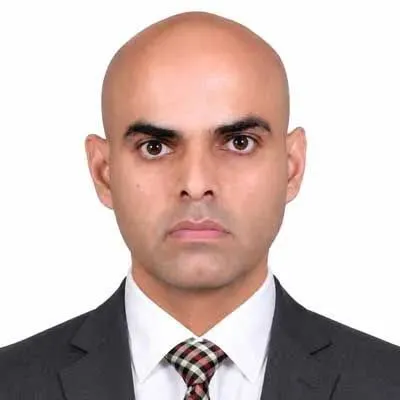
Part of the Welspun Group, Welspun Enterprises (WEL) was formed in its current form in 2015. WEL is unique as it focuses primarily on road HAM projects. WEL has seven road HAM projects in its portfolio with a total project value of Rs 85+ billion. The unexecuted order book at the end of FY19 stands at Rs 52+ billion. WEL is the first company to complete a HAM project – Delhi-Meerut Expressway (Package 1) – 11 months ahead of schedule, which was inaugurated by the Prime Minister in May 2018.Backed by a strong balance sheet with significant unleveraged cash balance,WEL is among the few infrastructure developers with long-term AA credit rating. Sandeep Garg, Managing Director & CEO, Welspun Enterprises, shares more….

Name one major challenge faced in FY2018-19. How did the company approach the same?
The past year-and-a-halfhas been particularly challenging for infrastructure developers.While the banking sector was passing through a challenging time owing to NPAs and regulatory changes, the situation was aggravated because of the crisis in the NBFC sector led by IL&FS, and further expanded to a few other private-sector housing finance companies. As a result, there was severe credit aversion in the financial sector during this period.A lot of developers faced difficulties in achieving financial closure for their HAM projects.Our strategy of ‘one step at a time’meant that we were typically undertaking financial closure for one project at a time. As a result of this,coupled with our strong balance sheet, WEL was able to successfully arrange timely funding for all its projects.

What is one decision you consider the biggest contributor to the company’s growth in FY2018-19?
There was a temporary slowdown in the bidding pipeline of NHAI in Q2-Q3 of last year. During this time, WEL diversified its client base by bidding selectively for HAM projects at the state level. We secured the Amravati (AM-2) project of PWD Maharashtra at a bid project cost of Rs 14.60 billion during this time. We will continue to selectively bid for HAM projects of a variety of clients.

Name one single factor you avoided that could otherwise have impacted the company’s topline and bottomline.
WEL is a strongly process-driven company and there is a clear expectation at all levels to deliver value to our stakeholders. We bid selectively for projects, and always bid at our internallymandated threshold IRR.Hence, wedo not compromise on our return expectations, even if it means not winning a project. We believe this creates maximum stakeholder value.

Going forward, what are your plans for the company’s growth in FY2019-20?
We will continue to proceed on our chosen focused path. In the roads sector, we will continue with our approach of execution excellence with an asset-light execution model for HAM projects. Project returns, rather than order booking, will be our mantra. On the execution front, we expect two of our HAM projects to achieve PCOD in FY2019-20, ahead of the contractual schedule.

Apart from roads, we have identified the water sector as one of the great opportunities. We continue to develop our capabilities in the sector, and will be bidding for HAM projects, focusing on bulk water transport, treatment and desalination. We will also look at opportunistic EPC play in this sector.

Part of the Welspun Group, Welspun Enterprises (WEL) was formed in its current form in 2015. WEL is unique as it focuses primarily on road HAM projects. WEL has seven road HAM projects in its portfolio with a total project value of Rs 85+ billion. The unexecuted order book at the end of FY19 stands at Rs 52+ billion. WEL is the first company to complete a HAM project – Delhi-Meerut Expressway (Package 1) – 11 months ahead of schedule, which was inaugurated by the Prime Minister in May 2018.Backed by a strong balance sheet with significant unleveraged cash balance,WEL is among the few infrastructure developers with long-term AA credit rating. Sandeep Garg, Managing Director & CEO, Welspun Enterprises, shares more….Name one major challenge faced in FY2018-19. How did the company approach the same?The past year-and-a-halfhas been particularly challenging for infrastructure developers.While the banking sector was passing through a challenging time owing to NPAs and regulatory changes, the situation was aggravated because of the crisis in the NBFC sector led by IL&FS, and further expanded to a few other private-sector housing finance companies. As a result, there was severe credit aversion in the financial sector during this period.A lot of developers faced difficulties in achieving financial closure for their HAM projects.Our strategy of ‘one step at a time’meant that we were typically undertaking financial closure for one project at a time. As a result of this,coupled with our strong balance sheet, WEL was able to successfully arrange timely funding for all its projects.What is one decision you consider the biggest contributor to the company’s growth in FY2018-19?There was a temporary slowdown in the bidding pipeline of NHAI in Q2-Q3 of last year. During this time, WEL diversified its client base by bidding selectively for HAM projects at the state level. We secured the Amravati (AM-2) project of PWD Maharashtra at a bid project cost of Rs 14.60 billion during this time. We will continue to selectively bid for HAM projects of a variety of clients.Name one single factor you avoided that could otherwise have impacted the company’s topline and bottomline.WEL is a strongly process-driven company and there is a clear expectation at all levels to deliver value to our stakeholders. We bid selectively for projects, and always bid at our internallymandated threshold IRR.Hence, wedo not compromise on our return expectations, even if it means not winning a project. We believe this creates maximum stakeholder value.Going forward, what are your plans for the company’s growth in FY2019-20?We will continue to proceed on our chosen focused path. In the roads sector, we will continue with our approach of execution excellence with an asset-light execution model for HAM projects. Project returns, rather than order booking, will be our mantra. On the execution front, we expect two of our HAM projects to achieve PCOD in FY2019-20, ahead of the contractual schedule.Apart from roads, we have identified the water sector as one of the great opportunities. We continue to develop our capabilities in the sector, and will be bidding for HAM projects, focusing on bulk water transport, treatment and desalination. We will also look at opportunistic EPC play in this sector.

Next Story
Infrastructure Transport

Large Format Store Planned At M G Road Metro Station

M G Road station in Bengaluru is set to host the city’s first large-format commercial and experience space, with planning led by Bangalore Metro Rail Corporation Limited. BMRCL has invited proposals to develop and operate a central business district destination at the Purple?Pink Line interchange. The plan positions the station as a commercial hub designed to serve a broad commuter base across the city. The proposal is part of a broader effort to activate transit nodes commercially. Tender documents set a minimum monthly rental of Rs 0.944 million (mn), inclusive of GST, for the large-format..

Next Story
Infrastructure Energy

Government Cancels Auction Of Eleven Critical Mineral Blocks

The government has cancelled the auction of 11 critical and strategic mineral blocks after receiving a poor investor response and failing to attract a sufficient number of qualified bidders. The decision represents a setback to plans to ramp up domestic exploration and production of critical minerals amid global supply chain disruptions and rising demand for materials used in clean energy and advanced technologies. The mines ministry issued an annulment notice setting out the reasons for the cancellations. The annulment notice indicated that the auction process for five mineral blocks was canc..

Next Story
Infrastructure Energy

Gujarat Pushes Biogas Growth With 193 Operational Units

Gujarat has operationalised 193 biogas plants across the state and is planning to add 60 more units as part of a broader push to scale up clean and sustainable energy solutions. The existing plants, established under various government-supported schemes, process organic waste including cattle dung and agricultural residue to produce biogas and a nutrient-rich slurry. The output is mainly used for cooking and other energy needs in rural and semi-urban communities, while also improving local waste management practices. The Gujarat Energy Development Agency (GEDA) is leading the initiative and is..

Advertisement

Subscribe to Our Newsletter

Get daily newsletters around different themes from Construction world.

STAY CONNECTED

Advertisement

Advertisement

Advertisement