Chennai Corporation To Create Digital Twin And Map 1,000 km Of Roads
ROADS & HIGHWAYS

Chennai Corporation To Create Digital Twin And Map 1,000 km Of Roads

The Greater Chennai Corporation has proposed a Digital Twin pilot for a central part of the city covering around five sq km that includes Nungambakkam, College Road, Greams Road and Anna Salai. The pilot is intended to advance data based urban planning and will be supported by an Urban Data Observatory and an infrastructure asset management system that are yet to be rolled out. The Integrated Command and Control Centre (ICCC) will feed operational data into the platform alongside information from city sensors and geographic information system (GIS) mapping.

The platform will use three dimensional and four dimensional simulation together with artificial intelligence for planning, analysis and scenario testing. Surveillance cameras will be installed at 100 storm water drain points across the city at an estimated cost of Rs 20 million (mn) to strengthen flood monitoring and early warning capabilities. The million (mn) unit is stated to facilitate later references to costings in the project documentation.

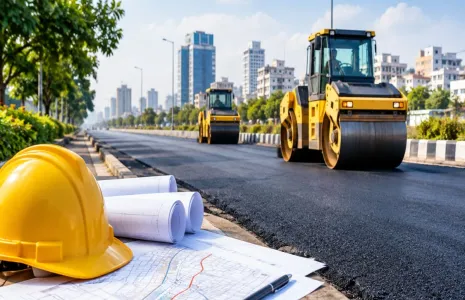
The GIS Cell will undertake a Light Detection and Ranging (LiDAR) survey covering around 1,000 km of bus route roads and key interior roads at an estimated cost of Rs 50 mn to generate high resolution road data. The survey will create digital maps to support traffic planning, maintenance prioritisation and asset inventories and the initial LiDAR mapping in the pilot phase will be carried out on Khader Nawaz Khan Road. The combined systems are intended to enable analysis of flood risk, traffic congestion and emergency situations and to improve interdepartmental planning and coordination.

Officials expect the integrated digital modelling and consolidated datasets to guide data driven decisions on infrastructure investments, maintenance cycles and flood mitigation measures. The platform is described as a tool to prioritise interventions, monitor outcomes and refine longer term urban resilience strategies. Departments will be able to draw on consolidated visualisations and analytics to manage resources and coordinate responses during extreme weather and other incidents.

The Greater Chennai Corporation has proposed a Digital Twin pilot for a central part of the city covering around five sq km that includes Nungambakkam, College Road, Greams Road and Anna Salai. The pilot is intended to advance data based urban planning and will be supported by an Urban Data Observatory and an infrastructure asset management system that are yet to be rolled out. The Integrated Command and Control Centre (ICCC) will feed operational data into the platform alongside information from city sensors and geographic information system (GIS) mapping. The platform will use three dimensional and four dimensional simulation together with artificial intelligence for planning, analysis and scenario testing. Surveillance cameras will be installed at 100 storm water drain points across the city at an estimated cost of Rs 20 million (mn) to strengthen flood monitoring and early warning capabilities. The million (mn) unit is stated to facilitate later references to costings in the project documentation. The GIS Cell will undertake a Light Detection and Ranging (LiDAR) survey covering around 1,000 km of bus route roads and key interior roads at an estimated cost of Rs 50 mn to generate high resolution road data. The survey will create digital maps to support traffic planning, maintenance prioritisation and asset inventories and the initial LiDAR mapping in the pilot phase will be carried out on Khader Nawaz Khan Road. The combined systems are intended to enable analysis of flood risk, traffic congestion and emergency situations and to improve interdepartmental planning and coordination. Officials expect the integrated digital modelling and consolidated datasets to guide data driven decisions on infrastructure investments, maintenance cycles and flood mitigation measures. The platform is described as a tool to prioritise interventions, monitor outcomes and refine longer term urban resilience strategies. Departments will be able to draw on consolidated visualisations and analytics to manage resources and coordinate responses during extreme weather and other incidents.

Related Stories

Gold Stories

Next Story
Infrastructure Urban

KONE Opens India's First Digital Experience Centre in Pune

KONE, a global elevator and escalator manufacturer, has inaugurated its first Digital Experience Centre (DEC) in India, located in Pune. The facility aims to showcase how artificial intelligence (AI), connectivity and data-driven technologies can enhance customer experiences and improve building operations.The centre was inaugurated by Jussi Herlin, Executive Vice Chair, KONE Corporation; Philippe Delorme, President and CEO, KONE; and Nandan Nilekani, Co-founder and Chairman of the Board, Infosys.Designed as an interactive customer environment, the facility demonstrates digital solutions cover..

Next Story
Infrastructure Urban

CII GreenCo Launches Circularity Guidelines for Indian Industry

The Confederation of Indian Industry (CII) GreenCo Council has launched the CII GreenCo Circularity Guidelines – Pilot Version at the 17th CII GreenCo Waste & Resource Management Summit 2026 in Chennai. The initiative aims to strengthen resource efficiency, waste reduction and circular economy practices across Indian manufacturing and process industries.The guidelines introduce a structured framework with circularity indices covering raw materials, consumables, packaging and other resource inputs. These indicators will help industries assess existing practices, identify opportunities to ..

Next Story
Infrastructure Energy

Global Electronics Association Launches IPC-1783-CO2E Standard

The Global Electronics Association has introduced IPC-1783-CO2E, a new international standard aimed at improving consistency, transparency and comparability in product carbon footprint reporting across the electronics manufacturing industry.The standard, titled International Standard for Data Collection and Reporting of CO2 Equivalent (CO2e) Emissions for the Electronics Manufacturing Supply Chain, provides industry-specific guidance for collecting, estimating and reporting carbon emissions data.With increasing regulatory requirements and customer expectations, electronics manufacturers face c..

Advertisement

Subscribe to Our Newsletter

Get daily newsletters around different themes from Construction world.

STAY CONNECTED

Advertisement

SPECIAL OFFER
QR Code