Mohan Yadav To Inspect Sleemanabad Water Tunnel In Katni
ROADS & HIGHWAYS

Mohan Yadav To Inspect Sleemanabad Water Tunnel In Katni

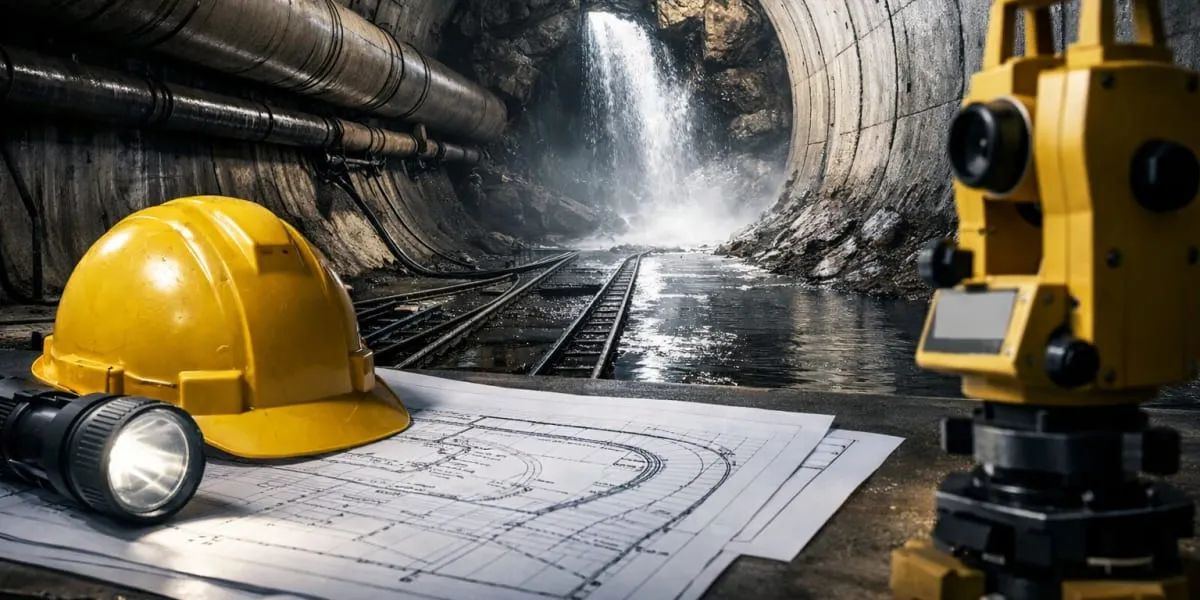
Chief Minister Mohan Yadav will inspect the Sleemanabad water tunnel in Katni district on Friday, a project described as the country's longest of its kind. The tunnel, one of the state's most ambitious irrigation undertakings, has reached the final stage of completion with only a one-metre breakthrough remaining. It is engineered to convey Narmada water by gravity through the Vindhya mountain range into the Son River basin. The scheme is being overseen by state departments responsible for irrigation and water resources.

The structure spans 11.952 km and is a key component of regional water transfer infrastructure. Upon completion 0.245 mn hectares across nearly 1,450 villages in Jabalpur, Katni, Maihar, Satna, Rewa and Panna districts will receive permanent irrigation facilities. The arrangement is intended to transform cropping patterns and bolster the agricultural economy of the Vindhya and Mahakaushal regions. The gravity-fed design removes dependence on energy-intensive pumping for large stretches of the network.

Officials describe the tunnel not merely as a mechanical conduit of concrete and stone but as a bridge with symbolic value for the region. Local folklore holds that the Narmada and Sonbhadra rivers originate in the Maikal range at Amarkantak and flowed in opposite directions, a separation that the scheme symbolically addresses. The project combines engineering scale with cultural resonance in communications from the state. Communications have highlighted both practical benefits and the project's symbolic restoration of the rivers' historical link.

The chief minister's inspection forms part of final verification and oversight ahead of formal commissioning arrangements by state agencies. Completion of the Sleemanabad tunnel will add a major gravity-fed conduit to the state's irrigation network and reduce reliance on lift irrigation for the beneficiary districts. Authorities have underscored the long-term economic and social benefits that permanent water supply will bring to farming communities. Local administrations will co-ordinate distribution networks to translate tunnel capacity into farm-level supply.

Chief Minister Mohan Yadav will inspect the Sleemanabad water tunnel in Katni district on Friday, a project described as the country's longest of its kind. The tunnel, one of the state's most ambitious irrigation undertakings, has reached the final stage of completion with only a one-metre breakthrough remaining. It is engineered to convey Narmada water by gravity through the Vindhya mountain range into the Son River basin. The scheme is being overseen by state departments responsible for irrigation and water resources. The structure spans 11.952 km and is a key component of regional water transfer infrastructure. Upon completion 0.245 mn hectares across nearly 1,450 villages in Jabalpur, Katni, Maihar, Satna, Rewa and Panna districts will receive permanent irrigation facilities. The arrangement is intended to transform cropping patterns and bolster the agricultural economy of the Vindhya and Mahakaushal regions. The gravity-fed design removes dependence on energy-intensive pumping for large stretches of the network. Officials describe the tunnel not merely as a mechanical conduit of concrete and stone but as a bridge with symbolic value for the region. Local folklore holds that the Narmada and Sonbhadra rivers originate in the Maikal range at Amarkantak and flowed in opposite directions, a separation that the scheme symbolically addresses. The project combines engineering scale with cultural resonance in communications from the state. Communications have highlighted both practical benefits and the project's symbolic restoration of the rivers' historical link. The chief minister's inspection forms part of final verification and oversight ahead of formal commissioning arrangements by state agencies. Completion of the Sleemanabad tunnel will add a major gravity-fed conduit to the state's irrigation network and reduce reliance on lift irrigation for the beneficiary districts. Authorities have underscored the long-term economic and social benefits that permanent water supply will bring to farming communities. Local administrations will co-ordinate distribution networks to translate tunnel capacity into farm-level supply.

Related Stories

Gold Stories

Next Story
Infrastructure Urban

KONE Opens India's First Digital Experience Centre in Pune

KONE, a global elevator and escalator manufacturer, has inaugurated its first Digital Experience Centre (DEC) in India, located in Pune. The facility aims to showcase how artificial intelligence (AI), connectivity and data-driven technologies can enhance customer experiences and improve building operations.The centre was inaugurated by Jussi Herlin, Executive Vice Chair, KONE Corporation; Philippe Delorme, President and CEO, KONE; and Nandan Nilekani, Co-founder and Chairman of the Board, Infosys.Designed as an interactive customer environment, the facility demonstrates digital solutions cover..

Next Story
Infrastructure Urban

CII GreenCo Launches Circularity Guidelines for Indian Industry

The Confederation of Indian Industry (CII) GreenCo Council has launched the CII GreenCo Circularity Guidelines – Pilot Version at the 17th CII GreenCo Waste & Resource Management Summit 2026 in Chennai. The initiative aims to strengthen resource efficiency, waste reduction and circular economy practices across Indian manufacturing and process industries.The guidelines introduce a structured framework with circularity indices covering raw materials, consumables, packaging and other resource inputs. These indicators will help industries assess existing practices, identify opportunities to ..

Next Story
Infrastructure Energy

Global Electronics Association Launches IPC-1783-CO2E Standard

The Global Electronics Association has introduced IPC-1783-CO2E, a new international standard aimed at improving consistency, transparency and comparability in product carbon footprint reporting across the electronics manufacturing industry.The standard, titled International Standard for Data Collection and Reporting of CO2 Equivalent (CO2e) Emissions for the Electronics Manufacturing Supply Chain, provides industry-specific guidance for collecting, estimating and reporting carbon emissions data.With increasing regulatory requirements and customer expectations, electronics manufacturers face c..

Advertisement

Subscribe to Our Newsletter

Get daily newsletters around different themes from Construction world.

STAY CONNECTED

Advertisement

SPECIAL OFFER
QR Code