
Mumbai-Pune Link May Cut Fuel Costs by Rs 2.72 Bn
ROADS & HIGHWAYS

Mumbai-Pune Link May Cut Fuel Costs by Rs 2.72 Bn

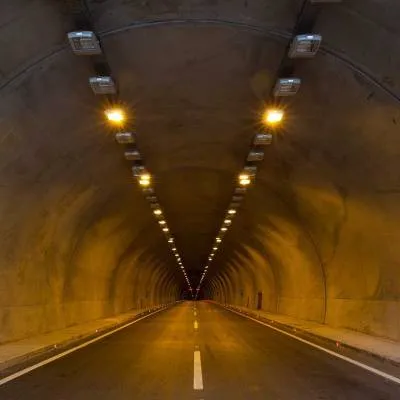
Intangles, an AI-powered predictive intelligence company focused on commercial vehicles, has released an analysis on the Mumbai-Pune corridor after the opening of the Connecting Link. The report estimates potential annual fuel savings of 2.7 crore litres, translating into nearly Rs 272 crore in fuel cost reduction across the corridor.

The study also estimates that lower fuel consumption could help avoid 64,905 metric tonnes of CO2 emissions every year. The findings highlight the economic and environmental benefits of smoother movement on a key corridor serving the Mumbai-Pune-Bangalore route and Maharashtra’s freight and passenger economy.

The analysis covered buses, MCV trucks, three-axle vehicles and multi-axle trucks. MCV trucks recorded an 18 per cent increase in average speed, a 19 per cent reduction in travel time and a 17 per cent drop in fuel consumption. Three-axle vehicles saw the highest travel time reduction at 20 per cent, while buses achieved the strongest fuel efficiency improvement at 24 per cent per trip.

Anup Patil, CEO, Intangles, said vehicle data can quantify infrastructure value in terms that matter to fleet operators, including litres saved, minutes recovered and emissions reduced. Hariharan Ravishankar, Chief AI Scientist, Intangles, added that the analysis used actual vehicle sensor streams and terrain-aware algorithms rather than fixed consumption assumptions.

The study tracked 1,849 commercial vehicles and more than 2,200 trips through the ghat section. It compared vehicle performance between 26 and 30 April 2026, before the link opened, and 2 to 15 May 2026, after the opening.

Intangles, an AI-powered predictive intelligence company focused on commercial vehicles, has released an analysis on the Mumbai-Pune corridor after the opening of the Connecting Link. The report estimates potential annual fuel savings of 2.7 crore litres, translating into nearly Rs 272 crore in fuel cost reduction across the corridor.The study also estimates that lower fuel consumption could help avoid 64,905 metric tonnes of CO2 emissions every year. The findings highlight the economic and environmental benefits of smoother movement on a key corridor serving the Mumbai-Pune-Bangalore route and Maharashtra’s freight and passenger economy.The analysis covered buses, MCV trucks, three-axle vehicles and multi-axle trucks. MCV trucks recorded an 18 per cent increase in average speed, a 19 per cent reduction in travel time and a 17 per cent drop in fuel consumption. Three-axle vehicles saw the highest travel time reduction at 20 per cent, while buses achieved the strongest fuel efficiency improvement at 24 per cent per trip.Anup Patil, CEO, Intangles, said vehicle data can quantify infrastructure value in terms that matter to fleet operators, including litres saved, minutes recovered and emissions reduced. Hariharan Ravishankar, Chief AI Scientist, Intangles, added that the analysis used actual vehicle sensor streams and terrain-aware algorithms rather than fixed consumption assumptions.The study tracked 1,849 commercial vehicles and more than 2,200 trips through the ghat section. It compared vehicle performance between 26 and 30 April 2026, before the link opened, and 2 to 15 May 2026, after the opening.

Related Stories

Gold Stories
Next Story
Resources

Schindler named among Forbes’ World’s Best Employers 2026

Schindler has been named among Forbes’ World’s Best Employers 2026, a global ranking recognising companies for their workplace environments.Compiled by Forbes in partnership with Statista, the ranking is based on independent employee feedback, including whether employees would recommend their organisation to friends and family.The company said the recognition reflected its focus on creating a workplace where employees can develop their expertise and build careers. ..

Next Story
Infrastructure Urban

India needs an export-execution mindset: Vishesh Jain

Interview with Vishesh Jain, Founder & CEO, EximpleWhat gaps in India’s global trade ecosystem led you to build Eximple, and what problem did you see businesses struggling with most?Eximple came out of a problem that all three founders had seen from different choke points in the trade ecosystem. India has millions of MSMEs and manufacturers, and many of them can make products that are genuinely competitive on quality. Yet only a small fraction is able to build meaningful international businesses. In our experience, the gap is usually not manufacturing capability; it is the ability to exe..

Next Story
Building Material

Nuvoco reports 13.5% revenue growth in Q2 FY27

Nuvoco Vistas Corp. Ltd. reported consolidated revenue of Rs 27.9 billion for Q2 FY27, up 13.5% year on year. Cement sales volume rose 9% to 4.7 million tonnes (MMT), while EBITDA increased 11% to Rs 4.11 billion.The company said it began its cement operations in 2014 with a 2.3 MMT per annum (MMTPA) operation at Nimbol. It now aims to reach 35 MMTPA of cement capacity by FY28, nearly 15 times its initial capacity. Its portfolio spans cement, ready-mix concrete and modern building materials.On sustainability and cost efficiency, Nuvoco partnered with CleanMax for a 46.4 MW wind-solar hybrid re..

Advertisement

Subscribe to Our Newsletter

Get daily newsletters around different themes from Construction world.

STAY CONNECTED

Advertisement

SPECIAL OFFER
QR Code