+
NHAI Monetisation Set To Gain Rs 200 bn From BOT Revival
ROADS & HIGHWAYS

NHAI Monetisation Set To Gain Rs 200 bn From BOT Revival

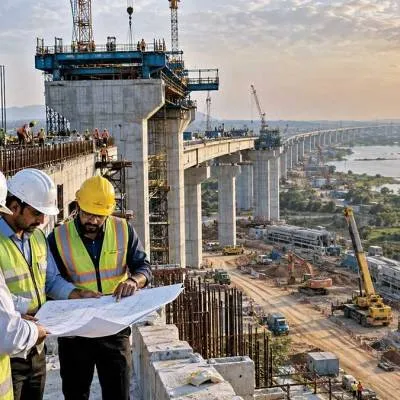
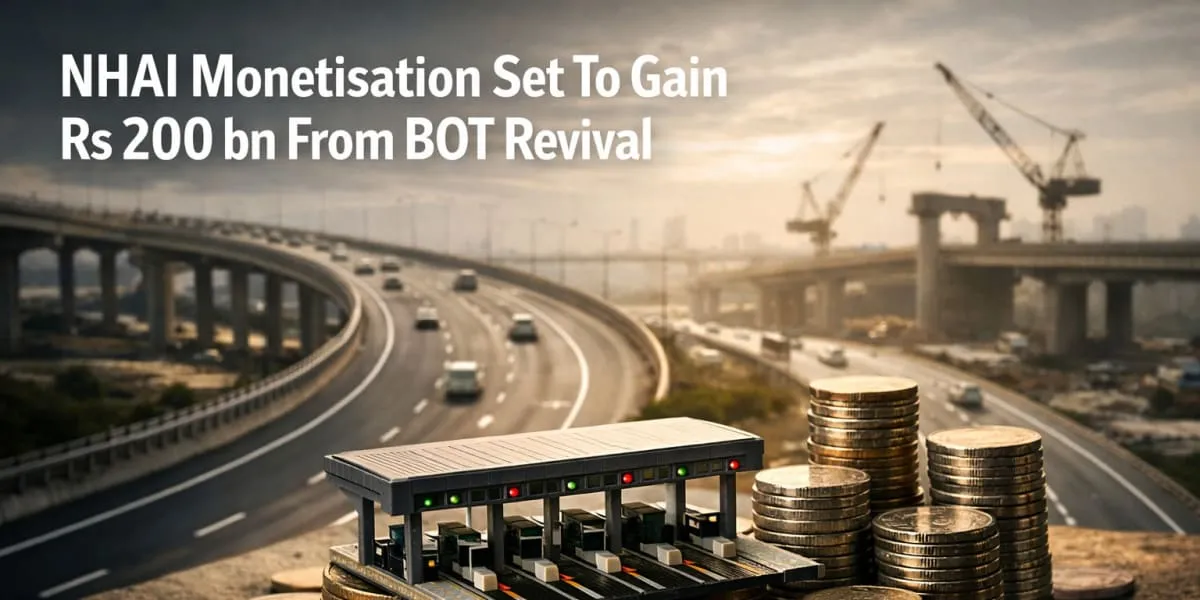
National Highways Authority of India is exploring a renewed emphasis on the Build-Operate-Transfer (BOT) model as part of its highway monetisation programme, industry sources say. Reports indicate that a revival of the BOT approach could generate about Rs 200 billion (bn) in additional receipts, strengthening NHAI's financial position and supporting future infrastructure investment. The potential boost comes as authorities seek to diversify funding for large-scale road projects.

Over recent years NHAI relied on a mix of toll-operate-transfer transactions, infrastructure investment trusts and borrowings alongside budgetary support to finance construction and upkeep. The Build-Operate-Transfer model allows private developers to finance, build, operate and maintain roads for a fixed concession period before transferring assets back to the government. Renewed investor interest reflects improving traffic volumes, stronger economic growth and more balanced risk-sharing arrangements that reduce developer exposure.

Officials expect that expanding BOT projects will ease the fiscal burden on public agencies while accelerating project delivery, since private partners provide capital at the outset and recover costs via toll collections and concession revenues. The approach is poised to complement NHAI's asset monetisation strategy as mature highway assets generate predictable revenue streams that attract institutional investors. Encouraging private participation at both construction and operational stages could create a more resilient infrastructure financing ecosystem.

Market participants have pointed to lower execution risks and improved project structuring as factors that make highway investments more attractive to domestic and international firms. A larger BOT pipeline may unlock fresh capital and broaden monetisation options, potentially enabling NHAI to surpass existing realisation targets. If adopted at scale the combined strategy of asset recycling and greater private involvement could mark a notable evolution in the financing of road infrastructure.

National Highways Authority of India is exploring a renewed emphasis on the Build-Operate-Transfer (BOT) model as part of its highway monetisation programme, industry sources say. Reports indicate that a revival of the BOT approach could generate about Rs 200 billion (bn) in additional receipts, strengthening NHAI's financial position and supporting future infrastructure investment. The potential boost comes as authorities seek to diversify funding for large-scale road projects. Over recent years NHAI relied on a mix of toll-operate-transfer transactions, infrastructure investment trusts and borrowings alongside budgetary support to finance construction and upkeep. The Build-Operate-Transfer model allows private developers to finance, build, operate and maintain roads for a fixed concession period before transferring assets back to the government. Renewed investor interest reflects improving traffic volumes, stronger economic growth and more balanced risk-sharing arrangements that reduce developer exposure. Officials expect that expanding BOT projects will ease the fiscal burden on public agencies while accelerating project delivery, since private partners provide capital at the outset and recover costs via toll collections and concession revenues. The approach is poised to complement NHAI's asset monetisation strategy as mature highway assets generate predictable revenue streams that attract institutional investors. Encouraging private participation at both construction and operational stages could create a more resilient infrastructure financing ecosystem. Market participants have pointed to lower execution risks and improved project structuring as factors that make highway investments more attractive to domestic and international firms. A larger BOT pipeline may unlock fresh capital and broaden monetisation options, potentially enabling NHAI to surpass existing realisation targets. If adopted at scale the combined strategy of asset recycling and greater private involvement could mark a notable evolution in the financing of road infrastructure.

Related Stories

Gold Stories
Next Story
Infrastructure Transport

97 Per Cent Of Rongjeng-Mangsang-Adokgre Road Nears Completion

Deputy Chief Minister in-charge of public works Prestone Tynsong said in Shillong on 26 August that 97 per cent physical progress had been achieved on the ongoing Rongjeng-Mangsang-Adokgre road being constructed under the Non-Lapsable Central Pool of Resources (NLCPR). He noted the project was sanctioned in 2017 and that the stipulated time for completion had been 24 months from issue of the final work order. The deputy chief minister informed the assembly that the government had decided to include the remaining work under a World Bank project. In reply to a query from Rongjeng MLA Jim M Sangm..

Next Story
Infrastructure Transport

First TBM Starts Digging Five Point Three Kilometre Tunnel Under SGNP

The Goregaon-Mulund Link Road (GMLR) Phase three (B) project has reached a key milestone as the first tunnel boring machine (TBM) began excavation of the first of two tunnels beneath the Sanjay Gandhi National Park (SGNP). The machine, named Tulsi, started cutting a five point three kilometre bore that will link Dadasaheb Phalke Chitranagari in Goregaon East with Amar Nagar in Mulund West. Officials issued a statement noting the commencement of tunnelling work under the protected green belt. The twin tunnels are being constructed using mechanised tunnelling methods that aim to limit surface di..

Next Story
Infrastructure Transport

UP Approves Two Expressways And Rs 240 bn Infrastructure Push

The Uttar Pradesh Cabinet approved a series of infrastructure and industrial investment proposals totalling Rs 240 billion (Rs 240 bn), including two major expressway projects, a manufacturing and logistics cluster in Sultanpur and incentives for 11 industrial projects across the state. The decisions, taken at a meeting chaired by Chief Minister Yogi Adityanath, underline the state government’s focus on expanding road connectivity around emerging industrial hubs while attracting manufacturing investment to districts beyond major urban centres. The approvals cover both greenfield expressway c..

Advertisement

Subscribe to Our Newsletter

Get daily newsletters around different themes from Construction world.

STAY CONNECTED

Advertisement

SPECIAL OFFER
QR Code