PAC Reviews Toll Levy And Road Quality As NHAI Addresses Concerns
ROADS & HIGHWAYS

PAC Reviews Toll Levy And Road Quality As NHAI Addresses Concerns

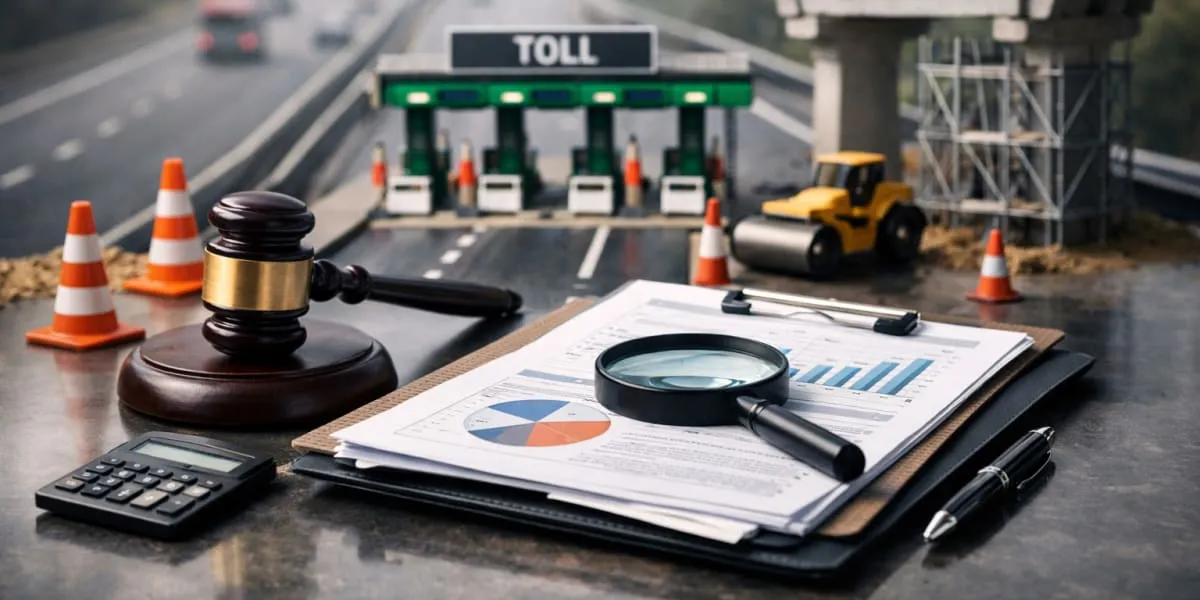
The Public Accounts Committee (PAC) on Wednesday reviewed the levy and regulation of toll fees, tariffs and user charges on public infrastructure, focusing on road safety, toll collection, construction quality and infrastructure financing. The session included officials from the Ministry of Road Transport and Highways (MoRTH), the National Highways Authority of India (NHAI), audit authorities and concerned organisations. The committee examined regulatory frameworks and operational practices governing tolling and maintenance of national highways. The review formed part of broader parliamentary oversight of public expenditure.

The meeting was chaired by Congress MP K C Venugopal, who described the discussions as productive and noted that the committee reviewed multiple issues related to infrastructure development and highway quality. He said the NHAI had presented a report addressing several previously identified shortcomings in design and construction and that some major concerns were resolved. The committee considered the responses from the authority and sought clarification on implementation timelines and monitoring mechanisms. Officials outlined steps to improve construction standards and toll collection.

The agenda item was titled levy and regulation of fees, tariffs and user charges on public infrastructure and other public utilities, and the committee heard oral evidence from representatives of MoRTH, NHAI and concerned organisations after an initial briefing by audit authorities. Discussions examined road safety measures, the effectiveness of tolling systems, and measures to ensure the quality and durability of highway construction. The exchange encompassed financing arrangements, contract management and accountability in project delivery. Members probed whether current oversight mechanisms and audit recommendations were being implemented effectively.

The meeting followed a PAC sitting on July two that had considered implementation and effectiveness of centrally sponsored welfare schemes in the education sector, and members indicated continued oversight of central expenditure and scheme delivery. The committee signalled that it would monitor corrective measures and expected follow up reports on quality audits and tolling reforms. Officials were asked to provide timelines and supporting evidence for remedial actions and monitoring enhancements. Further hearings were scheduled to ensure that recommendations were translated into on-ground improvements.

The Public Accounts Committee (PAC) on Wednesday reviewed the levy and regulation of toll fees, tariffs and user charges on public infrastructure, focusing on road safety, toll collection, construction quality and infrastructure financing. The session included officials from the Ministry of Road Transport and Highways (MoRTH), the National Highways Authority of India (NHAI), audit authorities and concerned organisations. The committee examined regulatory frameworks and operational practices governing tolling and maintenance of national highways. The review formed part of broader parliamentary oversight of public expenditure. The meeting was chaired by Congress MP K C Venugopal, who described the discussions as productive and noted that the committee reviewed multiple issues related to infrastructure development and highway quality. He said the NHAI had presented a report addressing several previously identified shortcomings in design and construction and that some major concerns were resolved. The committee considered the responses from the authority and sought clarification on implementation timelines and monitoring mechanisms. Officials outlined steps to improve construction standards and toll collection. The agenda item was titled levy and regulation of fees, tariffs and user charges on public infrastructure and other public utilities, and the committee heard oral evidence from representatives of MoRTH, NHAI and concerned organisations after an initial briefing by audit authorities. Discussions examined road safety measures, the effectiveness of tolling systems, and measures to ensure the quality and durability of highway construction. The exchange encompassed financing arrangements, contract management and accountability in project delivery. Members probed whether current oversight mechanisms and audit recommendations were being implemented effectively. The meeting followed a PAC sitting on July two that had considered implementation and effectiveness of centrally sponsored welfare schemes in the education sector, and members indicated continued oversight of central expenditure and scheme delivery. The committee signalled that it would monitor corrective measures and expected follow up reports on quality audits and tolling reforms. Officials were asked to provide timelines and supporting evidence for remedial actions and monitoring enhancements. Further hearings were scheduled to ensure that recommendations were translated into on-ground improvements.

Related Stories

Gold Stories

Next Story
Infrastructure Urban

KONE Opens India's First Digital Experience Centre in Pune

KONE, a global elevator and escalator manufacturer, has inaugurated its first Digital Experience Centre (DEC) in India, located in Pune. The facility aims to showcase how artificial intelligence (AI), connectivity and data-driven technologies can enhance customer experiences and improve building operations.The centre was inaugurated by Jussi Herlin, Executive Vice Chair, KONE Corporation; Philippe Delorme, President and CEO, KONE; and Nandan Nilekani, Co-founder and Chairman of the Board, Infosys.Designed as an interactive customer environment, the facility demonstrates digital solutions cover..

Next Story
Infrastructure Urban

CII GreenCo Launches Circularity Guidelines for Indian Industry

The Confederation of Indian Industry (CII) GreenCo Council has launched the CII GreenCo Circularity Guidelines – Pilot Version at the 17th CII GreenCo Waste & Resource Management Summit 2026 in Chennai. The initiative aims to strengthen resource efficiency, waste reduction and circular economy practices across Indian manufacturing and process industries.The guidelines introduce a structured framework with circularity indices covering raw materials, consumables, packaging and other resource inputs. These indicators will help industries assess existing practices, identify opportunities to ..

Next Story
Infrastructure Energy

Global Electronics Association Launches IPC-1783-CO2E Standard

The Global Electronics Association has introduced IPC-1783-CO2E, a new international standard aimed at improving consistency, transparency and comparability in product carbon footprint reporting across the electronics manufacturing industry.The standard, titled International Standard for Data Collection and Reporting of CO2 Equivalent (CO2e) Emissions for the Electronics Manufacturing Supply Chain, provides industry-specific guidance for collecting, estimating and reporting carbon emissions data.With increasing regulatory requirements and customer expectations, electronics manufacturers face c..

Advertisement

Subscribe to Our Newsletter

Get daily newsletters around different themes from Construction world.

STAY CONNECTED

Advertisement

SPECIAL OFFER
QR Code