
PAC Reviews Toll Levy And Road Quality
ROADS & HIGHWAYS

PAC Reviews Toll Levy And Road Quality

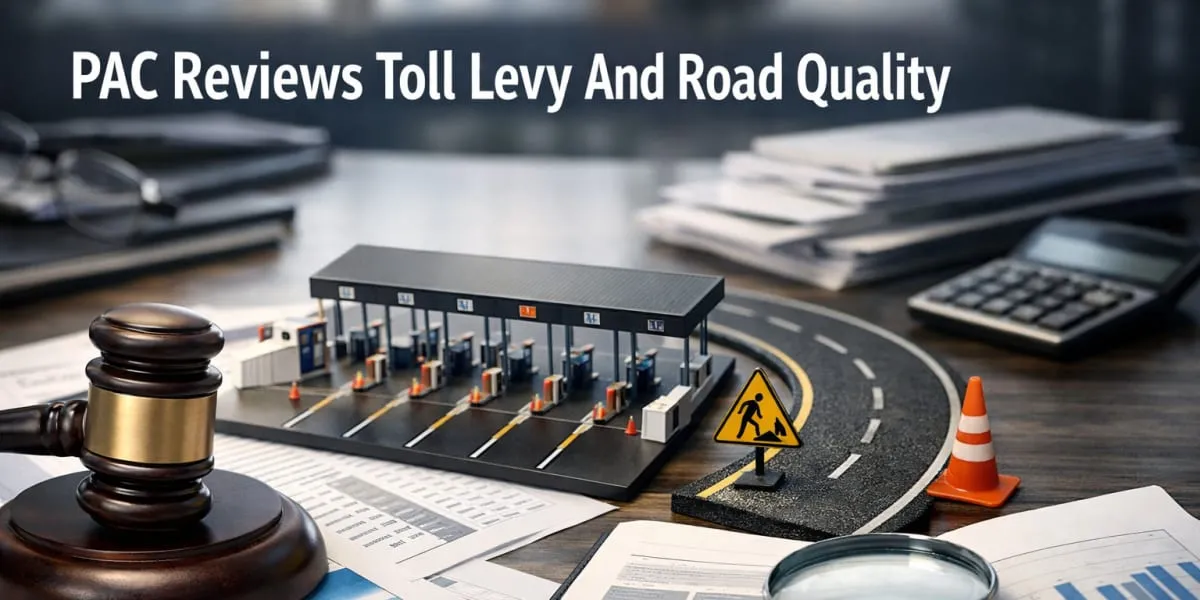
The Public Accounts Committee reviewed the levy and regulation of toll fees, tariffs and user charges on public infrastructure and utilities in a sitting on July 15. The meeting was chaired by Congress MP and PAC chairperson K.C. Venugopal and gathered officials from the Ministry of Road Transport and Highways, the National Highways Authority of India and audit authorities alongside representatives of other concerned organisations. The session formed part of routine parliamentary oversight.

Discussions during the meeting emphasised road safety, toll collection mechanisms, construction quality and the broader implications for infrastructure financing. The committee examined a subject formally titled levy and regulation of fees, tariffs and user charges on public infrastructure and other public utilities, considering past audit findings and implementation gaps. The proceedings commenced with a detailed briefing by audit authorities and proceeded to oral evidence from ministry and NHAI representatives that outlined corrective actions and current procedural arrangements.

Venugopal described the exchanges as productive and noted that the committee had reviewed issues relating to infrastructure development, toll collection arrangements and the quality of national highways. He conveyed that the National Highways Authority of India had acknowledged shortcomings in design and construction highlighted in earlier reports and had placed a report before the committee detailing remedial steps. The committee recorded that several major concerns raised previously had been addressed, while others required ongoing follow up and verification.

The PAC noted that the meeting followed a prior sitting on July two which reviewed implementation and effectiveness of centrally sponsored welfare schemes in the education sector, underscoring the committee's continuing mandate over public expenditure. Members emphasised the need for sustained monitoring of tolling systems, construction standards and road safety measures to safeguard users and public investment. Further oversight and periodic reporting were indicated as necessary to ensure compliance and accountability.

The Public Accounts Committee reviewed the levy and regulation of toll fees, tariffs and user charges on public infrastructure and utilities in a sitting on July 15. The meeting was chaired by Congress MP and PAC chairperson K.C. Venugopal and gathered officials from the Ministry of Road Transport and Highways, the National Highways Authority of India and audit authorities alongside representatives of other concerned organisations. The session formed part of routine parliamentary oversight. Discussions during the meeting emphasised road safety, toll collection mechanisms, construction quality and the broader implications for infrastructure financing. The committee examined a subject formally titled levy and regulation of fees, tariffs and user charges on public infrastructure and other public utilities, considering past audit findings and implementation gaps. The proceedings commenced with a detailed briefing by audit authorities and proceeded to oral evidence from ministry and NHAI representatives that outlined corrective actions and current procedural arrangements. Venugopal described the exchanges as productive and noted that the committee had reviewed issues relating to infrastructure development, toll collection arrangements and the quality of national highways. He conveyed that the National Highways Authority of India had acknowledged shortcomings in design and construction highlighted in earlier reports and had placed a report before the committee detailing remedial steps. The committee recorded that several major concerns raised previously had been addressed, while others required ongoing follow up and verification. The PAC noted that the meeting followed a prior sitting on July two which reviewed implementation and effectiveness of centrally sponsored welfare schemes in the education sector, underscoring the committee's continuing mandate over public expenditure. Members emphasised the need for sustained monitoring of tolling systems, construction standards and road safety measures to safeguard users and public investment. Further oversight and periodic reporting were indicated as necessary to ensure compliance and accountability.

Related Stories

Gold Stories
Next Story
Infrastructure Urban

Vedanta Metal Bazaar Expands to Global Markets

Vedanta Aluminium has expanded its digital e-commerce platform, Vedanta Metal Bazaar, to international markets, enabling overseas customers to order and purchase aluminium products online.The platform will now be available to buyers across Asia, Europe, Africa and the Americas, providing a digital gateway for export transactions with 24x7 access.In FY26, Vedanta Metal Bazaar processed transactions worth nearly $4.1 billion, or over Rs 380 billion, and fulfilled more than 23,000 orders. The platform is also used regularly by more than 550 MSMEs in India alongside large OEM customers.The export ..

Next Story
Infrastructure Urban

Ramky Infrastructure Q1 FY27 Revenue Rises 24.3%

Ramky Infrastructure Limited reported a 24.3% year-on-year increase in consolidated revenue from operations to Rs 471.2 crore for Q1 FY27, compared with Rs 3.79 billion in the corresponding quarter of FY26.Standalone revenue from operations rose 27.5% YoY to Rs 4.51 billion from Rs 3.54 billion, while total standalone income increased 35% to Rs 5.32 billion.Consolidated profit before tax stood at Rs 540.9 million during the quarter. The company highlighted a sharp sequential improvement compared with a pre-exceptional loss of Rs 190.1 million in Q4 FY26.Two of the three projects awarded during..

Next Story
Technology

LTTS Launches AgenticIQ AI Platform for Engineering

L&T Technology Services (LTTS) has launched AgenticIQ, an end-to-end agentic AI platform designed for engineering and manufacturing organisations.The platform is aimed at helping enterprises move beyond isolated AI pilots by enabling autonomous, multi-agent workflows across engineering, product development, manufacturing, industrial operations and customer experience.AgenticIQ is built on LTTS’ Engineering Intelligence portfolio and converts existing engineering capabilities into specialised, reusable AI agents. Its planning-first architecture is embedded into engineering and production ..

Advertisement

Subscribe to Our Newsletter

Get daily newsletters around different themes from Construction world.

STAY CONNECTED

Advertisement

Advertisement

Advertisement