Project BRAHMANK Marks 16 Years Of Strategic Roads In Arunachal
ROADS & HIGHWAYS

Project BRAHMANK Marks 16 Years Of Strategic Roads In Arunachal

Project BRAHMANK is marking 16 years of work to establish strategic road and bridge links across Arunachal Pradesh, maintaining and developing 811 kilometres of roads and nearly 86 bridges that range from small culverts to large steel and arch bridges. These transport links are described as critical for ensuring year-round movement of defence personnel, equipment and essential supplies while improving everyday travel for people in remote villages. The project balances national security requirements with regional development by focusing on reliable access in challenging terrain.

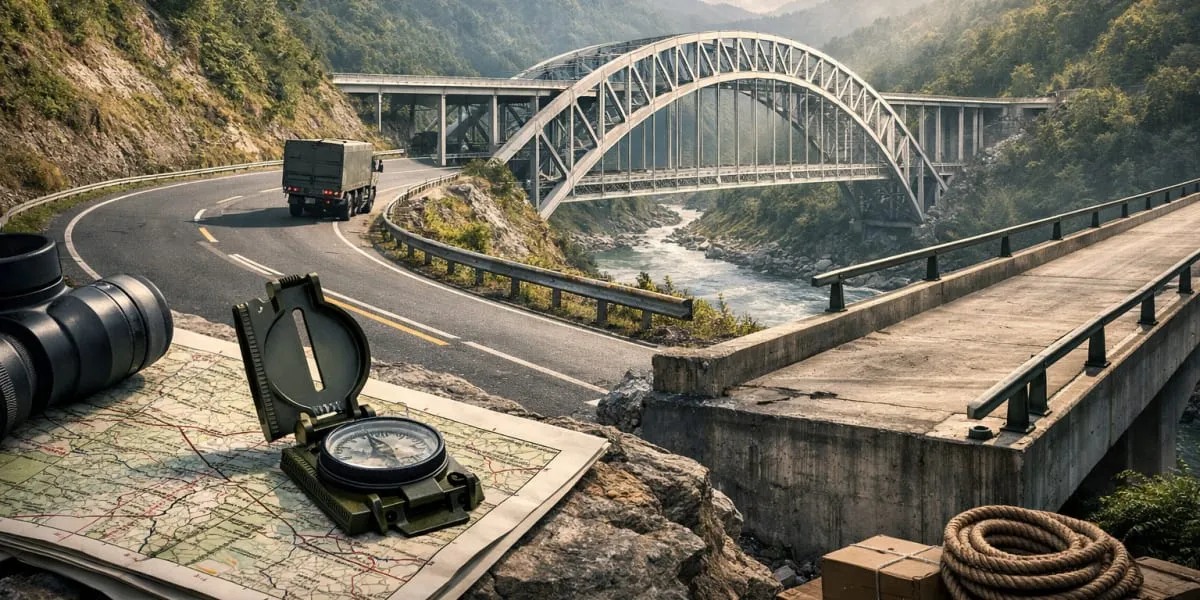
Notable engineering achievements include a 100-metre steel arch bridge over Siyom Nallah and a 165-metre pre-stressed concrete bridge over Simang Nallah on the Along-Yingkiong Road, which have eased river crossings and supported faster, safer transportation in strategic areas. Constructing such structures has required teams to overcome unstable terrain, landslides, heavy monsoon rains and limited access to construction materials, necessitating specialised methods and logistics. Despite these conditions, the project has continued to expand road networks that connect isolated communities with health, education and market centres.

During the 2025-26 financial year the project completed and inaugurated 13 bridges with a combined span of 390 metres across the Siang and Siyom valleys and finished blacktopping work on 61 kilometres of road to National Highways Development Level specifications. Upgraded surfaces are said to reduce travel time and improve year-round access in areas prone to frequent rainfall and difficult weather. New helipads were also developed to enhance connectivity where road access remains limited and to support emergency and logistical operations.

Sainik Sammelans and troop interaction sessions were held to recognise service and strengthen bonds among personnel who have operated since the formation of Project BRAHMANK, which was raised on 29 June 2011 at Ranaghat and became fully functional on 3 December 2011. Over the past 15 years teams have worked under demanding field conditions to deliver infrastructure that supports security while connecting villages with essential services. The project continues to play an important role in reinforcing border infrastructure and supporting socio-economic development in remote parts of the Northeast.

Project BRAHMANK is marking 16 years of work to establish strategic road and bridge links across Arunachal Pradesh, maintaining and developing 811 kilometres of roads and nearly 86 bridges that range from small culverts to large steel and arch bridges. These transport links are described as critical for ensuring year-round movement of defence personnel, equipment and essential supplies while improving everyday travel for people in remote villages. The project balances national security requirements with regional development by focusing on reliable access in challenging terrain. Notable engineering achievements include a 100-metre steel arch bridge over Siyom Nallah and a 165-metre pre-stressed concrete bridge over Simang Nallah on the Along-Yingkiong Road, which have eased river crossings and supported faster, safer transportation in strategic areas. Constructing such structures has required teams to overcome unstable terrain, landslides, heavy monsoon rains and limited access to construction materials, necessitating specialised methods and logistics. Despite these conditions, the project has continued to expand road networks that connect isolated communities with health, education and market centres. During the 2025-26 financial year the project completed and inaugurated 13 bridges with a combined span of 390 metres across the Siang and Siyom valleys and finished blacktopping work on 61 kilometres of road to National Highways Development Level specifications. Upgraded surfaces are said to reduce travel time and improve year-round access in areas prone to frequent rainfall and difficult weather. New helipads were also developed to enhance connectivity where road access remains limited and to support emergency and logistical operations. Sainik Sammelans and troop interaction sessions were held to recognise service and strengthen bonds among personnel who have operated since the formation of Project BRAHMANK, which was raised on 29 June 2011 at Ranaghat and became fully functional on 3 December 2011. Over the past 15 years teams have worked under demanding field conditions to deliver infrastructure that supports security while connecting villages with essential services. The project continues to play an important role in reinforcing border infrastructure and supporting socio-economic development in remote parts of the Northeast.

Next Story
Technology

AI-Enabled Workflows Lift Profitability and Productivity

Organisations modernising frontline workflows with artificial intelligence, automation and real-time data are reporting stronger financial performance, higher productivity and improved employee engagement, according to a global study by Zebra Technologies and Oxford Economics.The research covered 1,000 senior leaders across retail, manufacturing, transportation and logistics in the US, Mexico, the UK, Germany, India, Japan, Australia and New Zealand.In transportation and logistics, 54 per cent of companies that improved picking and packing operations reported faster operational performance, wh..

Next Story
Real Estate

India Leads Global AI Readiness but Implementation Lags

Indian companies lead global averages across all eight artificial intelligence readiness indicators tracked by JLL, but only 19 per cent have started making changes to their workplaces, according to the JLL 2026 Future of Work Survey.The study found that 77 per cent of Indian business leaders expect AI to change their office requirements, creating a 58-percentage-point gap between awareness and implementation. The survey covered more than 2,200 CEOs, CFOs and real estate leaders across 21 countries during the first quarter of 2026.Despite concerns over automation, 58 per cent of Indian leaders..

Next Story
Equipment

Three WOLFF Cranes Build Riyadh Cable-Stayed Bridges

Three WOLFF 180 B luffing jib cranes are supporting the construction of two cable-stayed bridges alongside the existing Wadi Laban Bridge in Riyadh, Saudi Arabia. The project is being developed for the Royal Commission for Riyadh City and executed by the ICRC joint venture comprising IC Ictas and Al Rashid Trading & Contracting Company.The cranes are handling lifting operations including formwork, reinforcement, concrete placement, work platforms, surveying equipment and other construction materials. Each crane is fitted with a 40 m jib, reaches a hook height of 157 m and offers a maximum ..

Advertisement

Subscribe to Our Newsletter

Get daily newsletters around different themes from Construction world.

STAY CONNECTED

Advertisement

Advertisement

Advertisement