Pune Elevated Corridors to Use Advanced Bridge Method
ROADS & HIGHWAYS

Pune Elevated Corridors to Use Advanced Bridge Method

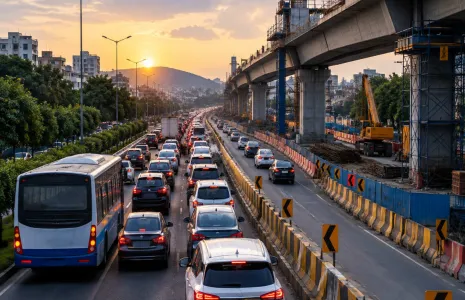
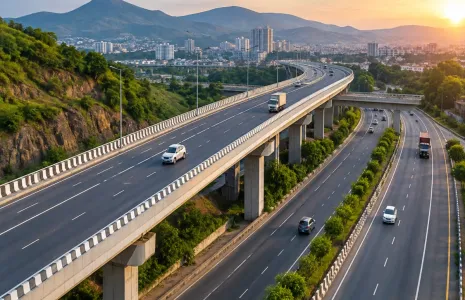
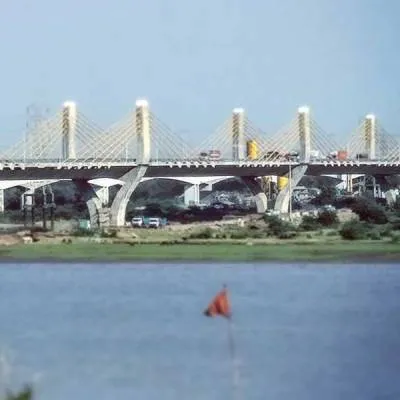
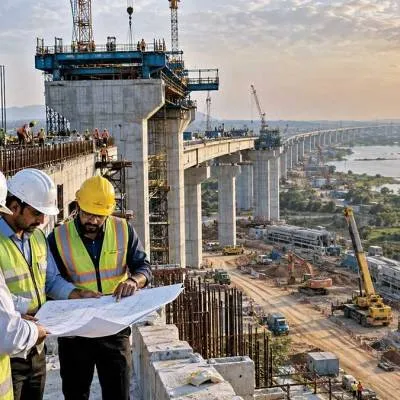
Three major elevated road corridors planned across Pune district are to adopt an advanced bridge construction method designed to reduce structural footprints, lower project costs and accelerate delivery. The corridors on the Pune-Shirur, Hadapsar-Yavat and Talegaon-Chakan-Shikrapur routes seek to ease congestion and strengthen links between Pune and neighbouring economic centres. The schemes are set to use Ultra High Performance Fibre Reinforced Concrete (UHPFRC), an engineering material that enables longer spans between supports.

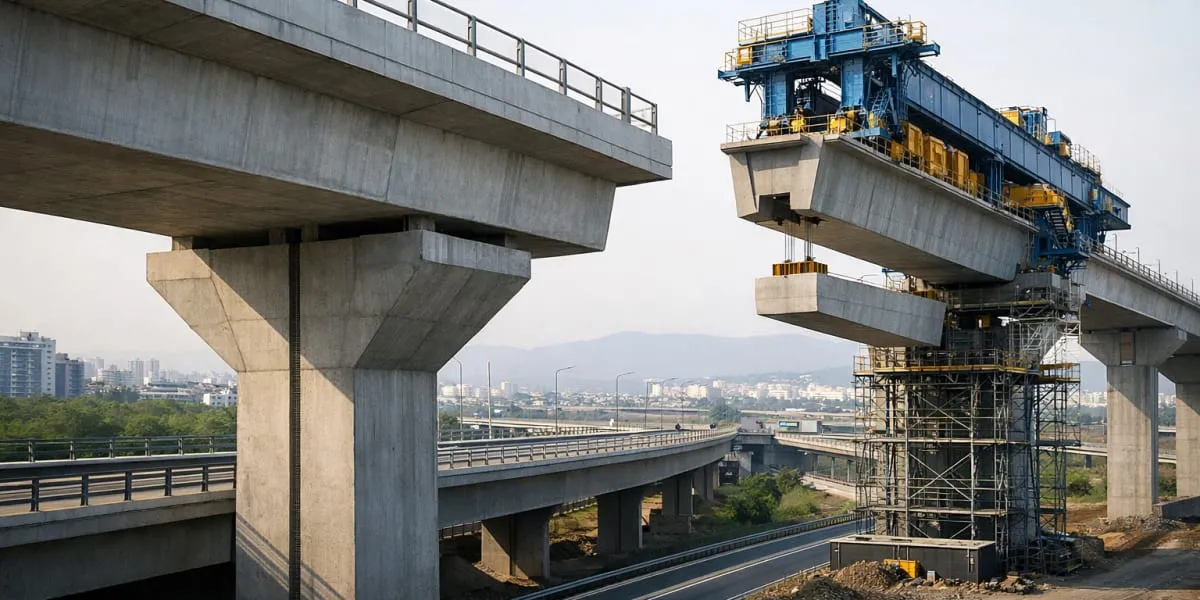
By increasing span lengths, the UHPFRC approach can reduce the number of ground-level pillars and thus minimise land requirements and obstructions beneath elevated sections. The longer-span design is expected to improve traffic movement under the structures and to reduce lifecycle maintenance demands compared with conventional elevated systems. Infrastructure specialists also note that such systems offer greater flexibility in densely built urban environments.

Officials have directed engineers to prioritise durable materials and tighter construction standards following concerns over structural components used in other projects, with the aim of improving long-term performance and lowering maintenance costs. The elevated corridors form part of a broader programme that includes additional highway upgrades, new expressway links and future connectivity measures intended to support industrial growth, freight movement and commuter mobility across western Maharashtra. Urban planners caution that expanding road capacity alone will not resolve the city's mobility challenges.

Sustainable strategies are therefore likely to combine efficient highways with public transport expansion, improved last-mile connectivity, intelligent traffic management and climate resilient infrastructure. Successful delivery will depend on timely land acquisition, coordinated project execution and strict adherence to engineering standards throughout construction. Authorities are expected to monitor progress closely to ensure that infrastructure investment delivers lasting mobility benefits and supports safer, more sustainable urban growth.

Three major elevated road corridors planned across Pune district are to adopt an advanced bridge construction method designed to reduce structural footprints, lower project costs and accelerate delivery. The corridors on the Pune-Shirur, Hadapsar-Yavat and Talegaon-Chakan-Shikrapur routes seek to ease congestion and strengthen links between Pune and neighbouring economic centres. The schemes are set to use Ultra High Performance Fibre Reinforced Concrete (UHPFRC), an engineering material that enables longer spans between supports. By increasing span lengths, the UHPFRC approach can reduce the number of ground-level pillars and thus minimise land requirements and obstructions beneath elevated sections. The longer-span design is expected to improve traffic movement under the structures and to reduce lifecycle maintenance demands compared with conventional elevated systems. Infrastructure specialists also note that such systems offer greater flexibility in densely built urban environments. Officials have directed engineers to prioritise durable materials and tighter construction standards following concerns over structural components used in other projects, with the aim of improving long-term performance and lowering maintenance costs. The elevated corridors form part of a broader programme that includes additional highway upgrades, new expressway links and future connectivity measures intended to support industrial growth, freight movement and commuter mobility across western Maharashtra. Urban planners caution that expanding road capacity alone will not resolve the city's mobility challenges. Sustainable strategies are therefore likely to combine efficient highways with public transport expansion, improved last-mile connectivity, intelligent traffic management and climate resilient infrastructure. Successful delivery will depend on timely land acquisition, coordinated project execution and strict adherence to engineering standards throughout construction. Authorities are expected to monitor progress closely to ensure that infrastructure investment delivers lasting mobility benefits and supports safer, more sustainable urban growth.

Next Story
Infrastructure Urban

Nuvoco Forecasts Rs 130 bn FY27 Revenue

Nuvoco Vistas Corp expects FY27 revenue to top Rs 130 billion (bn) as cement volumes gather pace, the company announced. The figure equates to Rs 130 bn after conversion from crore denominated targets and reflects management guidance for the next financial year. The chief executive outlined that prior constraints had limited volume growth but that recovery in demand during June and July had helped performance. The company expects costs to rise by Rs 100 to 120 per tonne (t) in the ongoing second quarter owing to monsoon related kiln maintenance shutdowns, higher fixed costs, and normal inflati..

Next Story
Building Material

India Core Infrastructure Output Rises Five Per Cent in June

India's core infrastructure sectors recorded growth of five per cent in June, marking a five-month high and signalling an upward trend in industrial activity. The expansion was propelled by strong performances in cement, electricity and the newly included iron ore, reflecting broader resilience across key inputs to construction and power supply. The readings point to strengthening domestic demand in construction and power generation. Production of cement and electricity each rose nine point eight per cent in the month, while iron ore output, included in the index under the new series, jumped 4..

Next Story
Infrastructure Energy

Telangana Thermal Plants Hold Limited Coal Stock

The government told the Rajya Sabha that coal-fired power plants across India held 42.8 million (mn) tonnes (t) of coal as of July 12, enough for 14 days of generation at an 85 per cent plant load factor (PLF). The reply said coal supplies were being monitored daily through a joint mechanism and that coal rakes were being given priority to support uninterrupted thermal generation during peak demand. Officials indicated that daily data on stock levels and rake movements was reviewed to manage dispatches and avoid generation shortfalls. The Central Electricity Authority daily fuel report for Jul..

Advertisement

Subscribe to Our Newsletter

Get daily newsletters around different themes from Construction world.

STAY CONNECTED

Advertisement

Advertisement

Advertisement