+
AI Surveillance To Boost Passenger Safety On Western Railway
RAILWAYS & METRO RAIL

AI Surveillance To Boost Passenger Safety On Western Railway

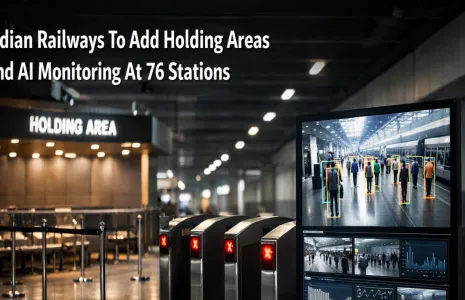
PTI reported that Western Railway will deploy artificial intelligence surveillance technology to boost passenger safety and to strengthen efforts to curb drug trafficking. The initiative is intended to upgrade existing closed circuit television networks with intelligent analytics and automated alerting. Officials framed the move as part of a broader effort to modernise security on the network. The announcement follows consultations with security experts and aims to harmonise technology with existing operational protocols.\n\nThe systems will combine high-resolution cameras with machine learning algorithms to identify suspicious behaviour, unattended items and unusual crowd movements in real time. Data will be routed to centralised control rooms where operators can assess alerts and coordinate responses with on-ground staff. The deployment is expected to focus initially on major stations and select long-distance services. Analytical models will be tailored to reduce false positives and to adapt to station-specific footfall patterns.\n\nRailway sources indicated the technology will enable more targeted checks and faster response times by providing precise location data and timestamps for incidents. Staff will receive additional training to interpret automated alerts and to conduct follow-up actions that respect legal and privacy frameworks. Coordination with local police and anti-narcotics units is planned to ensure actionable intelligence translates into enforcement. Implementation will include system audits and measures to protect passenger privacy while ensuring evidential integrity.\n\nThe project follows increased emphasis by transport authorities on the use of surveillance and analytics to reduce crime and enhance commuter confidence. Western Railway plans to evaluate performance and to scale systems across additional routes based on operational results and feedback. Officials expect the measures to act as both a deterrent and an investigative aid in the fight against drug trafficking. A phased rollout will allow assessment of impact on safety perceptions and adjustments to operating procedures.

PTI reported that Western Railway will deploy artificial intelligence surveillance technology to boost passenger safety and to strengthen efforts to curb drug trafficking. The initiative is intended to upgrade existing closed circuit television networks with intelligent analytics and automated alerting. Officials framed the move as part of a broader effort to modernise security on the network. The announcement follows consultations with security experts and aims to harmonise technology with existing operational protocols.\n\nThe systems will combine high-resolution cameras with machine learning algorithms to identify suspicious behaviour, unattended items and unusual crowd movements in real time. Data will be routed to centralised control rooms where operators can assess alerts and coordinate responses with on-ground staff. The deployment is expected to focus initially on major stations and select long-distance services. Analytical models will be tailored to reduce false positives and to adapt to station-specific footfall patterns.\n\nRailway sources indicated the technology will enable more targeted checks and faster response times by providing precise location data and timestamps for incidents. Staff will receive additional training to interpret automated alerts and to conduct follow-up actions that respect legal and privacy frameworks. Coordination with local police and anti-narcotics units is planned to ensure actionable intelligence translates into enforcement. Implementation will include system audits and measures to protect passenger privacy while ensuring evidential integrity.\n\nThe project follows increased emphasis by transport authorities on the use of surveillance and analytics to reduce crime and enhance commuter confidence. Western Railway plans to evaluate performance and to scale systems across additional routes based on operational results and feedback. Officials expect the measures to act as both a deterrent and an investigative aid in the fight against drug trafficking. A phased rollout will allow assessment of impact on safety perceptions and adjustments to operating procedures.

Related Stories

Gold Stories

Next Story
Infrastructure Transport

MMRDA Targets Completion of Projects by December 2028

The Mumbai Metropolitan Region Development Authority (MMRDA) is targeting the completion of all its ongoing infrastructure projects by December 2028, a year ahead of its December 2029 deadline, Metropolitan Commissioner Dr Sanjay Mukherjee has said.Speaking at the sixth edition of the Real Estate & Infrastructure Investors' Summit (REIIS) 2026 in Mumbai, Mukherjee said the authority was developing an integrated network of roads, tunnels, sea links and Metro corridors under its broader vision of “Mumbai in 59 Minutes”.The objective is to improve east-west and north-south connectivity an..

Next Story
Building Material

High-Performance Façades Gain Ground in Indian Buildings

High-performance façades are gaining greater importance in Indian architecture as developers and architects increasingly focus on energy efficiency, thermal comfort and building performance, according to Shankar Fenestrations & Glasses.The company said modern façade systems are increasingly being considered as part of a building's overall performance strategy rather than being used primarily as aesthetic elements.High-performance glass, curtain wall systems and structural glazing can contribute to thermal regulation, solar control, daylight management and indoor comfort. Their growing ad..

Next Story
Technology

SPML Infra's 104.4 kWh BESS Battery Pack Clears Global Tests

SPML Infra has announced that its proprietary 104.4 kWh Battery Energy Storage System (BESS) battery pack has completed key international safety, performance and transportation testing and certification requirements, marking a step towards its commercial deployment.Developed under the company's own intellectual property, the battery pack has completed requirements under UL9540A, IEC 62619, IEC 63056, IEC 60730, IEC 61000-6-2, IEC 61000-6-4 and UN38.3 standards.The testing covers areas including thermal runaway safety, battery performance, system functional safety, electromagnetic compatibility..

Advertisement

Subscribe to Our Newsletter

Get daily newsletters around different themes from Construction world.

STAY CONNECTED

Advertisement

SPECIAL OFFER
QR Code