Bengaluru Suburban Rail Project To Serve 1.9 Million Commuters
RAILWAYS & METRO RAIL

Bengaluru Suburban Rail Project To Serve 1.9 Million Commuters

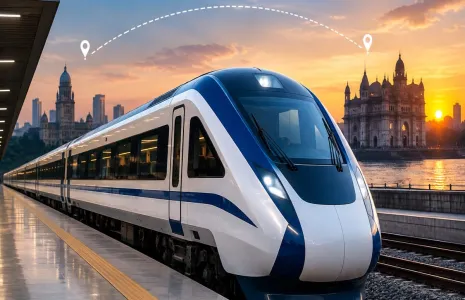
The Bengaluru Suburban Railway Project (BSRP) is expected to cater to 1.9 million passengers daily and remove around 40,000 buses from city roads, significantly easing congestion, the Managing Director of Rail Infrastructure Development Company (Karnataka) Limited (K-RIDE) said at the Concrete Panorama & Deminar 2026 conference. He cited projections from the Indian Institute of Science (IISc) that estimate the daily patronage by 2027 if all corridors are ready.

The project is estimated at Rs 233.42 billion (Rs 233.42 bn) and spans 148 km with 57 stations across four corridors named Sampige, Mallige, Parijata and Kanaka, collectively branded as Samparka, meaning connectivity. The scheme aims to provide suburban coverage and reduce reliance on road transport while integrating with major transport nodes.

The network is planned to connect with 17 Metro stations, 22 railway stations and major bus depots, with stations designed for universal accessibility and features such as solar panels and water harvesting systems. The proposals aim to reduce about 10 million tonnes of carbon dioxide emissions annually and harvest 22 million litres of water each year, quantified as 10 mn t and 22 mn litres respectively.

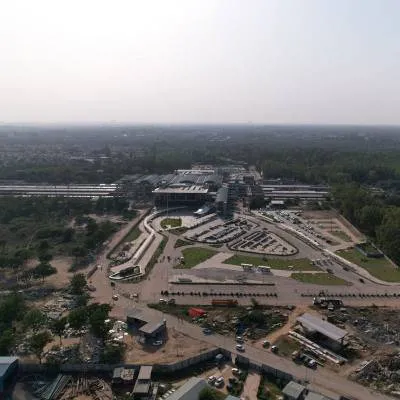
A notable element is the Yeshwantpur interchange, envisaged as a five storey station with two basement parking levels and stacked corridors that will carry two suburban corridors one above the other, a first for the city. The design seeks to accommodate high passenger flows and provide inter modal connectivity across rail systems.

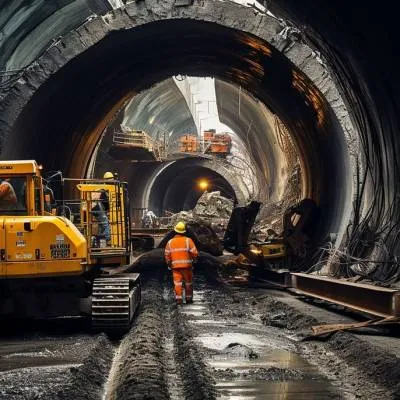
To eliminate around 24 level crossings and preserve traffic flow in dense areas, K-RIDE plans to elevate sections of Indian Railways tracks using retaining wall and track shifting techniques without major traffic disruption or large scale displacement. Operational readiness and phased corridor openings are being prioritised to deliver benefits in the short to medium term.

The Bengaluru Suburban Railway Project (BSRP) is expected to cater to 1.9 million passengers daily and remove around 40,000 buses from city roads, significantly easing congestion, the Managing Director of Rail Infrastructure Development Company (Karnataka) Limited (K-RIDE) said at the Concrete Panorama & Deminar 2026 conference. He cited projections from the Indian Institute of Science (IISc) that estimate the daily patronage by 2027 if all corridors are ready. The project is estimated at Rs 233.42 billion (Rs 233.42 bn) and spans 148 km with 57 stations across four corridors named Sampige, Mallige, Parijata and Kanaka, collectively branded as Samparka, meaning connectivity. The scheme aims to provide suburban coverage and reduce reliance on road transport while integrating with major transport nodes. The network is planned to connect with 17 Metro stations, 22 railway stations and major bus depots, with stations designed for universal accessibility and features such as solar panels and water harvesting systems. The proposals aim to reduce about 10 million tonnes of carbon dioxide emissions annually and harvest 22 million litres of water each year, quantified as 10 mn t and 22 mn litres respectively. A notable element is the Yeshwantpur interchange, envisaged as a five storey station with two basement parking levels and stacked corridors that will carry two suburban corridors one above the other, a first for the city. The design seeks to accommodate high passenger flows and provide inter modal connectivity across rail systems. To eliminate around 24 level crossings and preserve traffic flow in dense areas, K-RIDE plans to elevate sections of Indian Railways tracks using retaining wall and track shifting techniques without major traffic disruption or large scale displacement. Operational readiness and phased corridor openings are being prioritised to deliver benefits in the short to medium term.

Related Stories

Gold Stories

Next Story
Resources

Schindler named among Forbes’ World’s Best Employers 2026

Schindler has been named among Forbes’ World’s Best Employers 2026, a global ranking recognising companies for their workplace environments.Compiled by Forbes in partnership with Statista, the ranking is based on independent employee feedback, including whether employees would recommend their organisation to friends and family.The company said the recognition reflected its focus on creating a workplace where employees can develop their expertise and build careers. ..
Next Story
Infrastructure Urban

India needs an export-execution mindset: Vishesh Jain

Interview with Vishesh Jain, Founder & CEO, EximpleWhat gaps in India’s global trade ecosystem led you to build Eximple, and what problem did you see businesses struggling with most?Eximple came out of a problem that all three founders had seen from different choke points in the trade ecosystem. India has millions of MSMEs and manufacturers, and many of them can make products that are genuinely competitive on quality. Yet only a small fraction is able to build meaningful international businesses. In our experience, the gap is usually not manufacturing capability; it is the ability to exe..

Next Story
Building Material

Nuvoco reports 13.5% revenue growth in Q2 FY27

Nuvoco Vistas Corp. Ltd. reported consolidated revenue of Rs 27.9 billion for Q2 FY27, up 13.5% year on year. Cement sales volume rose 9% to 4.7 million tonnes (MMT), while EBITDA increased 11% to Rs 4.11 billion.The company said it began its cement operations in 2014 with a 2.3 MMT per annum (MMTPA) operation at Nimbol. It now aims to reach 35 MMTPA of cement capacity by FY28, nearly 15 times its initial capacity. Its portfolio spans cement, ready-mix concrete and modern building materials.On sustainability and cost efficiency, Nuvoco partnered with CleanMax for a 46.4 MW wind-solar hybrid re..

Advertisement

Subscribe to Our Newsletter

Get daily newsletters around different themes from Construction world.

STAY CONNECTED

Advertisement

SPECIAL OFFER
QR Code