DMRC To Study Double Decker Metro Flyover Corridor
RAILWAYS & METRO RAIL

DMRC To Study Double Decker Metro Flyover Corridor

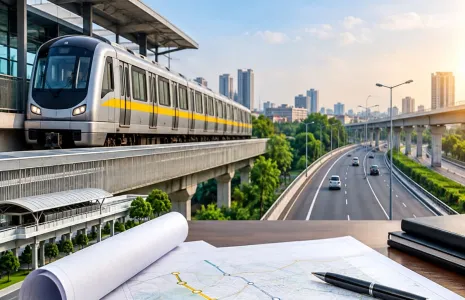
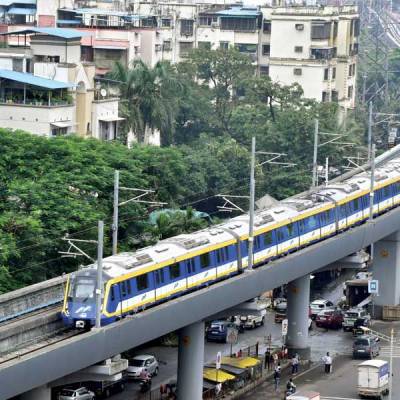
The Delhi Metro Rail Corporation (DMRC) will undertake a feasibility study to develop an integrated double?decker flyover?cum?Metro corridor along the proposed 16.5 km Keshav Puram to Rohini Sector 34 route under Phase V(B) of the Delhi Metro network. The consultancy is estimated to cost around Rs 20.8 mn and will examine options for placing Metro infrastructure on the upper deck with an elevated road or flyover on the lower deck to ease traffic congestion along the corridor.

The study is scheduled to be completed in six months and will assess alignment options, traffic and transport demand, structural and construction feasibility, utility constraints and the commercial viability of the integrated corridor. It will also evaluate the need for loops, ramp?in and ramp?out facilities, cloverleafs, directional ramps and other road infrastructure at major intersections.

Officials noted that the proposed corridor passes through densely urbanised areas including Keshav Puram and several sectors of Rohini, where the study will need to account for existing flyovers, Metro structures, utilities, land constraints and busy traffic junctions. As part of the exercise the appointed consultant will conduct traffic volume counts, turning movement surveys, origin?destination studies, public transport surveys, road network inventory and speed and delay studies, with limited topographical verification at critical stretches where required.

The consultant will prepare a transport model to assess current and future traffic demand and develop conceptual plans to integrate the Metro viaduct with road infrastructure, alongside concept?level structural assessment, construction feasibility and preliminary land requirement estimates. It will prepare indicative project cost estimates, conceptual bills of quantities and a comparative commercial assessment of different structural configurations, and carry out a cost?benefit analysis together with an environmental impact assessment. The final report will consolidate findings from all stages of the study and include recommendations on the preferred alignment and the overall feasibility of the proposed integrated double?decker corridor.

The Delhi Metro Rail Corporation (DMRC) will undertake a feasibility study to develop an integrated double?decker flyover?cum?Metro corridor along the proposed 16.5 km Keshav Puram to Rohini Sector 34 route under Phase V(B) of the Delhi Metro network. The consultancy is estimated to cost around Rs 20.8 mn and will examine options for placing Metro infrastructure on the upper deck with an elevated road or flyover on the lower deck to ease traffic congestion along the corridor. The study is scheduled to be completed in six months and will assess alignment options, traffic and transport demand, structural and construction feasibility, utility constraints and the commercial viability of the integrated corridor. It will also evaluate the need for loops, ramp?in and ramp?out facilities, cloverleafs, directional ramps and other road infrastructure at major intersections. Officials noted that the proposed corridor passes through densely urbanised areas including Keshav Puram and several sectors of Rohini, where the study will need to account for existing flyovers, Metro structures, utilities, land constraints and busy traffic junctions. As part of the exercise the appointed consultant will conduct traffic volume counts, turning movement surveys, origin?destination studies, public transport surveys, road network inventory and speed and delay studies, with limited topographical verification at critical stretches where required. The consultant will prepare a transport model to assess current and future traffic demand and develop conceptual plans to integrate the Metro viaduct with road infrastructure, alongside concept?level structural assessment, construction feasibility and preliminary land requirement estimates. It will prepare indicative project cost estimates, conceptual bills of quantities and a comparative commercial assessment of different structural configurations, and carry out a cost?benefit analysis together with an environmental impact assessment. The final report will consolidate findings from all stages of the study and include recommendations on the preferred alignment and the overall feasibility of the proposed integrated double?decker corridor.

Related Stories

Gold Stories

Next Story
Infrastructure Urban

Vedanta Metal Bazaar Expands to Global Markets

Vedanta Aluminium has expanded its digital e-commerce platform, Vedanta Metal Bazaar, to international markets, enabling overseas customers to order and purchase aluminium products online.The platform will now be available to buyers across Asia, Europe, Africa and the Americas, providing a digital gateway for export transactions with 24x7 access.In FY26, Vedanta Metal Bazaar processed transactions worth nearly $4.1 billion, or over Rs 380 billion, and fulfilled more than 23,000 orders. The platform is also used regularly by more than 550 MSMEs in India alongside large OEM customers.The export ..

Next Story
Infrastructure Urban

Ramky Infrastructure Q1 FY27 Revenue Rises 24.3%

Ramky Infrastructure Limited reported a 24.3% year-on-year increase in consolidated revenue from operations to Rs 471.2 crore for Q1 FY27, compared with Rs 3.79 billion in the corresponding quarter of FY26.Standalone revenue from operations rose 27.5% YoY to Rs 4.51 billion from Rs 3.54 billion, while total standalone income increased 35% to Rs 5.32 billion.Consolidated profit before tax stood at Rs 540.9 million during the quarter. The company highlighted a sharp sequential improvement compared with a pre-exceptional loss of Rs 190.1 million in Q4 FY26.Two of the three projects awarded during..

Next Story
Technology

LTTS Launches AgenticIQ AI Platform for Engineering

L&T Technology Services (LTTS) has launched AgenticIQ, an end-to-end agentic AI platform designed for engineering and manufacturing organisations.The platform is aimed at helping enterprises move beyond isolated AI pilots by enabling autonomous, multi-agent workflows across engineering, product development, manufacturing, industrial operations and customer experience.AgenticIQ is built on LTTS’ Engineering Intelligence portfolio and converts existing engineering capabilities into specialised, reusable AI agents. Its planning-first architecture is embedded into engineering and production ..

Advertisement

Subscribe to Our Newsletter

Get daily newsletters around different themes from Construction world.

STAY CONNECTED

Advertisement

Advertisement

Advertisement