+
DMRC First Indian Metro Organisation Certified Under ISO 55001:2024
RAILWAYS & METRO RAIL

DMRC First Indian Metro Organisation Certified Under ISO 55001:2024

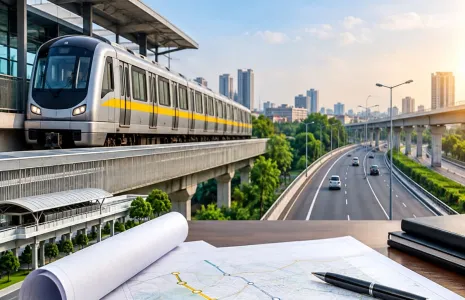
The Delhi Metro Rail Corporation (DMRC) has become the first metro organisation in India to receive the ISO 55001:2024 certification for its asset management system for the Mumbai Metro Line Three corridor. The certification provides a globally recognised framework for managing assets throughout their lifecycle and enables organisations to balance asset performance, operational risk and lifecycle cost. The achievement signals a shift from conventional maintenance practices towards strategic, risk-based and lifecycle-oriented asset management aligned with organisational objectives.

The DMRC achieved the certification in record time after strengthening its asset management framework. This process included enhancing its Strategic Asset Management Plan (SAMP), aligning asset management objectives with organisational priorities, strengthening risk assessment and lifecycle controls, and undertaking training and capacity building programmes for personnel. The system is subject to continuous monitoring through key performance indicators, audits and management reviews to measure effectiveness and drive improvement.

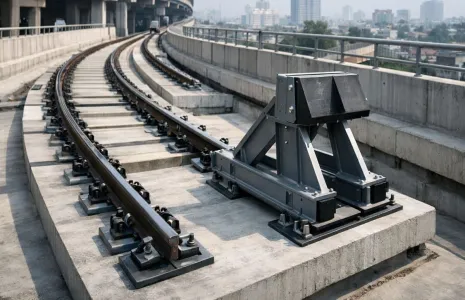
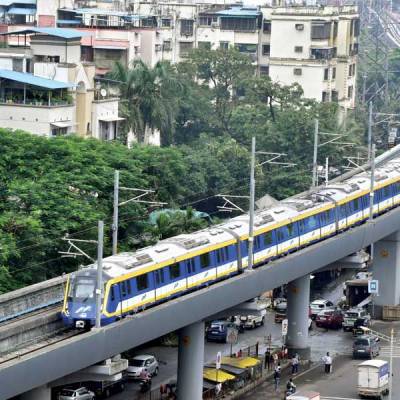
The DMRC is responsible for the operation and maintenance of the 33.5 km Mumbai Metro Line Three corridor, which connects Colaba, Bandra and SEEPZ. Its remit covers the safe, reliable and efficient management of critical assets such as rolling stock, traction systems, signalling and telecommunications, station facilities, lifts and escalators, track infrastructure and civil works. These responsibilities require coordinated technical, operational and administrative controls across the lifecycle of each asset.

The certification further strengthens the organisation's focus on safety, reliability, efficiency and sustainability by integrating these priorities into a globally benchmarked asset management system. The achievement sets a benchmark for structured and lifecycle based asset management within India's urban rail sector and demonstrates the DMRC's capability to provide operations and maintenance and asset management expertise beyond Delhi NCR. The outcome is likely to support wider adoption of globally aligned asset management practices across the country's expanding urban rail network.

The Delhi Metro Rail Corporation (DMRC) has become the first metro organisation in India to receive the ISO 55001:2024 certification for its asset management system for the Mumbai Metro Line Three corridor. The certification provides a globally recognised framework for managing assets throughout their lifecycle and enables organisations to balance asset performance, operational risk and lifecycle cost. The achievement signals a shift from conventional maintenance practices towards strategic, risk-based and lifecycle-oriented asset management aligned with organisational objectives. The DMRC achieved the certification in record time after strengthening its asset management framework. This process included enhancing its Strategic Asset Management Plan (SAMP), aligning asset management objectives with organisational priorities, strengthening risk assessment and lifecycle controls, and undertaking training and capacity building programmes for personnel. The system is subject to continuous monitoring through key performance indicators, audits and management reviews to measure effectiveness and drive improvement. The DMRC is responsible for the operation and maintenance of the 33.5 km Mumbai Metro Line Three corridor, which connects Colaba, Bandra and SEEPZ. Its remit covers the safe, reliable and efficient management of critical assets such as rolling stock, traction systems, signalling and telecommunications, station facilities, lifts and escalators, track infrastructure and civil works. These responsibilities require coordinated technical, operational and administrative controls across the lifecycle of each asset. The certification further strengthens the organisation's focus on safety, reliability, efficiency and sustainability by integrating these priorities into a globally benchmarked asset management system. The achievement sets a benchmark for structured and lifecycle based asset management within India's urban rail sector and demonstrates the DMRC's capability to provide operations and maintenance and asset management expertise beyond Delhi NCR. The outcome is likely to support wider adoption of globally aligned asset management practices across the country's expanding urban rail network.

Related Stories

Gold Stories
Next Story
Real Estate

BMC OC Amnesty Scheme Requires Key Approvals from Mumbai Societies

The Brihanmumbai Municipal Corporation (BMC) has clarified that housing societies applying under its Occupation Certificate (OC) amnesty scheme must possess key approvals linked to the original construction. The requirements include a valid Intimation of Disapproval (IOD), an approved building plan and a Commencement Certificate (CC), along with a No Objection Certificate (NOC) from the developer or original construction applicant. The Standard Operating Procedure (SOP) makes clear that the absence of an OC alone will not qualify a building for relief. Societies must establish that their build..

Next Story
Real Estate

Gurugram Emerges as Luxury Senior Living Hub

Gurugram is emerging as a potential hub for luxury senior living, supported by available land, healthcare infrastructure, connectivity and a concentration of affluent professionals, high-net-worth individuals and non-resident Indians. These factors could give the city an advantage over land-constrained metros such as Mumbai. A report by the Association of Senior Living India (ASLI) and JLL estimates that India’s organised senior living market could represent a $10.1 bn opportunity by 2030. The sector had about 25,050 organised units as of June 2026, while penetration stood at only 1.5 per ce..

Next Story
Real Estate

Corrosion Costs India’s Infrastructure Rs. 142 bn Annually

Corrosion costs India an estimated Rs. 1.42 tn annually, equivalent to 4.3 per cent of gross domestic product, according to a report by the Confederation of Indian Industry and the National Research Institute. Infrastructure accounts for Rs. 142 bn of the annual burden, making it the sector with the largest absolute cost among those examined. The report, presented at the CII Annual Infrastructure Summit 2026, said the infrastructure-sector cost equals about 2.9 per cent of the sector’s gross domestic product. It estimated that effective measures could generate maximum savings of Rs. 495.8 bn..

Advertisement

Subscribe to Our Newsletter

Get daily newsletters around different themes from Construction world.

STAY CONNECTED

Advertisement

SPECIAL OFFER
QR Code