DMRC Urges Kerala To Implement High Speed Rail
RAILWAYS & METRO RAIL

DMRC Urges Kerala To Implement High Speed Rail

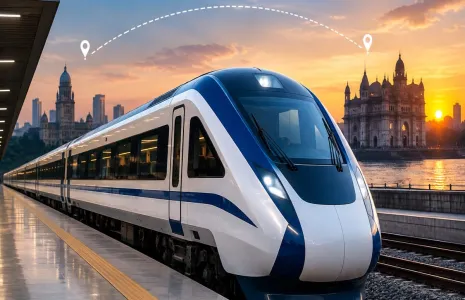
The Delhi Metro Rail Corporation urged the Kerala government to pursue implementation of a high speed rail corridor, emphasising comprehensive planning and integration with existing mass transit networks across the state.

The corporation highlighted the strategic potential of faster intercity links to ease congestion, support regional mobility and strengthen multimodal connectivity with airports and seaports.

DMRC advised that feasibility work should cover alignment options, ridership projections, station planning and the interface with local transport systems to ensure balanced land use and urban design.

The agency noted that careful assessment of environmental impact and land acquisition implications is essential to mitigate social and ecological risks.

It proposed that technical assistance be provided to state authorities to develop realistic cost estimates and timelines.

Officials argued that a high speed corridor would shorten travel times between major urban centres, enhancing business linkages and supporting tourism without specifying timelines.

Economic activity around stations would generate employment and catalyse real estate and commercial investment while necessitating robust policy frameworks.

Integrated ticketing, last mile connectivity and station area development were identified as priorities to maximise ridership and public benefit.

The DMRC recommended exploring varied financing models including central investment, concessional loans and partnerships with private sector developers to distribute risk and optimise capital flows.

Coordination between central, state and local agencies was described as vital to streamline approvals and secure long term operational viability.

The corporation offered to extend technical expertise during planning and early project stages to align institutional capacity and project delivery and to support inclusive and wide stakeholder consultation processes.

The Delhi Metro Rail Corporation urged the Kerala government to pursue implementation of a high speed rail corridor, emphasising comprehensive planning and integration with existing mass transit networks across the state. The corporation highlighted the strategic potential of faster intercity links to ease congestion, support regional mobility and strengthen multimodal connectivity with airports and seaports. DMRC advised that feasibility work should cover alignment options, ridership projections, station planning and the interface with local transport systems to ensure balanced land use and urban design. The agency noted that careful assessment of environmental impact and land acquisition implications is essential to mitigate social and ecological risks. It proposed that technical assistance be provided to state authorities to develop realistic cost estimates and timelines. Officials argued that a high speed corridor would shorten travel times between major urban centres, enhancing business linkages and supporting tourism without specifying timelines. Economic activity around stations would generate employment and catalyse real estate and commercial investment while necessitating robust policy frameworks. Integrated ticketing, last mile connectivity and station area development were identified as priorities to maximise ridership and public benefit. The DMRC recommended exploring varied financing models including central investment, concessional loans and partnerships with private sector developers to distribute risk and optimise capital flows. Coordination between central, state and local agencies was described as vital to streamline approvals and secure long term operational viability. The corporation offered to extend technical expertise during planning and early project stages to align institutional capacity and project delivery and to support inclusive and wide stakeholder consultation processes.

Related Stories

Gold Stories
Next Story
Resources

Schindler named among Forbes’ World’s Best Employers 2026

Schindler has been named among Forbes’ World’s Best Employers 2026, a global ranking recognising companies for their workplace environments.Compiled by Forbes in partnership with Statista, the ranking is based on independent employee feedback, including whether employees would recommend their organisation to friends and family.The company said the recognition reflected its focus on creating a workplace where employees can develop their expertise and build careers. ..

Next Story
Infrastructure Urban

India needs an export-execution mindset: Vishesh Jain

Interview with Vishesh Jain, Founder & CEO, EximpleWhat gaps in India’s global trade ecosystem led you to build Eximple, and what problem did you see businesses struggling with most?Eximple came out of a problem that all three founders had seen from different choke points in the trade ecosystem. India has millions of MSMEs and manufacturers, and many of them can make products that are genuinely competitive on quality. Yet only a small fraction is able to build meaningful international businesses. In our experience, the gap is usually not manufacturing capability; it is the ability to exe..

Next Story
Building Material

Nuvoco reports 13.5% revenue growth in Q2 FY27

Nuvoco Vistas Corp. Ltd. reported consolidated revenue of Rs 27.9 billion for Q2 FY27, up 13.5% year on year. Cement sales volume rose 9% to 4.7 million tonnes (MMT), while EBITDA increased 11% to Rs 4.11 billion.The company said it began its cement operations in 2014 with a 2.3 MMT per annum (MMTPA) operation at Nimbol. It now aims to reach 35 MMTPA of cement capacity by FY28, nearly 15 times its initial capacity. Its portfolio spans cement, ready-mix concrete and modern building materials.On sustainability and cost efficiency, Nuvoco partnered with CleanMax for a 46.4 MW wind-solar hybrid re..

Advertisement

Subscribe to Our Newsletter

Get daily newsletters around different themes from Construction world.

STAY CONNECTED

Advertisement

SPECIAL OFFER
QR Code