Four Point Six Kilometre Metro Extension Adds Five Stations In Lucknow
RAILWAYS & METRO RAIL

Four Point Six Kilometre Metro Extension Adds Five Stations In Lucknow

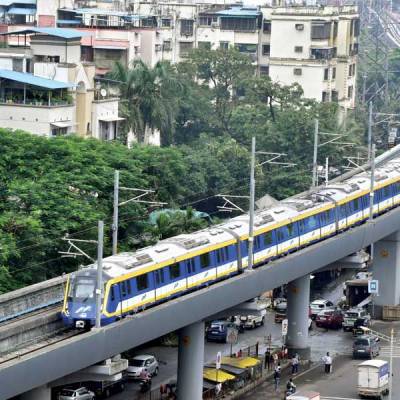
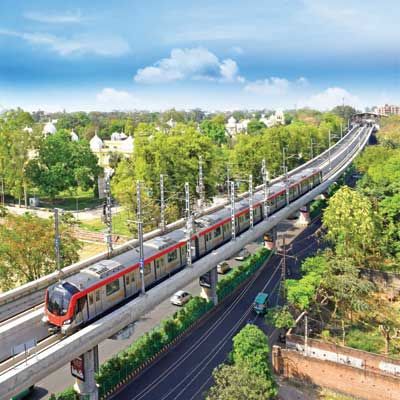
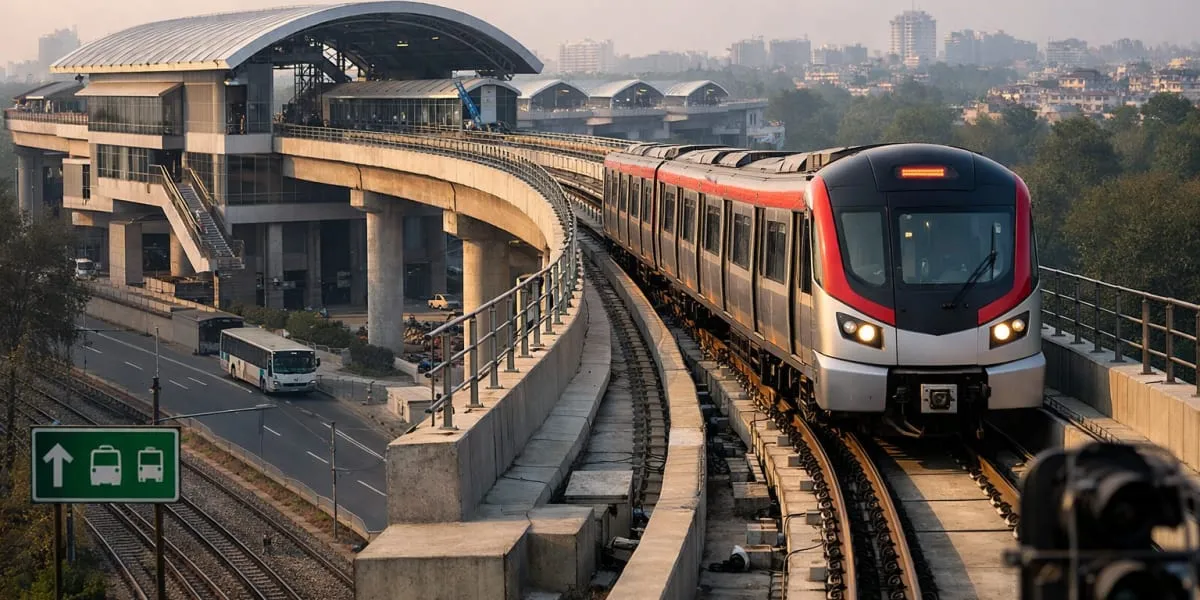
The Uttar Pradesh Metro Rail Corporation has announced that a four point six-kilometre elevated metro stretch in Lucknow will be expanded to include five new stations. The plan is intended to broaden access across key urban neighbourhoods and to improve transit connectivity for daily commuters. The expansion will link with the existing network and provide additional interchange options for bus and suburban services. Officials said planning studies assessed passenger demand and interchange capacity to inform station spacing.

The elevated extension follows prior phases of corridor development and is designed to fit within the current right of way to minimise land acquisition. Structural work will use pre-cast segments and standard elevated pier designs to accelerate construction and reduce disruption on adjacent roads. Project management officials outlined that station amenities will include barrier-free access, passenger information systems and integrated ticketing. The design team will also co-ordinate drainage, lighting and landscaping to restore street quality.

Officials said the additional stations will reduce road traffic congestion and shorten journey times for thousands of commuters, supporting a modal shift to public transport. The extension will bolster economic activity along the corridor by improving access to commercial and residential pockets. The scheme also forms part of a wider urban mobility strategy to enhance last mile connectivity and street level integration. Local businesses and commuter groups have been invited to provide inputs during station design to address accessibility and vendor needs.

The authority has scheduled the works in phases with commissioning of stations to follow progressive completion of civil and system works. Contractors will coordinate with city agencies to manage traffic and utilities during construction and to ensure safety standards. Further technical and financial details will be released by the transit authority as the project advances. Authorities indicated that environmental clearances, utility relocation and coordination with emergency services form part of preparatory work.

"Join industry leaders at RAHSTA Expo, India's premier platform for roads, highways and traffic infrastructure. Register now to explore innovations, network with experts and shape the future of mobility."

The Uttar Pradesh Metro Rail Corporation has announced that a four point six-kilometre elevated metro stretch in Lucknow will be expanded to include five new stations. The plan is intended to broaden access across key urban neighbourhoods and to improve transit connectivity for daily commuters. The expansion will link with the existing network and provide additional interchange options for bus and suburban services. Officials said planning studies assessed passenger demand and interchange capacity to inform station spacing. The elevated extension follows prior phases of corridor development and is designed to fit within the current right of way to minimise land acquisition. Structural work will use pre-cast segments and standard elevated pier designs to accelerate construction and reduce disruption on adjacent roads. Project management officials outlined that station amenities will include barrier-free access, passenger information systems and integrated ticketing. The design team will also co-ordinate drainage, lighting and landscaping to restore street quality. Officials said the additional stations will reduce road traffic congestion and shorten journey times for thousands of commuters, supporting a modal shift to public transport. The extension will bolster economic activity along the corridor by improving access to commercial and residential pockets. The scheme also forms part of a wider urban mobility strategy to enhance last mile connectivity and street level integration. Local businesses and commuter groups have been invited to provide inputs during station design to address accessibility and vendor needs. The authority has scheduled the works in phases with commissioning of stations to follow progressive completion of civil and system works. Contractors will coordinate with city agencies to manage traffic and utilities during construction and to ensure safety standards. Further technical and financial details will be released by the transit authority as the project advances. Authorities indicated that environmental clearances, utility relocation and coordination with emergency services form part of preparatory work.

Next Story
Infrastructure Transport

The Risk of Negative Bids

The phenomenon of negative bidding in India's roads sector has moved from being an occasional occurrence to an industry-wide concern. With contractors increasingly quoting significantly below project estimates to secure orders, questions are being raised over project viability, execution quality and the long-term sustainability of the contracting ecosystem.These concerns formed the core of a high-level industry roundtable organised by CW, where senior industry leaders deliberated on the reasons behind the trend, its implications and the reforms needed to restore discipline and sustainability i..

Next Story
Technology

Building Faster, Cleaner and More Profitably

The First Construction Council (FCC), in association with CW magazine and supported by Autodesk as the Presenting Partner, recently convened an exclusive CXO roundtable titled “Building Faster, Cleaner and More Profitably: The Growth Playbook for Construction Leaders.”Held as part of a multi-city dialogue series spanning Mumbai, Bengaluru and Delhi, the roundtable brought together senior industry leaders to deliberate on the challenges and opportunities shaping India's construction and real-estate sectors...To read the full article Click Here ..

Next Story
Real Estate

NICMAR’s campus is a live lesson in construction methodology

At NICMAR University, architecture becomes a live lesson in construction innovation. Pankaj Nande, Principal Architect, TDC Architecture and Design, explains how Alumil’s fenestration systems helped turn a precast campus vision into a functional, durable and future-facing learning environment for the next generation of builders.Please take us through your journey as an architect and some of the projects you have worked on.I am the founder of TDC- Architecture & Design, Pune. Our journey started with the thought of doing justice not only to design, but also to construction methodology, te..

Advertisement

Subscribe to Our Newsletter

Get daily newsletters around different themes from Construction world.

STAY CONNECTED

Advertisement

Advertisement

Advertisement