Jamshedpur to Kolkata Rail Route to Become Gate Free
RAILWAYS & METRO RAIL

Jamshedpur to Kolkata Rail Route to Become Gate Free

The South Eastern Railway has accelerated infrastructure work to enable trains to run at 160 km/h on the Howrah-Mumbai trunk route. The upgrades encompass the strategic closure of level crossings, construction of river bridges and modernisation of signalling and traction across the Chakradharpur and Kharagpur divisions. Railway authorities have prioritised these measures to remove bottlenecks and enhance both speed and safety on a corridor that serves millions of passengers each year.

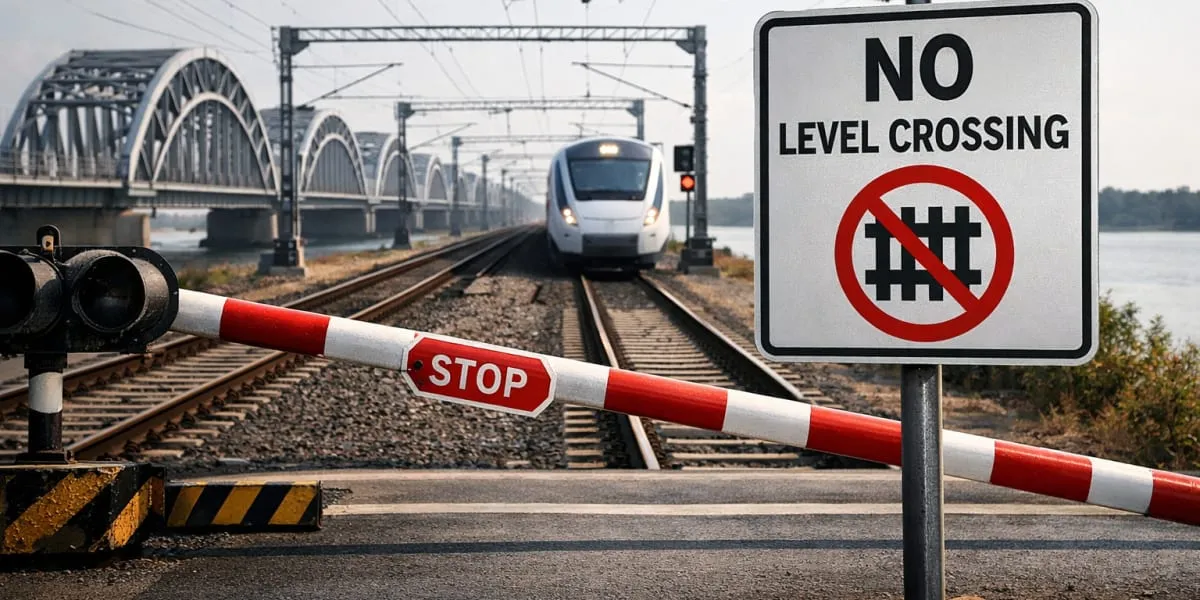
Tenders have been issued to close three major level crossings at Chakulia, Rakhamines and Jhargram, which presently force trains to slow down and increase accident risk. Each crossing will be replaced by an overbridge or an underpass to safeguard local connectivity while permitting higher speeds. The move follows similar works at Govindpur, Salgajhuri and Barigora where overbridges and underpasses are already under construction or have become operational.

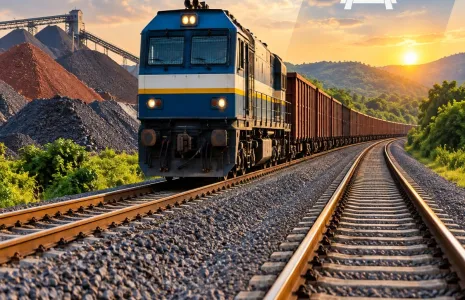
A new railway bridge is being built over the river between Haldipokhar and Bahalda on the Tatanagar-Badampahar section to ensure uninterrupted operations during the monsoon and to reduce the waterlogging and structural risks associated with older spans. The Tatanagar-Badampahar route is important for the movement of minerals and iron ore, and the bridge is expected to streamline freight flows to industrial hubs while improving passenger service reliability. Work is being sequenced to limit disruption.

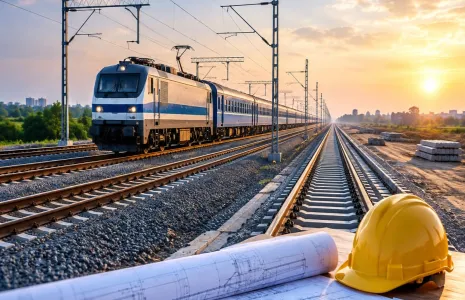
Long term plans include doubling the single line on the Tatanagar-Badampahar corridor and enlarging yards and maintenance sheds at Badampahar and Gurumahisani to handle increased traffic. Modern signalling and traction facilities were commissioned last year as part of the phased expansion. Officials noted that construction may necessitate brief power blocks but said the measures will shorten journey times, increase safety by eliminating level crossings such as the recently closed Jugsalai crossing and make services more resilient in the monsoon.

"Join industry leaders at RAHSTA Expo, India's premier platform for roads, highways and traffic infrastructure. Register now to explore innovations, network with experts and shape the future of mobility."

The South Eastern Railway has accelerated infrastructure work to enable trains to run at 160 km/h on the Howrah-Mumbai trunk route. The upgrades encompass the strategic closure of level crossings, construction of river bridges and modernisation of signalling and traction across the Chakradharpur and Kharagpur divisions. Railway authorities have prioritised these measures to remove bottlenecks and enhance both speed and safety on a corridor that serves millions of passengers each year. Tenders have been issued to close three major level crossings at Chakulia, Rakhamines and Jhargram, which presently force trains to slow down and increase accident risk. Each crossing will be replaced by an overbridge or an underpass to safeguard local connectivity while permitting higher speeds. The move follows similar works at Govindpur, Salgajhuri and Barigora where overbridges and underpasses are already under construction or have become operational. A new railway bridge is being built over the river between Haldipokhar and Bahalda on the Tatanagar-Badampahar section to ensure uninterrupted operations during the monsoon and to reduce the waterlogging and structural risks associated with older spans. The Tatanagar-Badampahar route is important for the movement of minerals and iron ore, and the bridge is expected to streamline freight flows to industrial hubs while improving passenger service reliability. Work is being sequenced to limit disruption. Long term plans include doubling the single line on the Tatanagar-Badampahar corridor and enlarging yards and maintenance sheds at Badampahar and Gurumahisani to handle increased traffic. Modern signalling and traction facilities were commissioned last year as part of the phased expansion. Officials noted that construction may necessitate brief power blocks but said the measures will shorten journey times, increase safety by eliminating level crossings such as the recently closed Jugsalai crossing and make services more resilient in the monsoon.

Next Story
Infrastructure Energy

Centre Prioritising Energy Security With Coal Gasification

Union minister for Coal and Mines G Kishan Reddy said the Centre is prioritising energy security through a strategic shift to coal gasification and has announced incentives totalling Rs 460 billion (bn) to support the effort. He said more than 35 companies will start coal gasification activities in India within two months and that the government is encouraging firms that bring technology to close the domestic technology gap. The minister described the initiative as aimed at reducing import dependence and developing indigenous capacity. India has the fifth-largest coal reserve in the world, and..

Next Story
Infrastructure Urban

BHEL and Coal India Invest Rs 250 bn in Odisha Gasification

Bharat Heavy Electricals (BHEL) and Coal India (CIL) are jointly investing Rs 250 billion in a coal gasification project in Odisha, with the Prime Minister laying the foundation stone in Jharsuguda. Union Coal and Mines Minister G Kishan Reddy described the initiative as a transformative shift in coal utilisation that will open industrial avenues for the state. The project moves coal beyond conventional power generation to industrial feedstocks. Coal gasification will convert coal into synthesis gas, a versatile feedstock for chemicals, fertilisers and synthetic fuels, and the technology is ex..

Next Story
Infrastructure Energy

BCCL Hands Over Dugdha Coal Washery To JSW Steel

Bharat Coking Coal has handed over the Dugdha Coal Washery to JSW Steel, marking the first coal washery asset monetisation under the Ministry of Coal's asset monetisation programme. The handover took place in the presence of senior officials from Bharat Coking Coal Ltd, JSW Steel and JSW Energy. The washery has a capacity of two million tonnes per annum (mn t per annum), and its transfer is intended to introduce private sector practices into coal beneficiation operations. The monetisation is aimed at modernising coal sector assets, improving operational efficiency and enhancing resource utilis..

Advertisement

Subscribe to Our Newsletter

Get daily newsletters around different themes from Construction world.

STAY CONNECTED

Advertisement

Advertisement

Advertisement