Kazipet-Balharshah Third Line Project Completed
RAILWAYS & METRO RAIL

Kazipet-Balharshah Third Line Project Completed

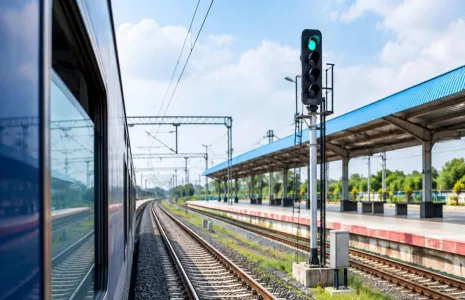
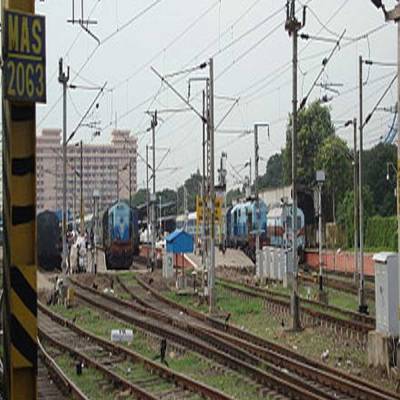
South Central Railway (SCR) has completed the 203 km Kazipet-Balharshah third line project along with electrification, marking a major infrastructure upgrade aimed at easing congestion and improving passenger and freight movement on one of the country's busiest rail corridors. The work covers the full Kazipet-Balharshah section, which forms a vital link between northern and southern India and serves multiple coal and cement sidings. Project execution involved phased works across busy sections to maintain operations.

The project was finalised with the commissioning of the last 11 km stretch between Asifabad and Sirpur Kaghaznagar, which included a bridge across the Bibra River. It was executed at a cost of around Rs 30 billion (bn) and enables seamless train operations along the Grand Trunk route connecting the northern and southern regions. The bridge improves resilience on the line and removes a historical bottleneck.

Continuous growth in passenger and freight traffic had led to persistent congestion on the route, prompting the phased tripling programme. SCR had earlier completed the 33 km tripling between Raghavapuram and Mandamarri in 2016, and the remaining 203 km stretch was sanctioned in 2015-16 as part of broader capacity augmentation. The phased works sought to limit disruption while delivering additional track capacity.

The 203 km stretch spans 159 km in Telangana and 44 km in Maharashtra and has now been commissioned together with overhead electrification. A small stretch near Balharshah station that falls under Central Railway jurisdiction is still being connected to the Balharshah yard through the newly laid third line. Overhead equipment was energised and tested prior to commissioning to ensure operational safety.

The completion is intended to raise line capacity, reduce delays and support faster freight turnaround, particularly for coal and cement consignments that use the corridor. SCR will continue integration works and operational adjustments to deliver improved punctuality and higher throughput on the Grand Trunk route. Network managers will coordinate with freight operators to phase train movements and maximise the benefits of the additional line.

South Central Railway (SCR) has completed the 203 km Kazipet-Balharshah third line project along with electrification, marking a major infrastructure upgrade aimed at easing congestion and improving passenger and freight movement on one of the country's busiest rail corridors. The work covers the full Kazipet-Balharshah section, which forms a vital link between northern and southern India and serves multiple coal and cement sidings. Project execution involved phased works across busy sections to maintain operations. The project was finalised with the commissioning of the last 11 km stretch between Asifabad and Sirpur Kaghaznagar, which included a bridge across the Bibra River. It was executed at a cost of around Rs 30 billion (bn) and enables seamless train operations along the Grand Trunk route connecting the northern and southern regions. The bridge improves resilience on the line and removes a historical bottleneck. Continuous growth in passenger and freight traffic had led to persistent congestion on the route, prompting the phased tripling programme. SCR had earlier completed the 33 km tripling between Raghavapuram and Mandamarri in 2016, and the remaining 203 km stretch was sanctioned in 2015-16 as part of broader capacity augmentation. The phased works sought to limit disruption while delivering additional track capacity. The 203 km stretch spans 159 km in Telangana and 44 km in Maharashtra and has now been commissioned together with overhead electrification. A small stretch near Balharshah station that falls under Central Railway jurisdiction is still being connected to the Balharshah yard through the newly laid third line. Overhead equipment was energised and tested prior to commissioning to ensure operational safety. The completion is intended to raise line capacity, reduce delays and support faster freight turnaround, particularly for coal and cement consignments that use the corridor. SCR will continue integration works and operational adjustments to deliver improved punctuality and higher throughput on the Grand Trunk route. Network managers will coordinate with freight operators to phase train movements and maximise the benefits of the additional line.

Related Stories

Gold Stories

Next Story
Infrastructure Urban

KONE Opens India's First Digital Experience Centre in Pune

KONE, a global elevator and escalator manufacturer, has inaugurated its first Digital Experience Centre (DEC) in India, located in Pune. The facility aims to showcase how artificial intelligence (AI), connectivity and data-driven technologies can enhance customer experiences and improve building operations.The centre was inaugurated by Jussi Herlin, Executive Vice Chair, KONE Corporation; Philippe Delorme, President and CEO, KONE; and Nandan Nilekani, Co-founder and Chairman of the Board, Infosys.Designed as an interactive customer environment, the facility demonstrates digital solutions cover..

Next Story
Infrastructure Urban

CII GreenCo Launches Circularity Guidelines for Indian Industry

The Confederation of Indian Industry (CII) GreenCo Council has launched the CII GreenCo Circularity Guidelines – Pilot Version at the 17th CII GreenCo Waste & Resource Management Summit 2026 in Chennai. The initiative aims to strengthen resource efficiency, waste reduction and circular economy practices across Indian manufacturing and process industries.The guidelines introduce a structured framework with circularity indices covering raw materials, consumables, packaging and other resource inputs. These indicators will help industries assess existing practices, identify opportunities to ..

Next Story
Infrastructure Energy

Global Electronics Association Launches IPC-1783-CO2E Standard

The Global Electronics Association has introduced IPC-1783-CO2E, a new international standard aimed at improving consistency, transparency and comparability in product carbon footprint reporting across the electronics manufacturing industry.The standard, titled International Standard for Data Collection and Reporting of CO2 Equivalent (CO2e) Emissions for the Electronics Manufacturing Supply Chain, provides industry-specific guidance for collecting, estimating and reporting carbon emissions data.With increasing regulatory requirements and customer expectations, electronics manufacturers face c..

Advertisement

Subscribe to Our Newsletter

Get daily newsletters around different themes from Construction world.

STAY CONNECTED

Advertisement

SPECIAL OFFER
QR Code