Railway Ministry withdraws PPP-based station monetisation proposal
RAILWAYS & METRO RAIL

Railway Ministry withdraws PPP-based station monetisation proposal

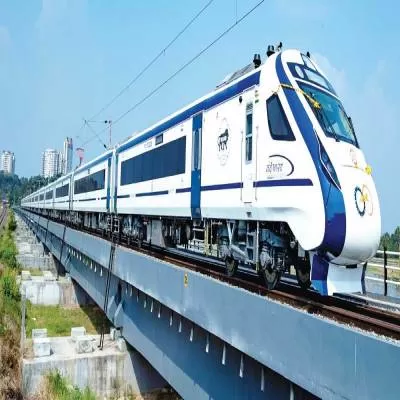
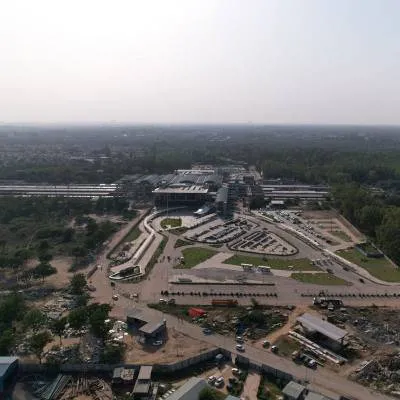
The proposal by the Ministry of Railways to monetise stations through a public-private partnership has been withdrawn.

The government has adopted a clear and hard stance that the railroads would not be privatised, the subject has been cleared at the cabinet level, the Ashwini Vaishnaw, Railways Minister previously stated.

The Engineering, Procurement, and Construction (EPC) mode will now be used for projects. The Ministry of Railways has been instructed to quicken the sale of other assets, including, but not limited to, trains, goodsheds, hill rail, stadiums, railroad colonies, and land parcels.

Stations, the largest asset class, decreased. Stations that were previously requested in PPP mode are now being accepted in EPC mode. Currently, an estimate of Rs 49.99 billion has been made for the likely revenue from asset monetisation of Indian Railways assets under National Monetisation Pipeline (NMP) in the current fiscal.

In contrast to its goal of Rs 300 billion for the current fiscal year, the ministry has only so far raised Rs 18.29 billion.

On November 14, Nirmala Sitharaman, the Minister of Finance, met with Parameswaran Iyer, CEO, Niti Aayog, to discuss the implementation of the NMP.

Also read:
Railway Ministry requests 30% increase for FY24 budget
CORE completes electrifying numerous segments and routes


The proposal by the Ministry of Railways to monetise stations through a public-private partnership has been withdrawn. The government has adopted a clear and hard stance that the railroads would not be privatised, the subject has been cleared at the cabinet level, the Ashwini Vaishnaw, Railways Minister previously stated. The Engineering, Procurement, and Construction (EPC) mode will now be used for projects. The Ministry of Railways has been instructed to quicken the sale of other assets, including, but not limited to, trains, goodsheds, hill rail, stadiums, railroad colonies, and land parcels. Stations, the largest asset class, decreased. Stations that were previously requested in PPP mode are now being accepted in EPC mode. Currently, an estimate of Rs 49.99 billion has been made for the likely revenue from asset monetisation of Indian Railways assets under National Monetisation Pipeline (NMP) in the current fiscal. In contrast to its goal of Rs 300 billion for the current fiscal year, the ministry has only so far raised Rs 18.29 billion. On November 14, Nirmala Sitharaman, the Minister of Finance, met with Parameswaran Iyer, CEO, Niti Aayog, to discuss the implementation of the NMP. Also read: Railway Ministry requests 30% increase for FY24 budget CORE completes electrifying numerous segments and routes

Related Stories

Gold Stories

Next Story
Infrastructure Urban

KONE Opens India's First Digital Experience Centre in Pune

KONE, a global elevator and escalator manufacturer, has inaugurated its first Digital Experience Centre (DEC) in India, located in Pune. The facility aims to showcase how artificial intelligence (AI), connectivity and data-driven technologies can enhance customer experiences and improve building operations.The centre was inaugurated by Jussi Herlin, Executive Vice Chair, KONE Corporation; Philippe Delorme, President and CEO, KONE; and Nandan Nilekani, Co-founder and Chairman of the Board, Infosys.Designed as an interactive customer environment, the facility demonstrates digital solutions cover..

Next Story
Infrastructure Urban

CII GreenCo Launches Circularity Guidelines for Indian Industry

The Confederation of Indian Industry (CII) GreenCo Council has launched the CII GreenCo Circularity Guidelines – Pilot Version at the 17th CII GreenCo Waste & Resource Management Summit 2026 in Chennai. The initiative aims to strengthen resource efficiency, waste reduction and circular economy practices across Indian manufacturing and process industries.The guidelines introduce a structured framework with circularity indices covering raw materials, consumables, packaging and other resource inputs. These indicators will help industries assess existing practices, identify opportunities to ..

Next Story
Infrastructure Energy

Global Electronics Association Launches IPC-1783-CO2E Standard

The Global Electronics Association has introduced IPC-1783-CO2E, a new international standard aimed at improving consistency, transparency and comparability in product carbon footprint reporting across the electronics manufacturing industry.The standard, titled International Standard for Data Collection and Reporting of CO2 Equivalent (CO2e) Emissions for the Electronics Manufacturing Supply Chain, provides industry-specific guidance for collecting, estimating and reporting carbon emissions data.With increasing regulatory requirements and customer expectations, electronics manufacturers face c..

Advertisement

Subscribe to Our Newsletter

Get daily newsletters around different themes from Construction world.

STAY CONNECTED

Advertisement

SPECIAL OFFER
QR Code