Railways Targets Kavach Rollout On Key Routes In 2026
RAILWAYS & METRO RAIL

Railways Targets Kavach Rollout On Key Routes In 2026

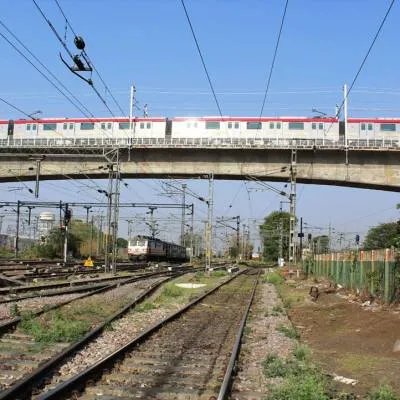
After missing its December 2025 deadline, Indian Railways is now aiming to operationalise the indigenous automatic train protection system, Kavach, on the Delhi–Mumbai and Delhi–Howrah routes sometime in 2026, officials said, citing steady progress and an aggressive execution strategy.

Kavach is a technology-intensive safety system designed to assist loco pilots in maintaining prescribed speed limits by automatically applying brakes if the driver fails to respond. Officials said around 25 per cent of the work on these high-density routes has already been commissioned and is ready for use, while major components for the remaining 75 per cent have been installed. Efforts are now focused on integrating and operationalising the system end to end.

The Ministry of Railways had earlier said on August 7, 2024, that Kavach installation on these routes would be completed by March 2025. This deadline was later extended to December 2025, as outlined in the budget document titled ‘Railways Estimates for Revised Estimates 2024–25 and Budget Estimates 2025–26’ released on February 1, 2025.

Providing an update in the Lok Sabha on December 17, Railway Minister Ashwini Vaishnaw said Kavach Version 4.0 has been successfully commissioned on 738 route km following extensive trials. This includes the Palwal–Mathura–Nagda section, covering 633 route km on the Delhi–Mumbai corridor, and the Howrah–Bardhaman section, spanning 105 route km on the Delhi–Howrah route.

The Minister added that optical fibre cable has been laid along 7,129 km, supported by the installation of 800 telecom towers. Other critical components have also progressed, with Station Kavach installed at 860 stations, track-side equipment deployed across 5,672 route km, and Loco Kavach fitted on 4,154 locomotives.

Once fully operational, Kavach is expected to significantly enhance safety on some of India’s busiest rail corridors by reducing the risk of human error and improving overall train control.

After missing its December 2025 deadline, Indian Railways is now aiming to operationalise the indigenous automatic train protection system, Kavach, on the Delhi–Mumbai and Delhi–Howrah routes sometime in 2026, officials said, citing steady progress and an aggressive execution strategy. Kavach is a technology-intensive safety system designed to assist loco pilots in maintaining prescribed speed limits by automatically applying brakes if the driver fails to respond. Officials said around 25 per cent of the work on these high-density routes has already been commissioned and is ready for use, while major components for the remaining 75 per cent have been installed. Efforts are now focused on integrating and operationalising the system end to end. The Ministry of Railways had earlier said on August 7, 2024, that Kavach installation on these routes would be completed by March 2025. This deadline was later extended to December 2025, as outlined in the budget document titled ‘Railways Estimates for Revised Estimates 2024–25 and Budget Estimates 2025–26’ released on February 1, 2025. Providing an update in the Lok Sabha on December 17, Railway Minister Ashwini Vaishnaw said Kavach Version 4.0 has been successfully commissioned on 738 route km following extensive trials. This includes the Palwal–Mathura–Nagda section, covering 633 route km on the Delhi–Mumbai corridor, and the Howrah–Bardhaman section, spanning 105 route km on the Delhi–Howrah route. The Minister added that optical fibre cable has been laid along 7,129 km, supported by the installation of 800 telecom towers. Other critical components have also progressed, with Station Kavach installed at 860 stations, track-side equipment deployed across 5,672 route km, and Loco Kavach fitted on 4,154 locomotives. Once fully operational, Kavach is expected to significantly enhance safety on some of India’s busiest rail corridors by reducing the risk of human error and improving overall train control.

Next Story
Real Estate

A Paradigm Shift

The Indian real-estate and construction sector, which employs a significant number of organised and unorganised workers in the country, has embarked on a paradigm shift in its regulatory framework from an employment law perspective. With the four Labour Codes – the Code on Wages, 2019 (Wage Code); the Industrial Relations Code, 2020 (IR Code); the Code on Social Security, 2020 (SS Code) and the Occupational Safety, Health and Working Conditions Code, 2020 (OSH Code) – coming into effect in India from November 21, 2025, the industry is shifting away from a fragmented, contractor- driven com..

Next Story
Technology

We offer end-to-end traceability at scale

mjunction has evolved from an e-auction pioneer into a multi-vertical digital commerce platform with deep expertise in complex steel and coal supply chains. Its end-to-end, AI-led architecture focuses on price discovery, traceability, compliance and scalability, enabling transparent procurement, efficient logistics and data-driven decision-making across geographies. Vinaya Varma, MD, shares more about the company in conversation with CW.From a technology standpoint, what are the core USPs of mjunction today that differentiate it in steel and coal supply chains?mjunction has evolved b..

Next Story
Infrastructure Urban

Henkel, Rotary Recycle PoP Ganesha Idols Under Project HARMONY

Henkel India, in partnership with the Rotary Club of Navi Mumbai – Joy of Giving and with support from the Navi Mumbai Municipal Corporation (NMMC), has advanced circular sustainability through Project HARMONY by recycling Plaster of Paris (PoP) Ganesha idols into community learning assets. The initiative highlights an integrated approach to environmental restoration and social impact.As part of the project, materials collected after Ganesh Visarjan 2025 at Nerul were responsibly diverted from land and water bodies and processed at an authorised recycling facility, with on-ground execution s..

Advertisement

Subscribe to Our Newsletter

Get daily newsletters around different themes from Construction world.

STAY CONNECTED

Advertisement

Advertisement

Advertisement

Advertisement

Open In App