+
Rishikesh Karnaprayag Rail Project On Track For December 2029
RAILWAYS & METRO RAIL

Rishikesh Karnaprayag Rail Project On Track For December 2029

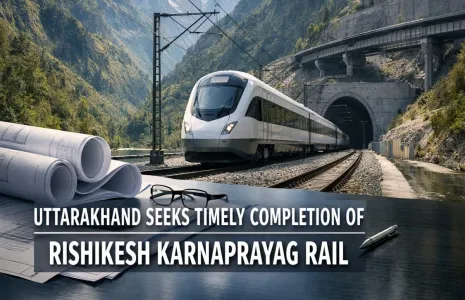
Rail Vikas Nigam Limited (RVNL) said the Rishikesh-Karnaprayag new line is targeted for completion by December 2029 and is being developed at a cost of Rs 370 bn.

The 125-km-long project is intended to strengthen rail connectivity in Uttarakhand and reduce travel time to the Himalayan region, and RVNL reported steady progress across tunnelling, bridgework and access infrastructure.

RVNL reported overall progress of 78 per cent and indicated that about 97 per cent of tunnel excavation has been completed, reflecting accelerated tunnelling works on the route.

The project is expected to support the Char Dham pilgrimage corridor, improve border connectivity, boost tourism and help local economies by facilitating faster movement of people and goods.

The line was sanctioned in the Union Budget for 2010-11 and passes through Dehradun, Tehri Garhwal, Pauri Garhwal, Rudraprayag and Chamoli districts, linking Devprayag and Karnaprayag with Rishikesh and the national capital.

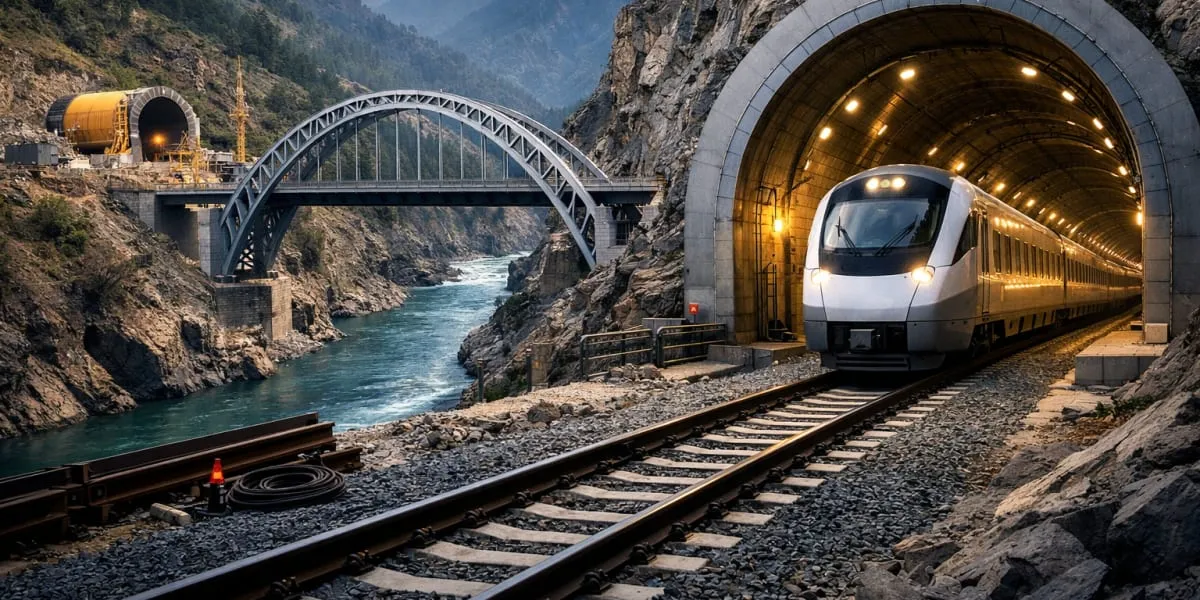
The alignment requires extensive tunnelling, comprising 16 main tunnels spanning 104 km and 12 escape tunnels covering around 98 km, of which 101 km and 95 km respectively have been completed to date.

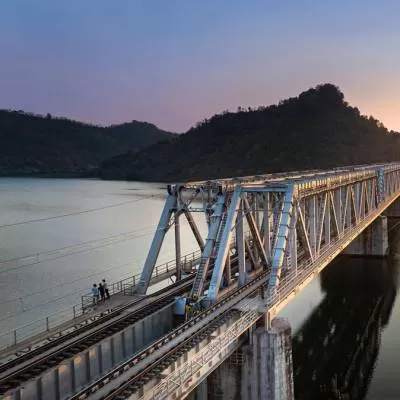
To facilitate works, eight access roads with a total length of five km have been constructed and 11 of 19 major bridges planned under the project have been finished while work continues on the remainder.

RVNL said remaining tasks focus on bridge construction, signalling and commissioning activities ahead of the December 2029 target and that teams remain mobilised across sites.

On completion the link is expected to open a new rail corridor into the Himalaya and provide a reliable alternative to long road journeys for pilgrims and residents.

The project continues to be monitored by the Ministry of Railways and will proceed in phases as complex civil works are finalised.

Rail Vikas Nigam Limited (RVNL) said the Rishikesh-Karnaprayag new line is targeted for completion by December 2029 and is being developed at a cost of Rs 370 bn. The 125-km-long project is intended to strengthen rail connectivity in Uttarakhand and reduce travel time to the Himalayan region, and RVNL reported steady progress across tunnelling, bridgework and access infrastructure. RVNL reported overall progress of 78 per cent and indicated that about 97 per cent of tunnel excavation has been completed, reflecting accelerated tunnelling works on the route. The project is expected to support the Char Dham pilgrimage corridor, improve border connectivity, boost tourism and help local economies by facilitating faster movement of people and goods. The line was sanctioned in the Union Budget for 2010-11 and passes through Dehradun, Tehri Garhwal, Pauri Garhwal, Rudraprayag and Chamoli districts, linking Devprayag and Karnaprayag with Rishikesh and the national capital. The alignment requires extensive tunnelling, comprising 16 main tunnels spanning 104 km and 12 escape tunnels covering around 98 km, of which 101 km and 95 km respectively have been completed to date. To facilitate works, eight access roads with a total length of five km have been constructed and 11 of 19 major bridges planned under the project have been finished while work continues on the remainder. RVNL said remaining tasks focus on bridge construction, signalling and commissioning activities ahead of the December 2029 target and that teams remain mobilised across sites. On completion the link is expected to open a new rail corridor into the Himalaya and provide a reliable alternative to long road journeys for pilgrims and residents. The project continues to be monitored by the Ministry of Railways and will proceed in phases as complex civil works are finalised.

Related Stories

Gold Stories

Next Story
Infrastructure Transport

Bevel Gears India Opens Aerospace Gear Plant Near Bengaluru

Bevel Gears India (BGI) has inaugurated a 70,000 sq ft manufacturing facility near Kempegowda International Airport in Bengaluru, dedicated exclusively to aerospace and defence gearing.The facility has been developed to manufacture flight-critical gearing with dedicated production, inspection and quality infrastructure. It will produce spiral and straight bevel gears, zerol and angular bevels, beveloids, hypoid and high-ratio hypoid gears, curvic couplings and precision parallel-axis gearing.The plant will cater to aero-engine, helicopter, UAV, actuation and aerospace gearbox programmes, suppo..

Next Story
Infrastructure Urban

Tata Hitachi Opens New Warehouse at Kharagpur Plant

Tata Hitachi Construction Machinery Company has inaugurated a new warehouse at its Kharagpur manufacturing facility in West Bengal to strengthen its supply chain and improve customer support across India.The facility was inaugurated by Sandeep Singh, Managing Director, Tata Hitachi, in the presence of Hiroshi Hosokawa, President – Spare Parts & Service Business Unit and Executive Officer, along with the company’s senior leadership and employees.The new warehouse is designed to enhance warehousing and inventory management capabilities, enabling more efficient handling and availability o..

Next Story
Infrastructure Urban

Vishnu Chemicals, DCX Chrome Form JV for Chromium Plant

Vishnu Chemicals Limited (VCL) has entered into a definitive joint venture agreement with France-based DCX Chrome SAS to establish a greenfield high-purity chromium metal manufacturing facility in Visakhapatnam, Andhra Pradesh.The two companies will hold equal 50% stakes in the proposed venture. The facility will have an installed capacity of 6,000 metric tonnes per annum and will manufacture high-purity chromium metal for applications across the aerospace, defence, energy, oil and gas, and chemical processing sectors.Under the partnership, DCX Chrome will provide its proprietary aluminothermi..

Advertisement

Subscribe to Our Newsletter

Get daily newsletters around different themes from Construction world.

STAY CONNECTED

Advertisement

SPECIAL OFFER
QR Code