+
Fadnavis Pitches Vidarbha As Maharashtra's Next Industrial Engine
PORTS & SHIPPING

Fadnavis Pitches Vidarbha As Maharashtra's Next Industrial Engine

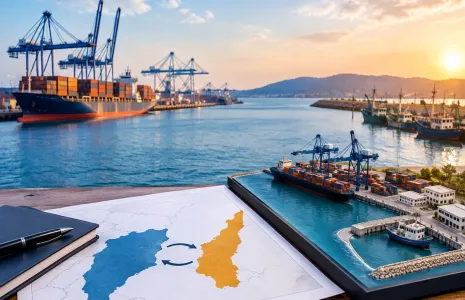
Devendra Fadnavis has pitched Vidarbha as Maharashtra's next industrial engine and announced plans for an access-controlled link to Vadhavan Port. The announcement framed improved port connectivity as central to regional industrial strategy and to unlocking manufacturing growth around Nagpur. The statement emphasised coordinated infrastructure investment to support industry and logistics without offering a timeline.

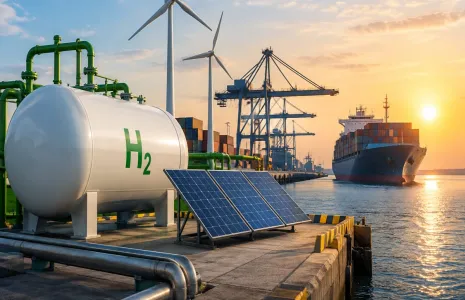
Vidarbha was presented as a focus for investment across established and emerging sectors, including proposals linked to green steel in Gadchiroli and solar manufacturing in Nagpur. The plan referenced development of a Global Capability Centres corridor (GCC corridor) to attract technology and services investment and to connect export oriented units to port facilities. Officials were said to be exploring policy measures and land use planning to catalyse industrial clusters while addressing environmental and social safeguards.

An access-controlled link to Vadhavan Port was described as a mechanism to streamline freight movements and to provide secure routes for high value and time sensitive cargo. Improved connectivity is expected to reduce transit friction for industries in central Maharashtra and to support supply chains that serve domestic and international markets. The initiative was linked to wider logistics upgrades and to the objective of making Nagpur a more competitive manufacturing node. Stakeholders were urged to coordinate timelines and to align investments with market demand.

Speakers indicated that realising the proposals will require coordinated public investment, private participation and clear regulatory frameworks to attract capital. Attention to workforce development and to ancillary services was said to be necessary to convert improved connectivity into sustainable employment gains. Observers noted that careful planning will be necessary to balance industrial growth with regional environmental priorities. The proposal was framed as part of a long term vision to integrate industrial corridors, logistics hubs and renewable energy manufacturing to enhance resilience and to diversify regional economic bases.

Devendra Fadnavis has pitched Vidarbha as Maharashtra's next industrial engine and announced plans for an access-controlled link to Vadhavan Port. The announcement framed improved port connectivity as central to regional industrial strategy and to unlocking manufacturing growth around Nagpur. The statement emphasised coordinated infrastructure investment to support industry and logistics without offering a timeline. Vidarbha was presented as a focus for investment across established and emerging sectors, including proposals linked to green steel in Gadchiroli and solar manufacturing in Nagpur. The plan referenced development of a Global Capability Centres corridor (GCC corridor) to attract technology and services investment and to connect export oriented units to port facilities. Officials were said to be exploring policy measures and land use planning to catalyse industrial clusters while addressing environmental and social safeguards. An access-controlled link to Vadhavan Port was described as a mechanism to streamline freight movements and to provide secure routes for high value and time sensitive cargo. Improved connectivity is expected to reduce transit friction for industries in central Maharashtra and to support supply chains that serve domestic and international markets. The initiative was linked to wider logistics upgrades and to the objective of making Nagpur a more competitive manufacturing node. Stakeholders were urged to coordinate timelines and to align investments with market demand. Speakers indicated that realising the proposals will require coordinated public investment, private participation and clear regulatory frameworks to attract capital. Attention to workforce development and to ancillary services was said to be necessary to convert improved connectivity into sustainable employment gains. Observers noted that careful planning will be necessary to balance industrial growth with regional environmental priorities. The proposal was framed as part of a long term vision to integrate industrial corridors, logistics hubs and renewable energy manufacturing to enhance resilience and to diversify regional economic bases.

Next Story
Infrastructure Urban

Implementation Status of Jal Jeevan Mission

Since August 2019 the Government has implemented Jal Jeevan Mission to provide assured potable water through household tap connections in rural India. At the start of the mission only 32.3 million (mn) rural households, representing 16.7 per cent, were reported to have tap water connections. States and union territories have reported that 125.8 mn additional rural households have since been provided with tap connections. As a result, of about 193.6 mn rural households roughly 158.2 mn, or 81.71 per cent, are reported to have tap water supply at home.\n\nThe State, district and village level st..

Next Story
Infrastructure Urban

Jal Jeevan Mission Reaches Eighty One Per Cent Rural Coverage

The Government reported substantial progress under the Jal Jeevan Mission, launched in August 2019 to provide tap water to every rural household. At launch only 32.3 million (mn) rural households had tap connections and states and Union territories reported provision of 125.8 mn additional households by March 2026. Consequently, out of about 193.6 mn rural households around 158.2 mn, or 81.71 per cent, are reported to have tap water at home. The Finance Minister announced extension of the mission until 2028 in the 2025-26 budget speech. The Swachh Bharat Mission Grameen, launched in October 20..

Next Story
Infrastructure Urban

Empowering Local Governance for Sustainable Rural Water Supply

The Ministry of Jal Shakti has aligned the Jal Jeevan Mission (JJM) with the 73rd Amendment to strengthen village level planning and community ownership of water supply. Gram Panchayats, village water and sanitation committees and Pani Samitis are to plan, implement, manage and maintain piped water systems, with gram sabha processes formalising handover and oversight. Implementation support agencies including non government organisations, community based organisations and self help groups have been empanelled to train local committees and promote women participation. Under JJM, the department ..

Advertisement

Subscribe to Our Newsletter

Get daily newsletters around different themes from Construction world.

STAY CONNECTED

Advertisement

Advertisement

Advertisement