

Indian Naval Ship Trikand Arrives At Mombasa Port
PORTS & SHIPPING

Indian Naval Ship Trikand Arrives At Mombasa Port

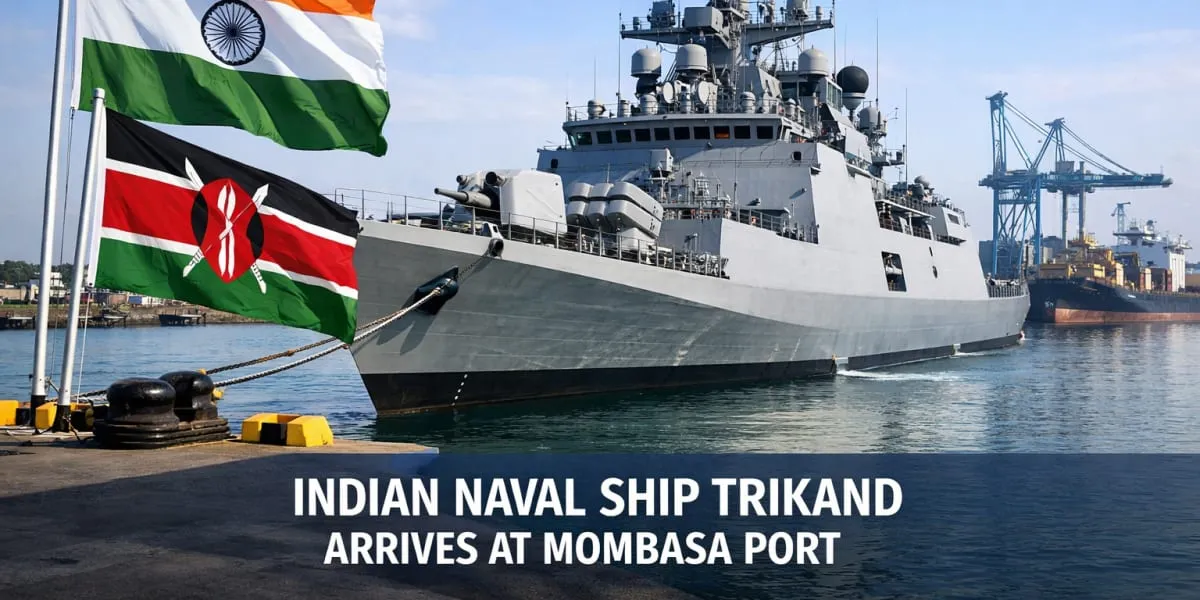
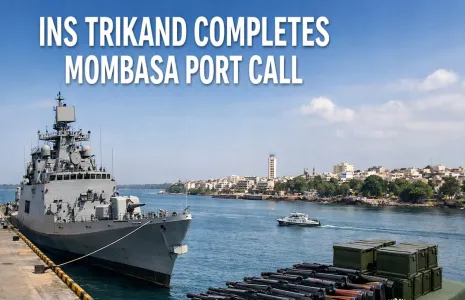
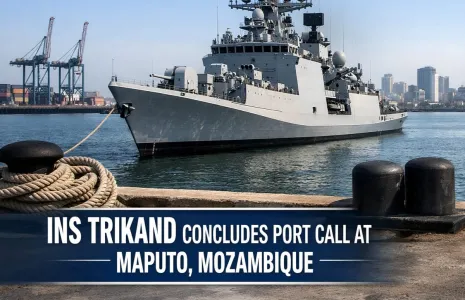
Indian Naval Ship Trikand (INS Trikand) arrived at Mombasa on seven April 2026 as part of its deployment in the South West Indian Ocean Region. The visit was intended to strengthen maritime cooperation and to enhance bilateral ties between India and Kenya. The ship is a frontline guided missile frigate of the Indian Navy and will undertake a series of engagements while alongside.

The port call coincided with the visit of Vice Admiral Krishna Swaminathan, Flag Officer Commanding-in-Chief, Western Naval Command, to Kenya. Professional, cultural and social engagements are scheduled and essential stores will be handed over to the Kenya Defence Forces. The ship's commanding officer will call on senior government functionaries to further diplomatic contact.

On departure from Mombasa, INS Trikand will conduct a Passage Exercise with units of the Kenya Navy (KN) to facilitate the exchange of best practices. The exercise is intended to deepen bilateral maritime interoperability and to enhance operational coordination. Training activities and tactical manoeuvres will provide opportunities for personnel from both navies to refine procedures and to build familiarity with one another.

The port call aligns with India’s MAHASAGAR vision for mutual and holistic advancement for security and growth across regions. The deployment demonstrates a commitment to ensuring a secure maritime environment and to supporting regional prosperity. The visit is expected to reinforce practical cooperation and to contribute to sustained engagement across the South West Indian Ocean Region.

While alongside, the ship will complete replenishment of essential supplies and undertake routine maintenance to sustain operational readiness. Professional exchanges and cultural interactions will further people-to-people ties and to promote mutual understanding between naval personnel. The call will also provide opportunities for follow up planning on future cooperative activities and for reinforcing communication channels between maritime authorities.

Indian Naval Ship Trikand (INS Trikand) arrived at Mombasa on seven April 2026 as part of its deployment in the South West Indian Ocean Region. The visit was intended to strengthen maritime cooperation and to enhance bilateral ties between India and Kenya. The ship is a frontline guided missile frigate of the Indian Navy and will undertake a series of engagements while alongside. The port call coincided with the visit of Vice Admiral Krishna Swaminathan, Flag Officer Commanding-in-Chief, Western Naval Command, to Kenya. Professional, cultural and social engagements are scheduled and essential stores will be handed over to the Kenya Defence Forces. The ship's commanding officer will call on senior government functionaries to further diplomatic contact. On departure from Mombasa, INS Trikand will conduct a Passage Exercise with units of the Kenya Navy (KN) to facilitate the exchange of best practices. The exercise is intended to deepen bilateral maritime interoperability and to enhance operational coordination. Training activities and tactical manoeuvres will provide opportunities for personnel from both navies to refine procedures and to build familiarity with one another. The port call aligns with India’s MAHASAGAR vision for mutual and holistic advancement for security and growth across regions. The deployment demonstrates a commitment to ensuring a secure maritime environment and to supporting regional prosperity. The visit is expected to reinforce practical cooperation and to contribute to sustained engagement across the South West Indian Ocean Region. While alongside, the ship will complete replenishment of essential supplies and undertake routine maintenance to sustain operational readiness. Professional exchanges and cultural interactions will further people-to-people ties and to promote mutual understanding between naval personnel. The call will also provide opportunities for follow up planning on future cooperative activities and for reinforcing communication channels between maritime authorities.

Next Story
Infrastructure Urban

Cabinet Approves Two Year Scheme To Replace Old Trucks And Buses

The Union Cabinet, chaired by the Prime Minister, approved a two-year scheme to reduce air pollution in the Delhi–NCR region and promote cleaner mobility. The programme will be funded through the National Capital Region Planning Board under the Ministry of Housing and Urban Affairs and implemented by the Ministry of Road Transport and Highways and the Ministry of Petroleum and Natural Gas, with participating States and Union Territories of Delhi, Haryana, Rajasthan and Uttar Pradesh. The total financial outlay has been set at Rs 95.85 billion (bn), with the Central Government contributing Rs..

Next Story
Infrastructure Transport

Bengaluru Suburban Rail And Metro To Share 500-Metre Corridor

Bengaluru suburban rail and the Metro will share a 500-metre corridor at Benniganahalli, a decision that planners say will reduce capital expenditure and urban disruption. The consolidation of alignments across the short stretch is intended to avoid duplication of elevated structures and station facilities while cutting land acquisition needs. Authorities put the maximum savings at Rs 1.69 bn (1,690 mn). The arrangement also aims to streamline construction interfaces between the two systems. The shared corridor will require coordinated design of track beds, piers and passenger access so that s..

Next Story
Infrastructure Urban

DRDO And IAF Complete Successful RudraM-II Flight Tests

The Defence Research and Development Organisation (DRDO) and the Indian Air Force (IAF) have conducted successful flight tests of the RudraM-II air-to-surface missile from an airborne platform. The trials were carried out under extreme release conditions with a critical trajectory that established the capability of all subsystems. The series of releases tested the missile's guidance, seeker and propulsion elements in an operationally representative environment. The missiles, released from the aircraft, were guided to a predefined target with pinpoint accuracy and all test objectives were fully..

Advertisement

Subscribe to Our Newsletter

Get daily newsletters around different themes from Construction world.

STAY CONNECTED

Advertisement

Advertisement

Advertisement