Great Nicobar Project To Be Game Changer For India's Maritime Trade
WAREHOUSING & LOGISTICS

Great Nicobar Project To Be Game Changer For India's Maritime Trade

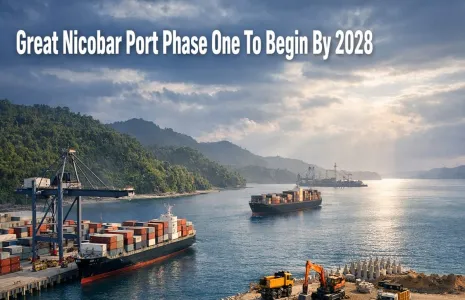
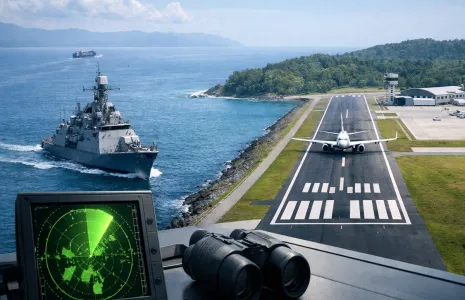
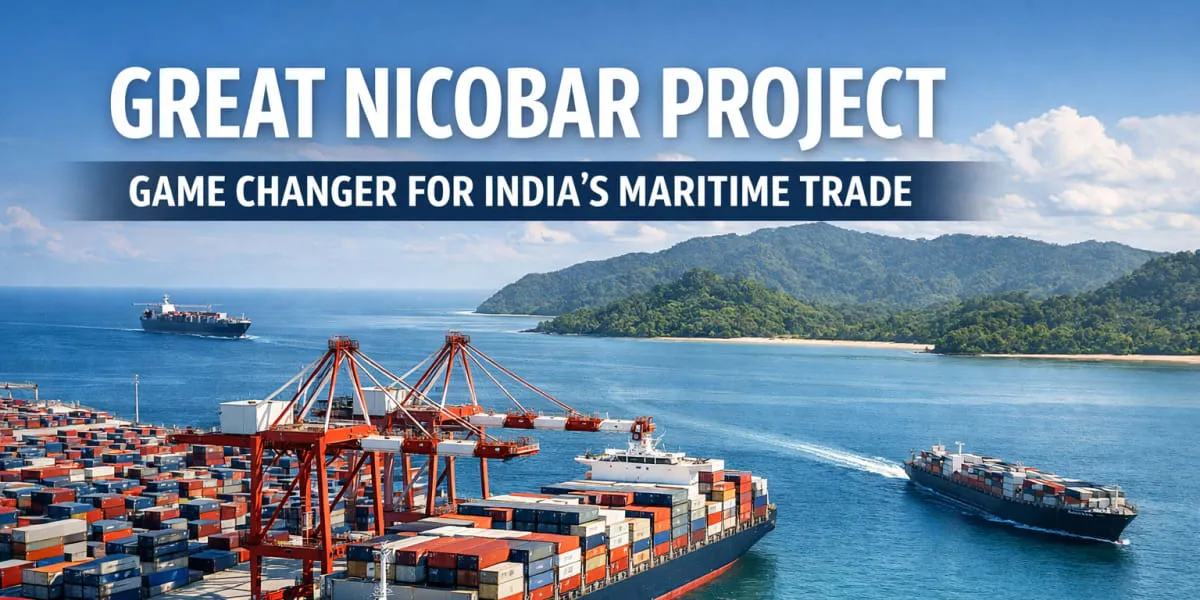
The Great Nicobar Island project is expected to transform India’s maritime trade and to position the Andaman and Nicobar Islands as a major logistics hub in the Indo-Pacific, Lieutenant Governor D K Joshi said. He said the scheme has moved into an implementation phase with the International Container Transshipment Terminal as its flagship. The island’s proximity to the Malacca Strait was cited as a strategic advantage for transhipment traffic.\n\nJoshi outlined that in the first phase the terminal is expected to handle around six million (six mn) TEUs at an estimated cost of Rs 200 billion (Rs 200 bn), with completion targeted within three years of commencement. He said the final phase could raise capacity to 21 million (21 mn) TEUs, placing the port among India’s largest and notable in the Indo-Pacific. The project will be implemented under a public-private partnership with planned environmental safeguards.\n\nAlongside the port, a green-field international airport is planned, with at least one runway due to be operational within three years, and the runway at the naval air station INS Baaz in Campbell Bay is being extended to nearly three km to handle large aircraft. Officials said an agreement with Cochin Shipyard Limited will aid skill development and upgrades to boost ship repair capacity. Opposition parties have raised environmental concerns about potential ecological damage and coral loss; authorities said safeguards will be incorporated.\n\nComplementary proposals include a ship-to-ship transhipment terminal at Port Meadows off Swaraj Dweep and a proposed deep-water multipurpose port at Atlanta Bay near Diglipur to augment the Great Nicobar initiative. Multiple studies are under way and projects will be rolled out in phased stages over the coming years, with shipping activity expected to rise significantly over the next five years. Officials said the combined developments are intended to foster an initial ship repair hub that could evolve into a shipbuilding centre, supporting the Viksit Bharat vision for the islands.

The Great Nicobar Island project is expected to transform India’s maritime trade and to position the Andaman and Nicobar Islands as a major logistics hub in the Indo-Pacific, Lieutenant Governor D K Joshi said. He said the scheme has moved into an implementation phase with the International Container Transshipment Terminal as its flagship. The island’s proximity to the Malacca Strait was cited as a strategic advantage for transhipment traffic.\n\nJoshi outlined that in the first phase the terminal is expected to handle around six million (six mn) TEUs at an estimated cost of Rs 200 billion (Rs 200 bn), with completion targeted within three years of commencement. He said the final phase could raise capacity to 21 million (21 mn) TEUs, placing the port among India’s largest and notable in the Indo-Pacific. The project will be implemented under a public-private partnership with planned environmental safeguards.\n\nAlongside the port, a green-field international airport is planned, with at least one runway due to be operational within three years, and the runway at the naval air station INS Baaz in Campbell Bay is being extended to nearly three km to handle large aircraft. Officials said an agreement with Cochin Shipyard Limited will aid skill development and upgrades to boost ship repair capacity. Opposition parties have raised environmental concerns about potential ecological damage and coral loss; authorities said safeguards will be incorporated.\n\nComplementary proposals include a ship-to-ship transhipment terminal at Port Meadows off Swaraj Dweep and a proposed deep-water multipurpose port at Atlanta Bay near Diglipur to augment the Great Nicobar initiative. Multiple studies are under way and projects will be rolled out in phased stages over the coming years, with shipping activity expected to rise significantly over the next five years. Officials said the combined developments are intended to foster an initial ship repair hub that could evolve into a shipbuilding centre, supporting the Viksit Bharat vision for the islands.

Next Story
Infrastructure Transport

Surya Roshni delivers customised lighting for NCRTC RRTS stations

Surya Roshni has supplied customised indoor lighting solutions for 18 elevated stations on the National Capital Region Transport Corporation's (NCRTC) Rapid Rail Transit System (RRTS), strengthening its presence in India's infrastructure lighting segment.The project involved the design and deployment of lighting systems for platforms, concourses, foot overbridges (FOBs) and back-of-house (BOH) areas. According to the company, the luminaires were developed specifically to meet NCRTC's design, operational and performance requirements rather than using standard products.Surya introduced two custo..

Next Story
Real Estate

Hilton debuts Tapestry Collection brand in Vietnam

Hilton has opened NHAAN Resort & Spa Hoi An, Tapestry Collection by Hilton, marking the debut of the Tapestry Collection brand in Vietnam and expanding its lifestyle hospitality portfolio in Southeast Asia.Located along the Co Co River in Cam Thanh village, the 174-key resort provides access to Hoi An Ancient Town, Cua Dai Beach and the Cam Thanh Nipa Forest. The property has been designed by Vietnamese architect Vo Trong Nghia, incorporating biophilic architecture, locally sourced materials and riverfront landscapes.The resort offers a mix of guest rooms and suites, including family-frien..

Next Story
Building Material

Electrent expands lithium energy storage system portfolio

Electrent Energy has expanded its lithium-based energy storage portfolio with the launch of the ESS 850 and ESS 1050, targeting compact and maintenance-free power backup solutions for Indian homes.The new systems integrate a Home UPS and a LiFePO4 lithium battery into a single unit, extending the company's product range following the launch of its ESS 1350 and ESS 2500 models.Designed for apartments and smaller homes, the ESS 850 provides up to 1 hour 15 minutes of backup, while the ESS 1050 offers up to 1 hour 45 minutes on a typical 400 W household load. The systems can power essential appli..

Advertisement

Subscribe to Our Newsletter

Get daily newsletters around different themes from Construction world.

STAY CONNECTED

Advertisement

Advertisement

Advertisement