IWDC 3.0 Clears Rs 15 Bn Projects for Inland Waterways
WATER & WASTE

IWDC 3.0 Clears Rs 15 Bn Projects for Inland Waterways

The third meeting of the Inland Waterways Development Council (IWDC 3.0) has approved projects worth over Rs 15 billion to accelerate green mobility, cargo movement and river tourism across India’s inland waterways network. The day-long meeting, held recently in Kochi, was chaired by Union Minister of Ports, Shipping and Waterways Sarbananda Sonowal and saw participation from ministers of several states.

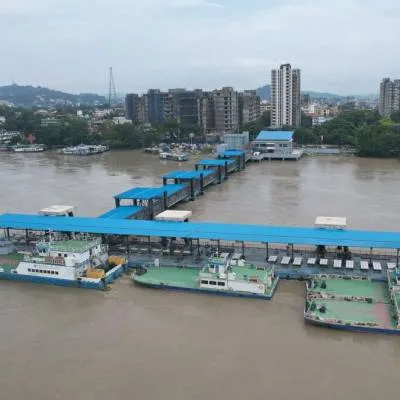
The council cleared new inland waterway projects valued at over Rs 9 billion, alongside asset procurement approvals worth more than Rs 4.65 billion to enhance navigability, safety and year-round operations. Foundation stones were laid for projects exceeding Rs 1.5 billion, including river cruise jetties across Kerala, Gujarat, Karnataka, Odisha and Telangana, strengthening India’s fast-growing river cruise tourism sector.

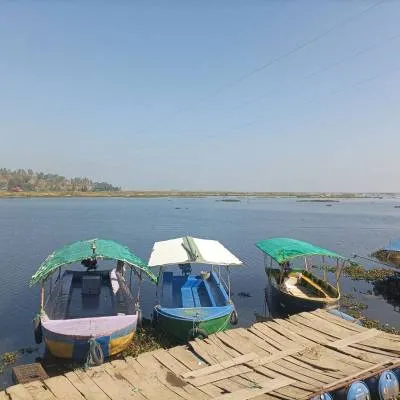
Key cargo infrastructure initiatives include the development of Ro-Ro and cargo terminals at Muktyala and Harishchandrapuram on the Krishna River (NW-4) in Andhra Pradesh, while onshore passenger facilities on the Jhelum River (NW-49) in Jammu and Kashmir were approved. Ten hybrid electric vessels will be deployed on NW-49 to support clean passenger movement.

Asset procurement approvals cover survey vessels in Kerala; Ro-Pax jetties in Bihar, Jharkhand and West Bengal; floating pontoons and quick-opening mechanisms in Uttar Pradesh, Bihar and West Bengal; hybrid survey vessels; dredgers; and tug-barge units.

Among major new projects announced were a slipway facility at Kochi, construction of 110 jetties across Odisha and the Northeast, implementation of the National River Traffic and Navigation System in Maharashtra, a Rs 700 million cruise terminal at Uzan Bazar Ghat in Guwahati, and a Rs 1.44 billion road connectivity project to the Bogibeel River Port in Dibrugarh on the Brahmaputra (NW-2).

Addressing the council, the Union Minister said inland waterways have emerged as a strategic pillar of India’s multimodal logistics framework, easing congestion on roads, reducing logistics costs and supporting ease of doing business. Kerala’s backwater and canal network was highlighted as a key opportunity, with proposals to expand the Jal Vahak cargo promotion scheme and introduce fixed-day scheduled cargo services to improve commercial viability.

Special emphasis was placed on the Northeast, with plans to develop 85 jetties involving investments exceeding Rs 5 billion to boost regional connectivity, trade and livelihoods.

The council reviewed the sector’s rapid expansion, with cargo movement on national waterways rising from 18 million tonnes in 2013–14 to 145.84 million tonnes in 2024–25, while operational national waterways increased from three to 32.

IWDC 3.0 concluded with a reaffirmed Centre–State commitment to scale up inland water transport, promote cleaner mobility solutions and position rivers as engines of sustainable economic growth.

The third meeting of the Inland Waterways Development Council (IWDC 3.0) has approved projects worth over Rs 15 billion to accelerate green mobility, cargo movement and river tourism across India’s inland waterways network. The day-long meeting, held recently in Kochi, was chaired by Union Minister of Ports, Shipping and Waterways Sarbananda Sonowal and saw participation from ministers of several states. The council cleared new inland waterway projects valued at over Rs 9 billion, alongside asset procurement approvals worth more than Rs 4.65 billion to enhance navigability, safety and year-round operations. Foundation stones were laid for projects exceeding Rs 1.5 billion, including river cruise jetties across Kerala, Gujarat, Karnataka, Odisha and Telangana, strengthening India’s fast-growing river cruise tourism sector. Key cargo infrastructure initiatives include the development of Ro-Ro and cargo terminals at Muktyala and Harishchandrapuram on the Krishna River (NW-4) in Andhra Pradesh, while onshore passenger facilities on the Jhelum River (NW-49) in Jammu and Kashmir were approved. Ten hybrid electric vessels will be deployed on NW-49 to support clean passenger movement. Asset procurement approvals cover survey vessels in Kerala; Ro-Pax jetties in Bihar, Jharkhand and West Bengal; floating pontoons and quick-opening mechanisms in Uttar Pradesh, Bihar and West Bengal; hybrid survey vessels; dredgers; and tug-barge units. Among major new projects announced were a slipway facility at Kochi, construction of 110 jetties across Odisha and the Northeast, implementation of the National River Traffic and Navigation System in Maharashtra, a Rs 700 million cruise terminal at Uzan Bazar Ghat in Guwahati, and a Rs 1.44 billion road connectivity project to the Bogibeel River Port in Dibrugarh on the Brahmaputra (NW-2). Addressing the council, the Union Minister said inland waterways have emerged as a strategic pillar of India’s multimodal logistics framework, easing congestion on roads, reducing logistics costs and supporting ease of doing business. Kerala’s backwater and canal network was highlighted as a key opportunity, with proposals to expand the Jal Vahak cargo promotion scheme and introduce fixed-day scheduled cargo services to improve commercial viability. Special emphasis was placed on the Northeast, with plans to develop 85 jetties involving investments exceeding Rs 5 billion to boost regional connectivity, trade and livelihoods. The council reviewed the sector’s rapid expansion, with cargo movement on national waterways rising from 18 million tonnes in 2013–14 to 145.84 million tonnes in 2024–25, while operational national waterways increased from three to 32. IWDC 3.0 concluded with a reaffirmed Centre–State commitment to scale up inland water transport, promote cleaner mobility solutions and position rivers as engines of sustainable economic growth.

Next Story
Infrastructure Urban

HVAC: Cool Advice

India’s Cooling Action Plan forecasts cooling demand to grow nearly eight times in the next 20 years. In light of the fact that cooling is no longer just a comfort product but lies at the intersection of national development, public health, climate action and energy security, this means the HVAC industry shoulders a very serious responsibility. Mihir Sanghavi, Managing Partner, Auro Engineering Company, Immediate Past President RATA, Secretary, ISHRAE, and Regional Representative, ASHRAE Region XV, describes that responsibility as “identifying a system that can serve for 15 to 20 years o..

Next Story
Infrastructure Urban

Wanted: 2 Million Workers

Construction, India’s second largest employer by industry, employs about 50 million workers but could additionally absorb another 40 million workers, according to estimates shared by the Construction Skill Development Council of India (CSDCI) in 2023. Within this, citing trade estimates, Rahul Bahl, Managing Director, Krishna Buildestates, says the shortage of trained, skilled workers is currently about 2 million, and is expected to rise to 5 million by 2030.Not only is the construction industry struggling to find workers but construction labour productivity in India significantly trails glo..

Next Story
Infrastructure Transport

The Critical Path

In Ircon International Ltd v. Afcons Infrastructure Ltd, OMP (Comm) 279/2019, the Delhi High Court examined how delay and extension of time (‘EOT’) are to be assessed in construction contracts, particularly in the context of the ‘critical path’ while dealing with challenge to an arbitral award under Section 34 of the Arbitration and Conciliation Act 1996 (‘the Act’). The High Court’s observations regarding the critical path are of significant import for construction and infrastructure projects and related arbitration. The parties entered into a contract for construction of T..

Advertisement

Subscribe to Our Newsletter

Get daily newsletters around different themes from Construction world.

STAY CONNECTED

Advertisement

Advertisement

Advertisement