MPCB Directs BMC to Strengthen Beach Cleaning and Waste Management
WATER & WASTE

MPCB Directs BMC to Strengthen Beach Cleaning and Waste Management

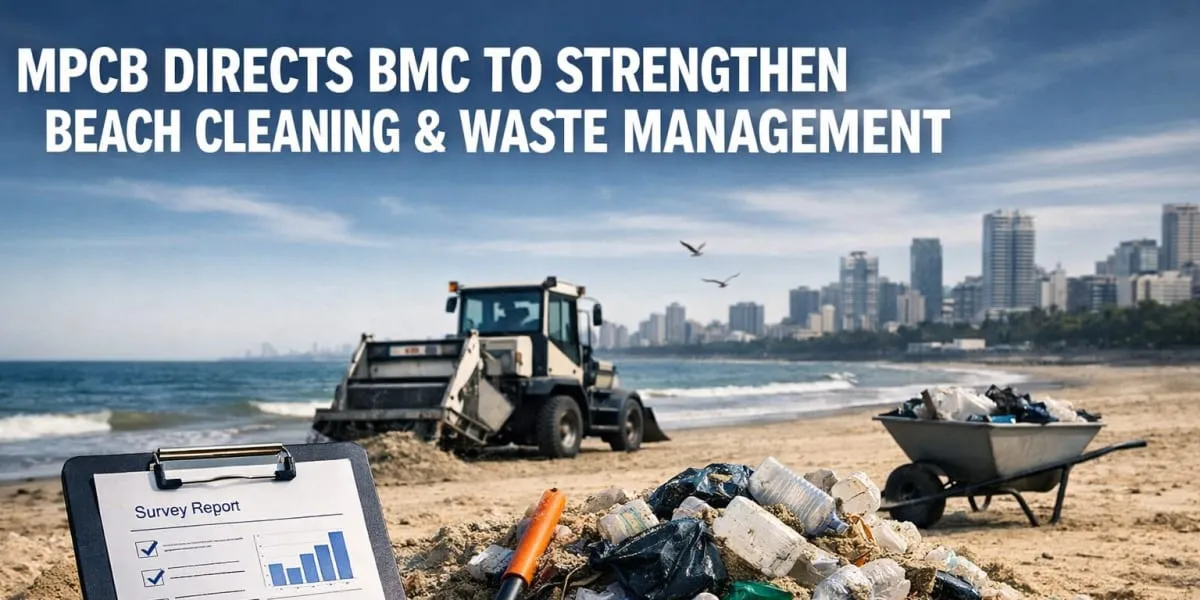
The Maharashtra Pollution Control Board (MPCB) chairman Siddhesh Kadam directed the Brihanmumbai Municipal Corporation (BMC) to conduct a detailed survey of all beaches in Mumbai and to immediately arrange the machinery and manpower required to improve cleanliness. The directions were issued during a review meeting at BMC headquarters to assess a beach cleaning drive carried out on August 17, 2026 and to discuss wider environmental concerns affecting the city.

The meeting focused on the problem of plastic and other waste entering the sea through drains and nullahs across Mumbai and on measures to prevent such inflows. Officials were instructed to map pollution hotspots, identify primary source points and prioritise locations for intervention. The BMC was asked to coordinate with drainage, solid waste and coastal departments to ensure an integrated response.

The board urged the timely deployment of mechanised cleaning equipment and adequate personnel to sustain operations and to establish routine monitoring of identified sites. It recommended a schedule for frequent cleansing of catchment areas and the use of containment measures at drain outfalls to reduce debris reaching open water. The review emphasised data collection to track progress and inform adaptive measures.

Officials reported that the measures are intended to improve beach cleanliness and to reduce marine pollution, and further oversight reviews were proposed to monitor implementation. The MPCB indicated that community involvement and awareness initiatives should complement civic action to sustain results. The meeting concluded with a directive for periodic reporting on survey findings and operational readiness.

Officials said follow up would include regular audits of cleaning contracts and improved waste segregation at source to reduce load on coastal areas. The board favoured the use of evidence gathered in the surveys to prioritise funding and to direct maintenance efforts where they are most needed. A timetable for review and technical support was requested to ensure sustained action.

The Maharashtra Pollution Control Board (MPCB) chairman Siddhesh Kadam directed the Brihanmumbai Municipal Corporation (BMC) to conduct a detailed survey of all beaches in Mumbai and to immediately arrange the machinery and manpower required to improve cleanliness. The directions were issued during a review meeting at BMC headquarters to assess a beach cleaning drive carried out on August 17, 2026 and to discuss wider environmental concerns affecting the city. The meeting focused on the problem of plastic and other waste entering the sea through drains and nullahs across Mumbai and on measures to prevent such inflows. Officials were instructed to map pollution hotspots, identify primary source points and prioritise locations for intervention. The BMC was asked to coordinate with drainage, solid waste and coastal departments to ensure an integrated response. The board urged the timely deployment of mechanised cleaning equipment and adequate personnel to sustain operations and to establish routine monitoring of identified sites. It recommended a schedule for frequent cleansing of catchment areas and the use of containment measures at drain outfalls to reduce debris reaching open water. The review emphasised data collection to track progress and inform adaptive measures. Officials reported that the measures are intended to improve beach cleanliness and to reduce marine pollution, and further oversight reviews were proposed to monitor implementation. The MPCB indicated that community involvement and awareness initiatives should complement civic action to sustain results. The meeting concluded with a directive for periodic reporting on survey findings and operational readiness. Officials said follow up would include regular audits of cleaning contracts and improved waste segregation at source to reduce load on coastal areas. The board favoured the use of evidence gathered in the surveys to prioritise funding and to direct maintenance efforts where they are most needed. A timetable for review and technical support was requested to ensure sustained action.

Related Stories

Gold Stories
Next Story
Infrastructure Urban

Bajaj Auto to Raise Monthly Electric 2W Capacity to 80,000 by March

Bajaj Auto plans to raise monthly production capacity for electric two-wheelers to around 80,000 units by the end of March, as demand for its Chetak electric scooter continues to exceed available output. The company currently has capacity for around 60,000 electric two-wheelers a month. Joint Managing Director Rakesh Sharma said production had returned to the existing full capacity after a supply chain disruption affected output. The issue had reduced recent production to around 40,000 units, resulting in a shortfall of 20,000 vehicles despite strong demand. The company expects to remove produ..

Next Story
Infrastructure Transport

India’s Domestic Air Passenger Traffic Falls 6.5% in September

India’s domestic air passenger traffic declined 6.49 per cent month on month to 11.8 mn in September, according to data released by the Directorate General of Civil Aviation (DGCA). IndiGo retained its leading position, carrying nearly two-thirds of domestic passengers, while the Air India Group remained the second-largest operator. IndiGo held a 65.4 per cent market share and transported 7.73 mn passengers during the month. The Air India Group accounted for 26.8 per cent of the market, carrying 3.165 mn passengers, based on data from the aviation regulator. Akasa Air ranked third with a 5.6..

Next Story
Infrastructure Urban

DPIIT Advances Trust-Based Governance Across India

The Department for Promotion of Industry and Internal Trade (DPIIT), under the Ministry of Commerce and Industry, is shifting India’s regulatory approach from permission-based administration to trust-based governance. The reforms seek to reduce business compliance, support startups, attract investment and simplify approvals across the country. According to an official statement, 47,957 compliance requirements have been reduced across Central Ministries and States and Union Territories. Of these, 22,290 have been digitised, 16,141 simplified, 5,255 decriminalised and 4,271 eliminated. The Jan..

Advertisement

Subscribe to Our Newsletter

Get daily newsletters around different themes from Construction world.

STAY CONNECTED

Advertisement

SPECIAL OFFER
QR Code