Eicher Trucks & Buses Reaffirms Energy-Efficient Mobility Focus
Products

Eicher Trucks & Buses Reaffirms Energy-Efficient Mobility Focus

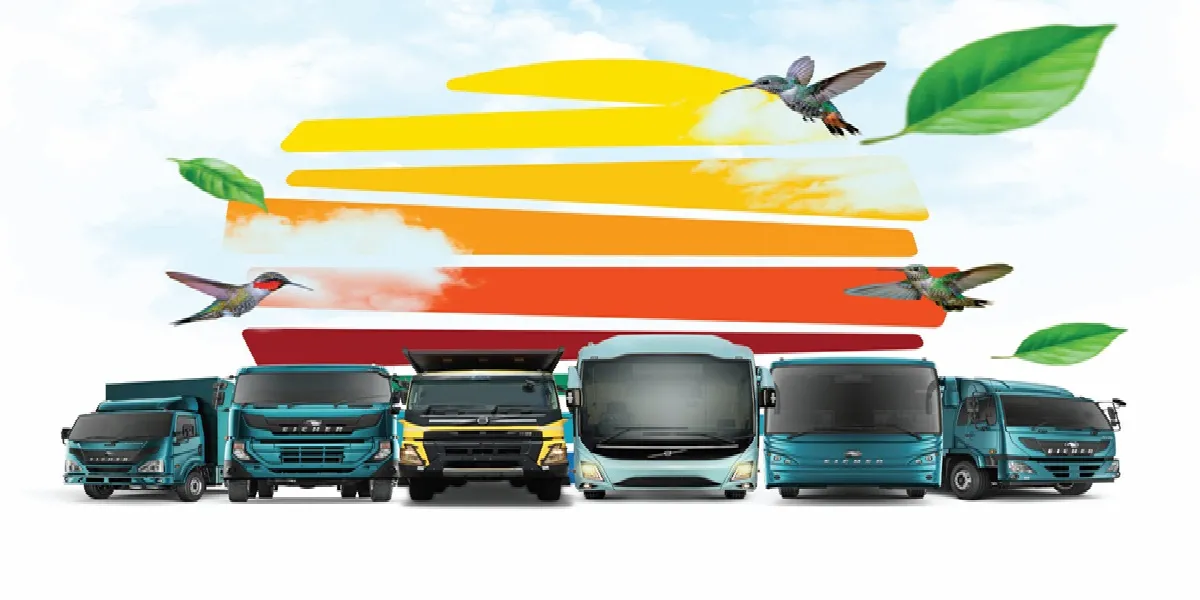
Eicher Trucks & Buses, a business unit of Volvo Eicher Commercial Vehicles (VECV), recently marked National Energy Conservation Day by reaffirming its focus on building an energy-efficient mobility ecosystem spanning manufacturing, fleet operations and customer productivity. The company continues to integrate energy-efficient technologies, expand renewable energy adoption and enable customers to achieve higher efficiency with lower energy consumption.

A key pillar of this strategy is Eicher’s Industry 4.0-enabled Bhopal manufacturing facility, which is designed for responsible and resource-efficient production. The plant features a 52-million-litre water body that supplies water to the paint shop, with recycled and treated water fed back into the lake, reflecting a circular water-management approach. The quality of recycling has enabled the water body to support aquatic life and attract migratory birds.

Energy efficiency across facilities is further supported through LED-based lighting, replacing nearly 5,000 conventional fixtures, along with intelligent systems such as IoT-led energy monitoring and VFD-enabled motor controls. Under its sustainability roadmap, VECV is progressing towards sourcing 70 per cent of its energy from renewable sources by FY27 and aims to achieve Water Positive status by 2030.

On-road efficiency is driven through Eicher’s connected ecosystem, with more than 3.87 lakh vehicles leveraging MyEicher’s predictive insights to optimise vehicle utilisation, reduce idling and improve fuel efficiency. Complementing this, Eicher operates a growing fleet of alternate-fuel commercial vehicles, including CNG, LNG and electric variants, deployed across multiple states.

Guided by its ‘Pro-Profit, Pro Planet’ philosophy, Eicher’s sustainability initiatives also cover waste reduction, plantation drives, emission control and Zero Waste to Landfill programmes. These efforts are aligned with the UN Sustainable Development Goals related to water, energy, responsible consumption and climate action.

As India advances through its Amrit Kaal phase, Eicher Trucks & Buses stated that it remains committed to modernising commercial transportation by reducing energy use at source, optimising efficiency in operations and enabling sustainable, scalable logistics and mobility solutions.

Eicher Trucks & Buses, a business unit of Volvo Eicher Commercial Vehicles (VECV), recently marked National Energy Conservation Day by reaffirming its focus on building an energy-efficient mobility ecosystem spanning manufacturing, fleet operations and customer productivity. The company continues to integrate energy-efficient technologies, expand renewable energy adoption and enable customers to achieve higher efficiency with lower energy consumption. A key pillar of this strategy is Eicher’s Industry 4.0-enabled Bhopal manufacturing facility, which is designed for responsible and resource-efficient production. The plant features a 52-million-litre water body that supplies water to the paint shop, with recycled and treated water fed back into the lake, reflecting a circular water-management approach. The quality of recycling has enabled the water body to support aquatic life and attract migratory birds. Energy efficiency across facilities is further supported through LED-based lighting, replacing nearly 5,000 conventional fixtures, along with intelligent systems such as IoT-led energy monitoring and VFD-enabled motor controls. Under its sustainability roadmap, VECV is progressing towards sourcing 70 per cent of its energy from renewable sources by FY27 and aims to achieve Water Positive status by 2030. On-road efficiency is driven through Eicher’s connected ecosystem, with more than 3.87 lakh vehicles leveraging MyEicher’s predictive insights to optimise vehicle utilisation, reduce idling and improve fuel efficiency. Complementing this, Eicher operates a growing fleet of alternate-fuel commercial vehicles, including CNG, LNG and electric variants, deployed across multiple states. Guided by its ‘Pro-Profit, Pro Planet’ philosophy, Eicher’s sustainability initiatives also cover waste reduction, plantation drives, emission control and Zero Waste to Landfill programmes. These efforts are aligned with the UN Sustainable Development Goals related to water, energy, responsible consumption and climate action. As India advances through its Amrit Kaal phase, Eicher Trucks & Buses stated that it remains committed to modernising commercial transportation by reducing energy use at source, optimising efficiency in operations and enabling sustainable, scalable logistics and mobility solutions.

Next Story
Technology

AI-Enabled Workflows Lift Profitability and Productivity

Organisations modernising frontline workflows with artificial intelligence, automation and real-time data are reporting stronger financial performance, higher productivity and improved employee engagement, according to a global study by Zebra Technologies and Oxford Economics.The research covered 1,000 senior leaders across retail, manufacturing, transportation and logistics in the US, Mexico, the UK, Germany, India, Japan, Australia and New Zealand.In transportation and logistics, 54 per cent of companies that improved picking and packing operations reported faster operational performance, wh..

Next Story
Real Estate

India Leads Global AI Readiness but Implementation Lags

Indian companies lead global averages across all eight artificial intelligence readiness indicators tracked by JLL, but only 19 per cent have started making changes to their workplaces, according to the JLL 2026 Future of Work Survey.The study found that 77 per cent of Indian business leaders expect AI to change their office requirements, creating a 58-percentage-point gap between awareness and implementation. The survey covered more than 2,200 CEOs, CFOs and real estate leaders across 21 countries during the first quarter of 2026.Despite concerns over automation, 58 per cent of Indian leaders..

Next Story
Equipment

Three WOLFF Cranes Build Riyadh Cable-Stayed Bridges

Three WOLFF 180 B luffing jib cranes are supporting the construction of two cable-stayed bridges alongside the existing Wadi Laban Bridge in Riyadh, Saudi Arabia. The project is being developed for the Royal Commission for Riyadh City and executed by the ICRC joint venture comprising IC Ictas and Al Rashid Trading & Contracting Company.The cranes are handling lifting operations including formwork, reinforcement, concrete placement, work platforms, surveying equipment and other construction materials. Each crane is fitted with a 40 m jib, reaches a hook height of 157 m and offers a maximum ..

Advertisement

Subscribe to Our Newsletter

Get daily newsletters around different themes from Construction world.

STAY CONNECTED

Advertisement

Advertisement

Advertisement