+
Centre Explores Special Coal Mining Framework For Meghalaya
COAL & MINING

Centre Explores Special Coal Mining Framework For Meghalaya

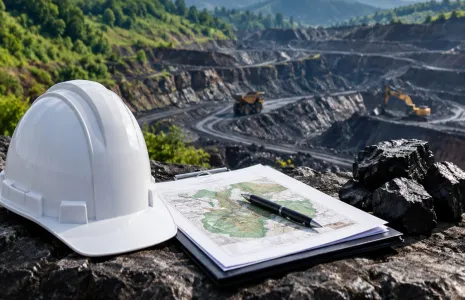
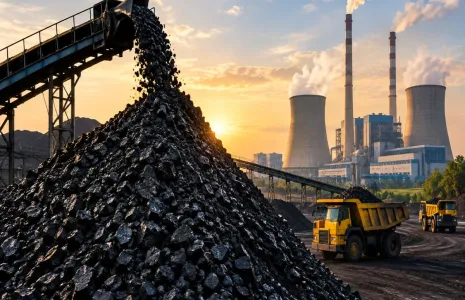
The Centre is exploring a special framework to enable scientific coal mining in Meghalaya, the Chief Minister Conrad K Sangma told the state Assembly during a short-duration discussion initiated by VPP president Ardent Miller Basaiawmoit. He noted that the Supreme Court has lifted the blanket ban on coal mining provided operations comply with legal requirements and environmental norms. The move is being considered to transition the state away from hazardous rat-hole practices while balancing local livelihoods and regulatory obligations.

Coal mining in Meghalaya has faced legal and operational restrictions since 2014 when the National Green Tribunal prohibited transportation and unscientific rat-hole extraction methods. The Supreme Court overturned that ban in 2019 and permitted scientific mining approaches under judicial and regulatory oversight. Sangma indicated that the proposed framework aims to address practical challenges in applying such methods across the state.

The state government continues to contend with the legacy of informal operations, difficult terrain and the need for strict safety protocols, all of which complicate efforts to introduce mechanised, regulated mining. Officials have emphasised the importance of environmental safeguards, worker safety measures and community engagement as part of any new regime. Technical capacity, monitoring mechanisms and clear compliance pathways are being discussed as essential elements of the proposed arrangement.

Sangma said the Centre and the state are in dialogue to develop rules that reconcile conservation concerns with economic realities and that any framework will have to align with existing laws and court directions. The Assembly exchange underlined the sensitivity of mining policy in Meghalaya and the requirement for coordinated implementation across agencies. Further consultations with stakeholders and regulators are expected as authorities work towards operationalising a scientific mining model. Officials indicated that timelines and implementation details will be worked out in consultation with legal and technical experts.

The Centre is exploring a special framework to enable scientific coal mining in Meghalaya, the Chief Minister Conrad K Sangma told the state Assembly during a short-duration discussion initiated by VPP president Ardent Miller Basaiawmoit. He noted that the Supreme Court has lifted the blanket ban on coal mining provided operations comply with legal requirements and environmental norms. The move is being considered to transition the state away from hazardous rat-hole practices while balancing local livelihoods and regulatory obligations. Coal mining in Meghalaya has faced legal and operational restrictions since 2014 when the National Green Tribunal prohibited transportation and unscientific rat-hole extraction methods. The Supreme Court overturned that ban in 2019 and permitted scientific mining approaches under judicial and regulatory oversight. Sangma indicated that the proposed framework aims to address practical challenges in applying such methods across the state. The state government continues to contend with the legacy of informal operations, difficult terrain and the need for strict safety protocols, all of which complicate efforts to introduce mechanised, regulated mining. Officials have emphasised the importance of environmental safeguards, worker safety measures and community engagement as part of any new regime. Technical capacity, monitoring mechanisms and clear compliance pathways are being discussed as essential elements of the proposed arrangement. Sangma said the Centre and the state are in dialogue to develop rules that reconcile conservation concerns with economic realities and that any framework will have to align with existing laws and court directions. The Assembly exchange underlined the sensitivity of mining policy in Meghalaya and the requirement for coordinated implementation across agencies. Further consultations with stakeholders and regulators are expected as authorities work towards operationalising a scientific mining model. Officials indicated that timelines and implementation details will be worked out in consultation with legal and technical experts.

Related Stories

Gold Stories

Next Story
Real Estate

BMC OC Amnesty Scheme Requires Key Approvals from Mumbai Societies

The Brihanmumbai Municipal Corporation (BMC) has clarified that housing societies applying under its Occupation Certificate (OC) amnesty scheme must possess key approvals linked to the original construction. The requirements include a valid Intimation of Disapproval (IOD), an approved building plan and a Commencement Certificate (CC), along with a No Objection Certificate (NOC) from the developer or original construction applicant. The Standard Operating Procedure (SOP) makes clear that the absence of an OC alone will not qualify a building for relief. Societies must establish that their build..

Next Story
Real Estate

Gurugram Emerges as Luxury Senior Living Hub

Gurugram is emerging as a potential hub for luxury senior living, supported by available land, healthcare infrastructure, connectivity and a concentration of affluent professionals, high-net-worth individuals and non-resident Indians. These factors could give the city an advantage over land-constrained metros such as Mumbai. A report by the Association of Senior Living India (ASLI) and JLL estimates that India’s organised senior living market could represent a $10.1 bn opportunity by 2030. The sector had about 25,050 organised units as of June 2026, while penetration stood at only 1.5 per ce..

Next Story
Real Estate

Corrosion Costs India’s Infrastructure Rs. 142 bn Annually

Corrosion costs India an estimated Rs. 1.42 tn annually, equivalent to 4.3 per cent of gross domestic product, according to a report by the Confederation of Indian Industry and the National Research Institute. Infrastructure accounts for Rs. 142 bn of the annual burden, making it the sector with the largest absolute cost among those examined. The report, presented at the CII Annual Infrastructure Summit 2026, said the infrastructure-sector cost equals about 2.9 per cent of the sector’s gross domestic product. It estimated that effective measures could generate maximum savings of Rs. 495.8 bn..

Advertisement

Subscribe to Our Newsletter

Get daily newsletters around different themes from Construction world.

STAY CONNECTED

Advertisement

SPECIAL OFFER
QR Code