+
Tamil Nadu Sets Up State Mineral Corporation To Curb Illegal Mining
COAL & MINING

Tamil Nadu Sets Up State Mineral Corporation To Curb Illegal Mining

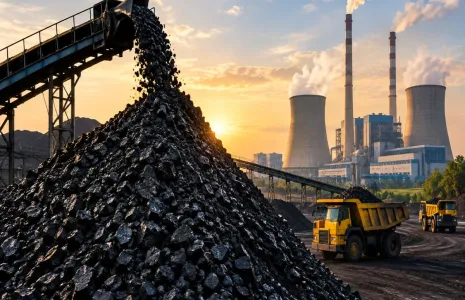
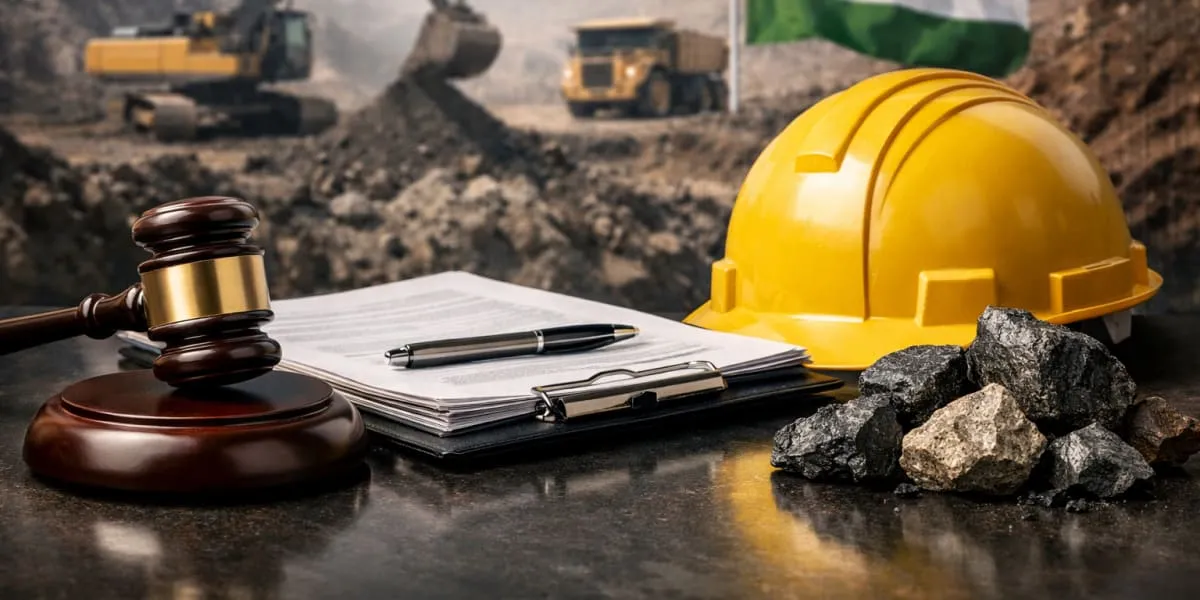
Natural Resources minister T.K. Prabhu announced the entry of the public sector into mining with the formation of Tamil Nadu Mineral Resources Development Corporation Limited to curb illegal quarrying and improve governance. He outlined that the move would bring state participation into a sector hitherto dominated by private players and alleged irregularities. The new body is intended to undertake mining operations and to strengthen oversight.

Mr Prabhu said the ministry would set up a separate drone section, an integrated digital mineral management platform and a mines control and monitoring centre to enable real-time oversight of operations. The platform would monitor Geological and Mines department activities, while the control centre would use modern facilities for continuous surveillance. Drones and satellite imagery would be used to detect unauthorised extraction and to assess the volume of mineral removal from leased areas.

He said the corporation would carry out extraction, separate minerals, improve quality, import required material, undertake value addition and marketing and facilitate investment in the mining department. The minister noted that private involvement had produced large profits amid allegations of irregularities and environmental degradation due to indiscriminate quarrying. The state entity would be expected to capture revenues and promote scientific mines management.

A monitoring section would investigate allegations against officials and act within a fixed time frame, coordinating with the Directorate of Vigilance and Anti-Corruption and other agencies, the minister said. A grievance centre would be created to assist the public and mining entrepreneurs and regulations would be reconsidered to ensure availability of stone for sculptors and grinding stone makers. The ministry also plans policies to analyse techniques for recycling mineral waste to promote sustainable practices.

Prabhu announced a plant fossil park at Gunduperumbedu in Sriperumbudur in Kanchipuram district to protect fossils estimated to be 600 million (600 mn) years old. A detailed project report will be prepared to develop mine tourist centres at abandoned quarries. The minister framed the measures as part of a wider effort to combine state-led production with technological oversight to check illegal mining.

Natural Resources minister T.K. Prabhu announced the entry of the public sector into mining with the formation of Tamil Nadu Mineral Resources Development Corporation Limited to curb illegal quarrying and improve governance. He outlined that the move would bring state participation into a sector hitherto dominated by private players and alleged irregularities. The new body is intended to undertake mining operations and to strengthen oversight. Mr Prabhu said the ministry would set up a separate drone section, an integrated digital mineral management platform and a mines control and monitoring centre to enable real-time oversight of operations. The platform would monitor Geological and Mines department activities, while the control centre would use modern facilities for continuous surveillance. Drones and satellite imagery would be used to detect unauthorised extraction and to assess the volume of mineral removal from leased areas. He said the corporation would carry out extraction, separate minerals, improve quality, import required material, undertake value addition and marketing and facilitate investment in the mining department. The minister noted that private involvement had produced large profits amid allegations of irregularities and environmental degradation due to indiscriminate quarrying. The state entity would be expected to capture revenues and promote scientific mines management. A monitoring section would investigate allegations against officials and act within a fixed time frame, coordinating with the Directorate of Vigilance and Anti-Corruption and other agencies, the minister said. A grievance centre would be created to assist the public and mining entrepreneurs and regulations would be reconsidered to ensure availability of stone for sculptors and grinding stone makers. The ministry also plans policies to analyse techniques for recycling mineral waste to promote sustainable practices. Prabhu announced a plant fossil park at Gunduperumbedu in Sriperumbudur in Kanchipuram district to protect fossils estimated to be 600 million (600 mn) years old. A detailed project report will be prepared to develop mine tourist centres at abandoned quarries. The minister framed the measures as part of a wider effort to combine state-led production with technological oversight to check illegal mining.

Related Stories

Gold Stories

Next Story
Real Estate

BMC OC Amnesty Scheme Requires Key Approvals from Mumbai Societies

The Brihanmumbai Municipal Corporation (BMC) has clarified that housing societies applying under its Occupation Certificate (OC) amnesty scheme must possess key approvals linked to the original construction. The requirements include a valid Intimation of Disapproval (IOD), an approved building plan and a Commencement Certificate (CC), along with a No Objection Certificate (NOC) from the developer or original construction applicant. The Standard Operating Procedure (SOP) makes clear that the absence of an OC alone will not qualify a building for relief. Societies must establish that their build..

Next Story
Real Estate

Gurugram Emerges as Luxury Senior Living Hub

Gurugram is emerging as a potential hub for luxury senior living, supported by available land, healthcare infrastructure, connectivity and a concentration of affluent professionals, high-net-worth individuals and non-resident Indians. These factors could give the city an advantage over land-constrained metros such as Mumbai. A report by the Association of Senior Living India (ASLI) and JLL estimates that India’s organised senior living market could represent a $10.1 bn opportunity by 2030. The sector had about 25,050 organised units as of June 2026, while penetration stood at only 1.5 per ce..

Next Story
Real Estate

Corrosion Costs India’s Infrastructure Rs. 142 bn Annually

Corrosion costs India an estimated Rs. 1.42 tn annually, equivalent to 4.3 per cent of gross domestic product, according to a report by the Confederation of Indian Industry and the National Research Institute. Infrastructure accounts for Rs. 142 bn of the annual burden, making it the sector with the largest absolute cost among those examined. The report, presented at the CII Annual Infrastructure Summit 2026, said the infrastructure-sector cost equals about 2.9 per cent of the sector’s gross domestic product. It estimated that effective measures could generate maximum savings of Rs. 495.8 bn..

Advertisement

Subscribe to Our Newsletter

Get daily newsletters around different themes from Construction world.

STAY CONNECTED

Advertisement

SPECIAL OFFER
QR Code