Ethanol Blending Averted Rs 125 Petrol Spike, Says Government
OIL & GAS

Ethanol Blending Averted Rs 125 Petrol Spike, Says Government

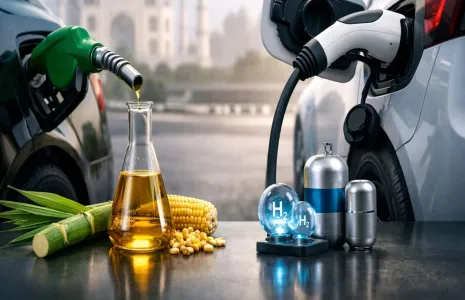
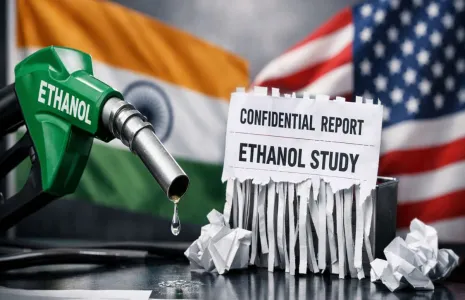
The Ministry of Petroleum and Natural Gas defended the Ethanol Blended Petrol programme and said retail petrol prices in Delhi could have reached around Rs 125 per litre during peak global crude spikes if ethanol blending had not been implemented. It said the measure provided nearly Rs 30 per litre in savings at the pump when the Indian crude basket rose to about USD 135 per barrel, with consumers paying Rs 94.77 per litre because 20 per cent of every litre consisted of domestically produced ethanol procured at stable pre-agreed prices. The ministry characterised the scheme as a buffer against extreme international price volatility rather than a daily cheapest fuel option.

It argued that ethanol blending strengthens India's energy security and keeps more of the country's fuel bill within the domestic economy rather than sending it overseas. The ministry pointed to the programme's role in insulating consumers from shocks during the crude price surge and in creating predictable demand for agricultural feedstock. It also addressed concerns over food security and subsidies, saying the policy is not a taxpayer subsidy but an element of national energy insurance.

The statement said the EBP programme has yielded over Rs 1.97 trillion (tn) in foreign exchange savings, substituted more than 31.6 million (mn) t of crude imports and reduced CO2 emissions by over 95 million (mn) t. These gains were presented as evidence that the blending drive both cut import bills and delivered environmental benefits.

The ministry added that the initiative has driven over Rs 1.66 tn in direct payments to farmers and distillers, helping to establish a reliable domestic marketplace for feedstock and value addition within India. It said this market support has aided rural incomes while decreasing the country's import dependence on crude oil to 88 per cent. Officials framed the programme as contributing to energy sovereignty and economic resilience amid volatile international markets.

The Ministry of Petroleum and Natural Gas defended the Ethanol Blended Petrol programme and said retail petrol prices in Delhi could have reached around Rs 125 per litre during peak global crude spikes if ethanol blending had not been implemented. It said the measure provided nearly Rs 30 per litre in savings at the pump when the Indian crude basket rose to about USD 135 per barrel, with consumers paying Rs 94.77 per litre because 20 per cent of every litre consisted of domestically produced ethanol procured at stable pre-agreed prices. The ministry characterised the scheme as a buffer against extreme international price volatility rather than a daily cheapest fuel option. It argued that ethanol blending strengthens India's energy security and keeps more of the country's fuel bill within the domestic economy rather than sending it overseas. The ministry pointed to the programme's role in insulating consumers from shocks during the crude price surge and in creating predictable demand for agricultural feedstock. It also addressed concerns over food security and subsidies, saying the policy is not a taxpayer subsidy but an element of national energy insurance. The statement said the EBP programme has yielded over Rs 1.97 trillion (tn) in foreign exchange savings, substituted more than 31.6 million (mn) t of crude imports and reduced CO2 emissions by over 95 million (mn) t. These gains were presented as evidence that the blending drive both cut import bills and delivered environmental benefits. The ministry added that the initiative has driven over Rs 1.66 tn in direct payments to farmers and distillers, helping to establish a reliable domestic marketplace for feedstock and value addition within India. It said this market support has aided rural incomes while decreasing the country's import dependence on crude oil to 88 per cent. Officials framed the programme as contributing to energy sovereignty and economic resilience amid volatile international markets.

Related Stories

Gold Stories

Next Story
Infrastructure Urban

NABARD, NaBFID Partner to Fund Rural Infrastructure

The National Bank for Agriculture and Rural Development (NABARD) and the National Bank for Financing Infrastructure and Development (NaBFID) have signed a Memorandum of Understanding (MoU) to collaborate on financing infrastructure projects with significant rural impact.The partnership combines NABARD’s expertise in rural and agricultural infrastructure with NaBFID’s specialised infrastructure financing capabilities. It will focus on joint financing, knowledge sharing and developing financing solutions to improve access to long-term, competitively priced capital for rural infrastructure an..

Next Story
Infrastructure Energy

Advait Energy Wins Rs 1.34 Billion MPPTCL Order

Advait Energy Transitions (AETL) has secured a Rs 1.34 billion turnkey contract from Madhya Pradesh Power Transmission Co. Ltd. (MPPTCL) for the design, manufacturing and supply of Emergency Restoration Systems (ERS) for 400kV, 220kV and 132kV EHV transmission lines.The order, received against Tender No. TR-23/2025 on August 25, 2026, will be executed over 18 months. The contract value, inclusive of taxes, covers the complete ERS along with the required accessories.Emergency Restoration Systems are used to restore transmission infrastructure following disruptions, helping maintain continuity a..

Next Story
Real Estate

Gradiant expands Coimbatore engineering centre

Gradiant has expanded its Global Engineering Center (GEC) in Coimbatore, more than doubling its engineering workforce from approximately 100 to over 200 professionals as it strengthens its global project execution capabilities.The expanded centre will bring together multidisciplinary expertise across process engineering, detailed design and project engineering, enabling the India team to take on greater responsibility for the engineering and design of Gradiant’s international projects.According to Govind Alagappan, COO, Gradiant, Coimbatore’s engineering talent and industrial heritage make..

Advertisement

Subscribe to Our Newsletter

Get daily newsletters around different themes from Construction world.

STAY CONNECTED

Advertisement