TVS Motor and Indian Oil Partner to Boost Sustainable LPG Delivery
OIL & GAS

TVS Motor and Indian Oil Partner to Boost Sustainable LPG Delivery

TVS Motor Company and Indian Oil Corporation (IOC) have announced a strategic collaboration to accelerate sustainable last?mile liquefied petroleum gas distribution. The partnership will focus on deploying low?emission delivery solutions and related infrastructure to improve safety and efficiency in urban and peri?urban areas. The companies said the initiative aligns with broader efforts to decarbonise transport and enhance energy access.

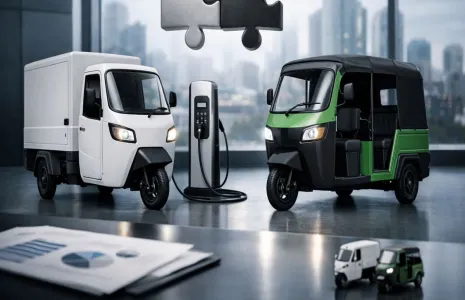
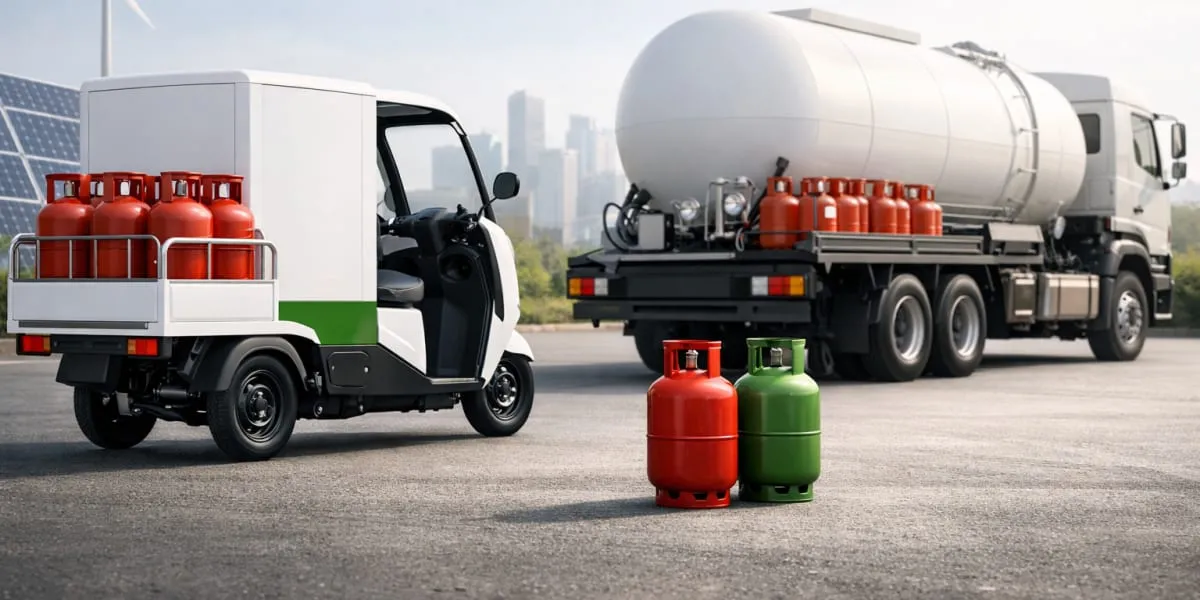
The project will combine TVS Motor Company expertise in electric three?wheelers with IOC network capabilities for fuel distribution and customer reach. It will include trials of battery?electric and hybrid delivery vehicles adapted for cylinder transport, along with charging solutions at select godowns and distribution points. Vehicle safety standards and operational training will be emphasised to maintain handling protocols for liquefied petroleum gas.

The alliance is intended to reduce tailpipe emissions and lower operating costs over time through improved energy efficiency and route optimisation. Supporting infrastructure will be evaluated for scalability to towns and smaller cities, with a view to replicating successful models across regions. The companies will monitor performance metrics including vehicle utilisation, energy consumption and service turnaround times. Findings will guide future investments and potential wider rollouts.

Stakeholders in urban logistics and public sector distributors welcomed the move as an example of industry cooperation on sustainable mobility. The partnership is expected to create demonstration projects that can inform policy on low?emission urban freight and last?mile delivery of essential energy commodities. Both parties said the collaboration will be pursued with attention to regulatory compliance and customer safety. Next steps include pilot deployments and data collection to assess operational viability.

The collaboration will also explore synergies with municipal programmes and clean energy initiatives to maximise environmental benefits. Insights from pilots will be shared with stakeholders to support wider adoption. The partners will periodically review progress and adapt the approach. Implementation will follow.

TVS Motor Company and Indian Oil Corporation (IOC) have announced a strategic collaboration to accelerate sustainable last?mile liquefied petroleum gas distribution. The partnership will focus on deploying low?emission delivery solutions and related infrastructure to improve safety and efficiency in urban and peri?urban areas. The companies said the initiative aligns with broader efforts to decarbonise transport and enhance energy access. The project will combine TVS Motor Company expertise in electric three?wheelers with IOC network capabilities for fuel distribution and customer reach. It will include trials of battery?electric and hybrid delivery vehicles adapted for cylinder transport, along with charging solutions at select godowns and distribution points. Vehicle safety standards and operational training will be emphasised to maintain handling protocols for liquefied petroleum gas. The alliance is intended to reduce tailpipe emissions and lower operating costs over time through improved energy efficiency and route optimisation. Supporting infrastructure will be evaluated for scalability to towns and smaller cities, with a view to replicating successful models across regions. The companies will monitor performance metrics including vehicle utilisation, energy consumption and service turnaround times. Findings will guide future investments and potential wider rollouts. Stakeholders in urban logistics and public sector distributors welcomed the move as an example of industry cooperation on sustainable mobility. The partnership is expected to create demonstration projects that can inform policy on low?emission urban freight and last?mile delivery of essential energy commodities. Both parties said the collaboration will be pursued with attention to regulatory compliance and customer safety. Next steps include pilot deployments and data collection to assess operational viability. The collaboration will also explore synergies with municipal programmes and clean energy initiatives to maximise environmental benefits. Insights from pilots will be shared with stakeholders to support wider adoption. The partners will periodically review progress and adapt the approach. Implementation will follow.

Related Stories

Gold Stories

Next Story
Infrastructure Energy

Asian Energy Services Q1 FY27 PAT Rises 129 Per Cent

Asian Energy Services Limited reported a 129 per cent year-on-year rise in net profit to Rs 128 million for Q1 FY27, compared with the corresponding quarter last year.Revenue increased 135 per cent year-on-year to Rs 2.71 billion, supported by continued momentum across its services business, disciplined execution and contributions from domestic and international operations. EBITDA grew 81 per cent year-on-year during the quarter.As of June 30, 2026, the company’s standalone order book stood at Rs 17.54 billion, with around 60 per cent coming from oil and gas services and 40 per cent from min..

Next Story
Infrastructure Urban

BioBTX to Build First Commercial-Scale Circular Chemicals Plant

Dutch circular chemistry technology developer BioBTX is building what it says will be the world’s first commercial-scale plant to convert mixed plastic waste into high-quality aromatic chemicals using its proprietary Integrated Catalytic Cracking Process (ICCP) technology.The facility will be built at Chemical Park Delfzijl on the northern coast of the Netherlands and is expected to create 35 jobs. Covestro, which has been a shareholder and strategic partner of BioBTX since 2024, holds a mid-single-digit million-euro investment in the company.BioBTX’s ICCP technology uses catalytic pyrolys..

Next Story
Real Estate

Awfis Q1 FY27 PAT Jumps 140% as Revenue Rises 27%

Awfis Space Solutions reported a 140 per cent year-on-year rise in consolidated profit after tax (PAT) to Rs 240 million for Q1 FY27, compared with Rs 100 million in the corresponding quarter last year.Revenue from operations increased 27 per cent to Rs 4.25 billion from Rs 3.35 billion, while EBITDA rose 28 per cent to Rs 1.62 billion. EBITDA margin improved to 38.2 per cent from 37.8 per cent. Profit before tax increased 135 per cent to Rs 240 million.The company's co-working business recorded 27 per cent year-on-year growth, supported by demand from enterprises, Global Capability Centres (G..

Advertisement

Subscribe to Our Newsletter

Get daily newsletters around different themes from Construction world.

STAY CONNECTED

Advertisement