+
Cement Makers Step Up Green Energy Investments to Cut Costs, Emissions
POWER & RENEWABLE ENERGY

Cement Makers Step Up Green Energy Investments to Cut Costs, Emissions

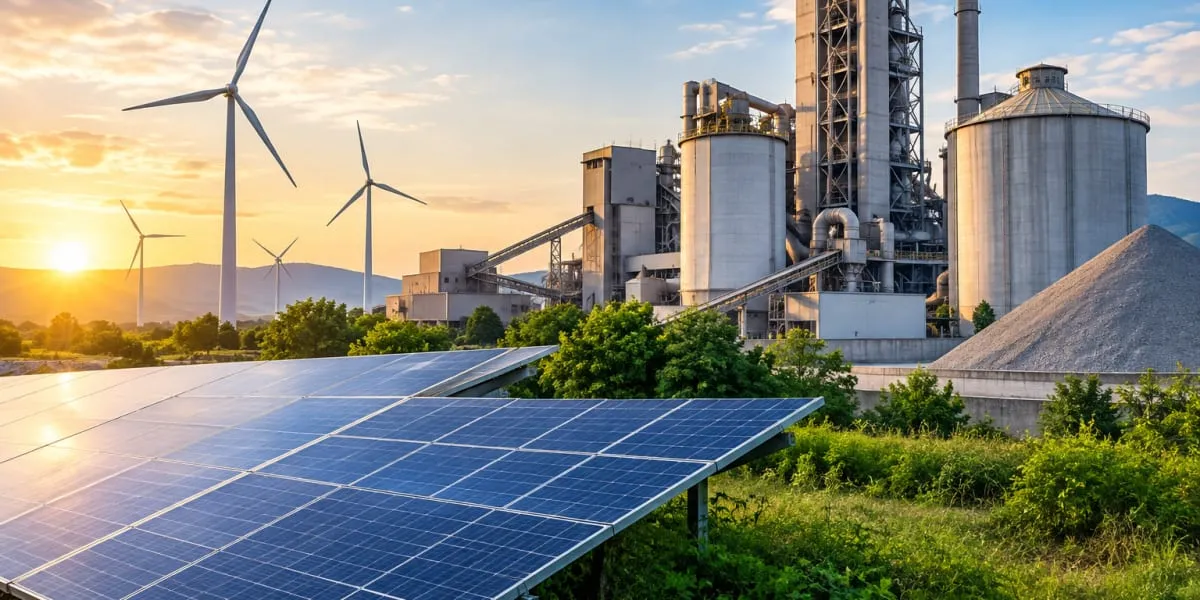
Cement companies are increasing green energy investments to lower power costs, reduce emissions and protect margins from fuel price volatility. The sector’s green capacity is expected to rise significantly over the next two years as companies pursue larger shares of renewable power in their energy mix.

UltraTech Cement aims to raise its green energy share to 85 per cent by FY30 from 35.8 per cent in FY26. It has become the first cement company in India to exceed 2 GW of green energy capacity for captive use. Ambuja Cements is targeting a 60 per cent share by FY28, while J K Cement aims for around 75 per cent by FY30. Shree Cement has reached around 65.2 per cent.

Power and fuel account for around 25 to 35 per cent of cement manufacturing costs. Analysts said renewable energy investments, initially driven by emissions reduction goals, are increasingly being supported by falling generation costs and the potential to improve earnings before interest, taxes, depreciation and amortisation per tonne.

Icra estimates that replacing 25 per cent of conventional power with green energy could save Rs. 75 to 80 per tonne. It expects green power capacity among major cement companies to increase to 5.8 to 6 GW by March 2028 from around 4 GW in March 2026. Investments of Rs. 120 to 130 bn over two years could generate annual savings of Rs. 62 to 67 bn, with a payback period of 1.8 to 2.2 years.

The group captive model is enabling companies to access renewable power with lower upfront equity requirements. Under the Green Open Access Rules, companies can qualify for group captive status by investing at least 26 per cent equity in a renewable project and consuming 51 per cent of its power. Adani Cement is instead setting up around 1 GW of solar and wind capacity independently, investing about Rs. 50 to 60 bn. Analysts expect hybrid ownership and power purchase arrangements to become more common, while green financing through sustainability-linked bonds and loans is also gaining importance.

Cement companies are increasing green energy investments to lower power costs, reduce emissions and protect margins from fuel price volatility. The sector’s green capacity is expected to rise significantly over the next two years as companies pursue larger shares of renewable power in their energy mix. UltraTech Cement aims to raise its green energy share to 85 per cent by FY30 from 35.8 per cent in FY26. It has become the first cement company in India to exceed 2 GW of green energy capacity for captive use. Ambuja Cements is targeting a 60 per cent share by FY28, while J K Cement aims for around 75 per cent by FY30. Shree Cement has reached around 65.2 per cent. Power and fuel account for around 25 to 35 per cent of cement manufacturing costs. Analysts said renewable energy investments, initially driven by emissions reduction goals, are increasingly being supported by falling generation costs and the potential to improve earnings before interest, taxes, depreciation and amortisation per tonne. Icra estimates that replacing 25 per cent of conventional power with green energy could save Rs. 75 to 80 per tonne. It expects green power capacity among major cement companies to increase to 5.8 to 6 GW by March 2028 from around 4 GW in March 2026. Investments of Rs. 120 to 130 bn over two years could generate annual savings of Rs. 62 to 67 bn, with a payback period of 1.8 to 2.2 years. The group captive model is enabling companies to access renewable power with lower upfront equity requirements. Under the Green Open Access Rules, companies can qualify for group captive status by investing at least 26 per cent equity in a renewable project and consuming 51 per cent of its power. Adani Cement is instead setting up around 1 GW of solar and wind capacity independently, investing about Rs. 50 to 60 bn. Analysts expect hybrid ownership and power purchase arrangements to become more common, while green financing through sustainability-linked bonds and loans is also gaining importance.

Related Stories

Gold Stories

Next Story
Infrastructure Transport

Madhya Pradesh Plans Airport Every 150 Km, Airstrip Every 75 Km

The Madhya Pradesh government plans to establish an airport every 150 km, an airstrip every 75 km and a helipad every 45 km, according to the state aviation department. Airports being developed in Ujjain and Shivpuri are expected to take the state’s airport count to 10. The government stated that Madhya Pradesh currently has eight airports in eight cities. The locations named by the department include Indore, Bhopal, Jabalpur, Gwalior, Khajuraho, Rewa and Satna. The state also has more than 20 airstrips and 220 helipads, while permanent helipads are planned in all 230 Assembly constituencies..

Next Story
Infrastructure Transport

West Bengal Plans Four Airports for 2028 Completion Under UDAN

West Bengal will develop four new airports under an agreement signed between the Union Civil Aviation Ministry and the state government, with all facilities targeted for completion by 2028. Union Civil Aviation Minister K Rammohan Naidu said the airports would be located at Charra in Purulia, Kalaikunda in Paschim Medinipur, Balurghat in Dakshin Dinajpur and Hasimara in Alipurduar. The project is part of the Centre’s regional connectivity UDAN programme. The Union government has committed Rs. 290 bn for West Bengal’s aviation sector over the next decade, while the state government will pro..

Next Story
Infrastructure Transport

Mumbai Airport Bars Russian Airlines as Agent Seeks Ministry Intervention

Mumbai airport has stopped accepting cargo booked on Russian flag carrier Aeroflot, disrupting shipments and prompting the airline’s cargo sales agent, Delmos Aviation, to seek intervention from the Ministry of Civil Aviation. The restrictions also affect cargo booked on Volga-Dnepr Airlines, according to a letter submitted by Delmos Aviation to the ministry on September 30. Aeroflot operates daily flights between Moscow and Delhi and runs a winter seasonal service to Goa. Bonded cargo from Mumbai and other cities is transported by road to Delhi before being flown to Russia. The agent said t..

Advertisement

Subscribe to Our Newsletter

Get daily newsletters around different themes from Construction world.

STAY CONNECTED

Advertisement

SPECIAL OFFER
QR Code