Delhi Eases Rooftop Solar Rules To Accelerate Adoption
POWER & RENEWABLE ENERGY

Delhi Eases Rooftop Solar Rules To Accelerate Adoption

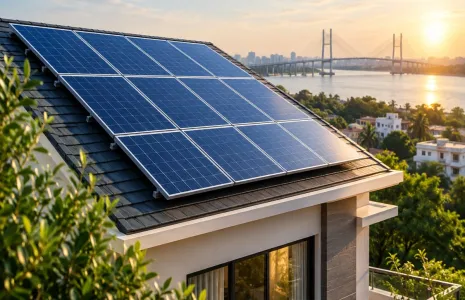
The Delhi Electricity Regulatory Commission (DERC) has amended net metering regulations to accelerate rooftop solar adoption in the city. The changes streamline the application process, remove fees for small domestic installations and set strict timelines for distribution companies to provide connections. The revised regulations were issued on July 16 and replace a three-stage approval process with a two-stage procedure.

Under the new rules, the previous technical feasibility analysis, registration and connection agreement steps are consolidated so that registration, document verification, inspection and net meter installation occur in a single stage. Consumers applying for the central Pradhan Mantri Surya Ghar Muft Bijli Yojana and those not availing subsidies may use online portals to submit applications. The commission has mandated that distribution companies complete technical feasibility studies within 15 days of receiving an application and that failure to meet the deadline will result in deemed approval.

The largest relief is aimed at small domestic consumers, as rooftop solar systems with a capacity of up to 10 kilowatt (kW) will no longer require a technical feasibility assessment. The rules also remove feasibility analysis and registration fees for domestic installations up to 10 kW regardless of subsidy status. The digitisation of the connection agreement replaces physical paperwork with a digitally executed agreement between the consumer and the distribution company to reduce delays.

After installation, distribution companies will verify documents, inspect and test systems, install net meters and issue registration numbers before energising connections, which is expected to speed up commissioning. The intent of the amendments is to reduce administrative barriers and encourage wider uptake of rooftop solar in Delhi by simplifying procedures and lowering upfront costs. Officials described the measures as aimed at making installations faster and more convenient for households and developers.

The Delhi Electricity Regulatory Commission (DERC) has amended net metering regulations to accelerate rooftop solar adoption in the city. The changes streamline the application process, remove fees for small domestic installations and set strict timelines for distribution companies to provide connections. The revised regulations were issued on July 16 and replace a three-stage approval process with a two-stage procedure. Under the new rules, the previous technical feasibility analysis, registration and connection agreement steps are consolidated so that registration, document verification, inspection and net meter installation occur in a single stage. Consumers applying for the central Pradhan Mantri Surya Ghar Muft Bijli Yojana and those not availing subsidies may use online portals to submit applications. The commission has mandated that distribution companies complete technical feasibility studies within 15 days of receiving an application and that failure to meet the deadline will result in deemed approval. The largest relief is aimed at small domestic consumers, as rooftop solar systems with a capacity of up to 10 kilowatt (kW) will no longer require a technical feasibility assessment. The rules also remove feasibility analysis and registration fees for domestic installations up to 10 kW regardless of subsidy status. The digitisation of the connection agreement replaces physical paperwork with a digitally executed agreement between the consumer and the distribution company to reduce delays. After installation, distribution companies will verify documents, inspect and test systems, install net meters and issue registration numbers before energising connections, which is expected to speed up commissioning. The intent of the amendments is to reduce administrative barriers and encourage wider uptake of rooftop solar in Delhi by simplifying procedures and lowering upfront costs. Officials described the measures as aimed at making installations faster and more convenient for households and developers.

Next Story
Infrastructure Urban

AI Powered Security Robot To Debut At Puri Station

The East Coast Railway (ECoR) has unveiled an artificial intelligence powered robotic surveillance platform that will be deployed at Puri railway station ahead of Lord Jagannath's Bahuda Yatra on 24 July to enhance passenger safety and security. The platform, named DSC ARJUN, was revealed in the presence of ECoR General Manager Parmeshwar Funkwal and senior railway and Railway Protection Force (RPF) officers. ECoR officials said the system has been introduced as a temporary deployment for the festival and may later be shifted to Bhubaneswar railway station. Developed to support Railway Protect..

Next Story
Infrastructure Urban

India Eases RCMC Rule For Low Value Exports

The Directorate General of Foreign Trade (DGFT) has proposed exempting low value export consignments from the requirement to hold a registration-cum-membership certificate (RCMC), in a move intended to simplify compliance for small exporters. The proposal targets shipments with a free-on-board value of up to Rs 10,000 and seeks to reduce paperwork for first time exporters and micro, small and medium enterprises. The announcement forms part of a wider government effort to encourage exports through online platforms and emerging delivery channels. Under the proposed amendment to Paragraph 2.57 of..

Next Story
Infrastructure Urban

Assam Launches Centre Of Excellence For Additive Manufacturing

The Assam government has inaugurated a Digital Design and additive manufacturing centre of excellence in Guwahati, signalling a push towards technology driven manufacturing across the state. Chief Minister Himanta Biswa Sarma opened the facility and outlined its intended role in fostering innovation, product development and entrepreneurship. The centre will provide industries, startups and researchers with access to advanced digital manufacturing tools and additive manufacturing capabilities. Officials said the facility aims to strengthen the state innovation ecosystem and reduce dependence on..

Advertisement

Subscribe to Our Newsletter

Get daily newsletters around different themes from Construction world.

STAY CONNECTED

Advertisement

Advertisement

Advertisement