+
Gujarat Cuts Green Energy Open Access Banking Charge To Rs One Per kWh
POWER & RENEWABLE ENERGY

Gujarat Cuts Green Energy Open Access Banking Charge To Rs One Per kWh

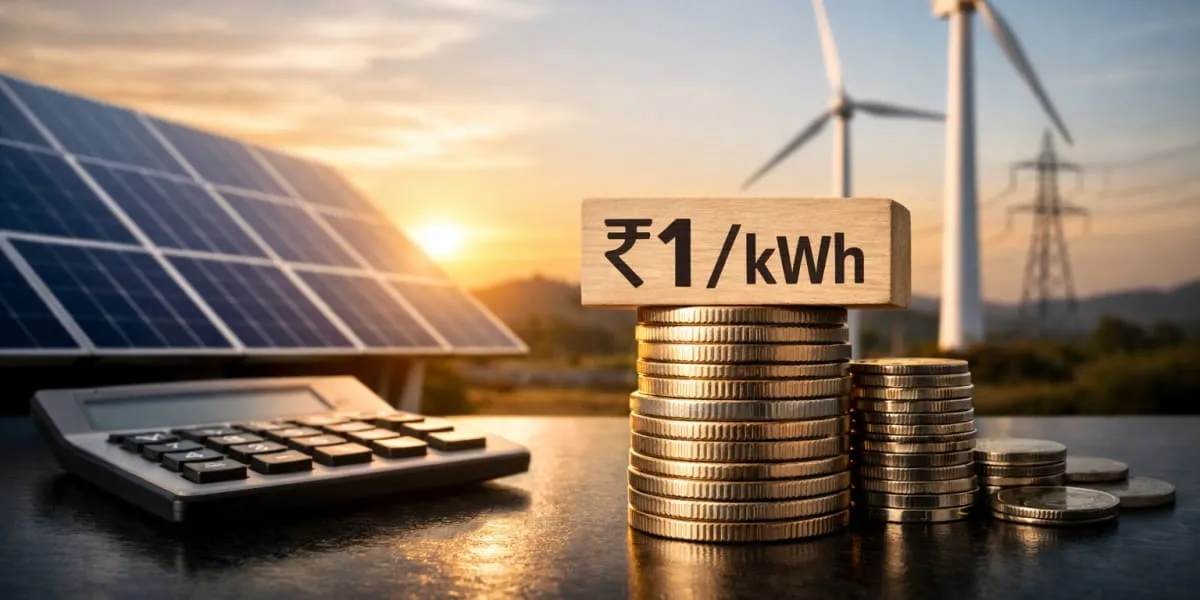
On 16 September 2026 the Gujarat government reduced the green energy open access banking charge to Rs one per kWh, the state said. The revision lowers the banking fee applied when renewable energy is injected to the grid for consumption at a later time and aims to streamline costs for open access consumers. The change was announced as part of measures to improve the viability of renewable power transactions.

The reduced charge is intended to decrease transaction costs for industrial and commercial buyers that procure renewable power through open access arrangements, and to provide clearer price signals for project developers. By lowering the banking fee, the state seeks to encourage better utilisation of solar and wind generation across diurnal cycles without imposing large additional levies on consumers. Distribution utilities will retain responsibility for accounting and settlement under existing procedures.

Energy analysts described the move as a practical adjustment that addresses a common barrier to short term energy banking, noting that lower fees can improve project economics for smaller scale developers and aggregators. Market participants will review contractual terms to reflect the revised charge and align scheduling, metering and settlement practices with the new rate. Regulators will monitor the operational impacts to ensure system stability and fair access.

The reduction complements other policy steps aimed at strengthening renewable energy uptake and making open access a more accessible route for offsite procurement. Officials indicated that the measure forms part of a broader effort to balance grid integration with affordable supply for industry and to support investment in flexible resources. The state will publish implementation guidance and updates for stakeholders ahead of the effective date.

On 16 September 2026 the Gujarat government reduced the green energy open access banking charge to Rs one per kWh, the state said. The revision lowers the banking fee applied when renewable energy is injected to the grid for consumption at a later time and aims to streamline costs for open access consumers. The change was announced as part of measures to improve the viability of renewable power transactions. The reduced charge is intended to decrease transaction costs for industrial and commercial buyers that procure renewable power through open access arrangements, and to provide clearer price signals for project developers. By lowering the banking fee, the state seeks to encourage better utilisation of solar and wind generation across diurnal cycles without imposing large additional levies on consumers. Distribution utilities will retain responsibility for accounting and settlement under existing procedures. Energy analysts described the move as a practical adjustment that addresses a common barrier to short term energy banking, noting that lower fees can improve project economics for smaller scale developers and aggregators. Market participants will review contractual terms to reflect the revised charge and align scheduling, metering and settlement practices with the new rate. Regulators will monitor the operational impacts to ensure system stability and fair access. The reduction complements other policy steps aimed at strengthening renewable energy uptake and making open access a more accessible route for offsite procurement. Officials indicated that the measure forms part of a broader effort to balance grid integration with affordable supply for industry and to support investment in flexible resources. The state will publish implementation guidance and updates for stakeholders ahead of the effective date.

Related Stories

Gold Stories

Next Story
Products

Colour, Wood-Finish Profiles Gain Ground in Home Design

Colour and wood-finish profiles are gaining traction in residential fenestration as homeowners increasingly seek doors and windows that complement interior and exterior design, according to Durakraft Extrusions.The company said traditional white profiles are increasingly being complemented by a wider range of colours, textures and finishes as homeowners and designers place greater emphasis on personalised interiors.Wood finishes are being used to introduce a natural and warm appearance, while shades such as anthracite grey, black, walnut, mahogany and Golden Oak offer options to coordinate fen..

Next Story
Building Material

Hard Worker Wins Three Honours at Kyoorius Design Awards

The Ramco Cements Limited’s construction chemicals brand, Hard Worker, has won three honours at the Kyoorius Design Awards 2026, including the Grand Prix – Grey Elephant in the Design in Action category.The brand also secured two Blue Elephant honours, one for Design in Action and another for Packaging, recognising the design approach behind its brand identity and packaging.Launched in 2025, Hard Worker entered the construction chemicals segment with the brand promise, “Hard-working products for hardworking people.” Its visual identity uses animals and birds to represent product benefi..

Next Story
Infrastructure Transport

Kopri-Patni Creek Bridge to Improve Thane-Navi Mumbai Connectivity

Road connectivity between Thane and Navi Mumbai is set to receive a boost with the proposed six-lane Kopri-Patni Creek Bridge, which will provide a new route across Thane Creek. The project is intended to create a direct link between the two urban centres and add capacity to the region’s road network. The bridge will connect Kopri in Thane East with Patni in Navi Mumbai. It will begin at Mith Bandar Road in Kopri, about 750 metres from Thane railway station, cross Thane Creek and land near Airoli Knowledge City Road in Navi Mumbai. The project has advanced with Akshya Infra Projects emerging..

Advertisement

Subscribe to Our Newsletter

Get daily newsletters around different themes from Construction world.

STAY CONNECTED

Advertisement

SPECIAL OFFER
QR Code