India Achieves Historic Milestone in Nuclear Energy with Kalpakkam FBR
POWER & RENEWABLE ENERGY

India Achieves Historic Milestone in Nuclear Energy with Kalpakkam FBR

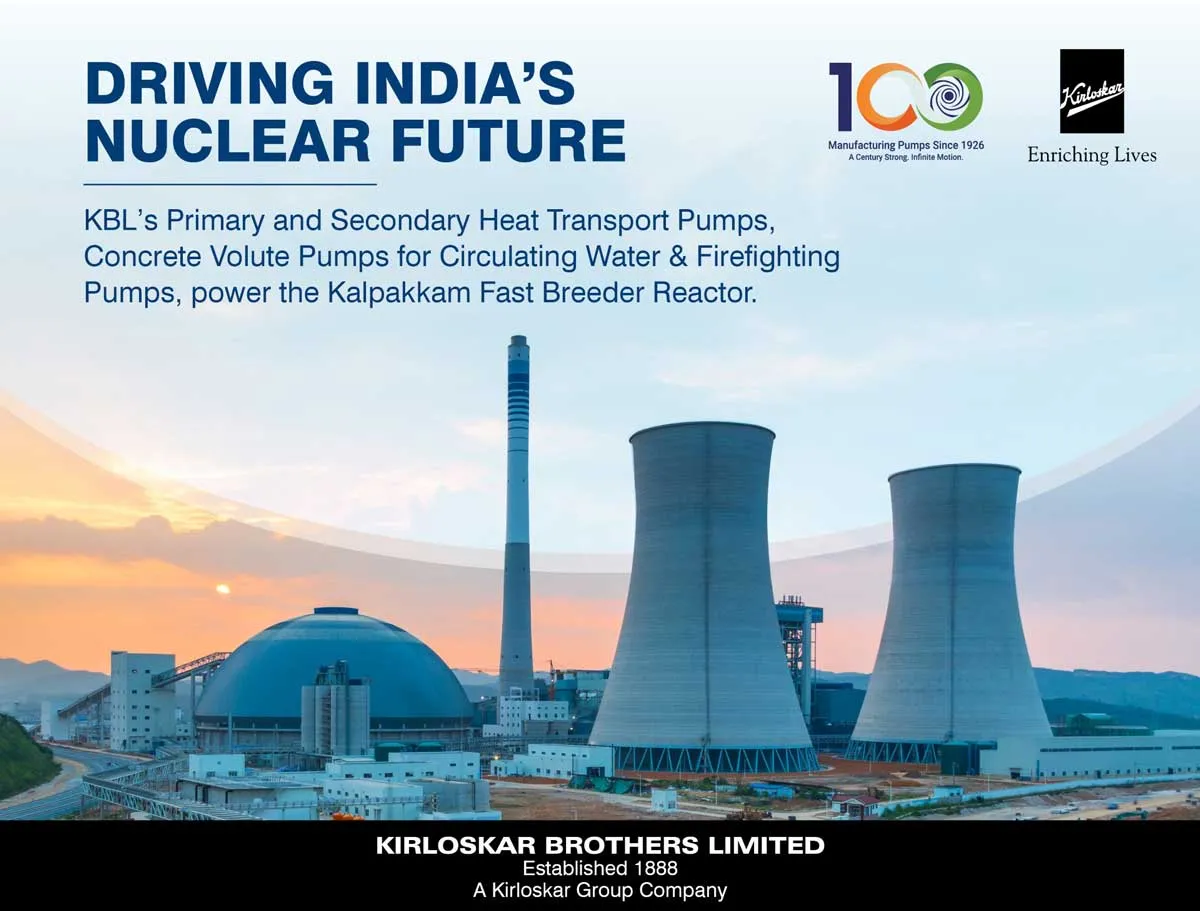
India has reached a historic milestone as the Kalpakkam Fast Breeder Reactor (FBR) attains criticality, marking a significant step in the nation’s ambitious three-stage nuclear power programme. This achievement underscores India's commitment to sustainable, self-reliant energy solutions.
At the forefront of this success is Kirloskar Brothers (KBL), which engineered and supplied Primary and Secondary Heat Transport Pumps—critical components within the reactor system. These pumps, weighing approximately 135 tonnes each, are built with exotic materials to withstand extreme conditions, designed to handle liquid sodium at temperatures over 500°C. KBL is among a select few companies globally capable of manufacturing such advanced nuclear-grade pumping systems, demonstrating both precision and innovation.
In addition to these pumps, KBL provided Concrete Volute Circulating Water Pumps, a world-first for fast breeder reactors. Developed using seismic and CFD techniques, these pumps ensure reliable seawater circulation, providing 9,500 litres per second. They also eliminate the need for a standby pump, further improving operational efficiency.
KBL’s contribution extends to a comprehensive firefighting system, bolstering plant safety. For over four decades, KBL has been a key player in India’s nuclear infrastructure, delivering “Make in India” solutions that reinforce the country’s progress toward energy self-reliance.
This success is a testament to the collaboration between KBL, Bharatiya Nabhikiya Vidyut Nigam (BHAVINI), the Department of Atomic Energy (DAE), and Nuclear Power Corporation of India (NPCIL).

India has reached a historic milestone as the Kalpakkam Fast Breeder Reactor (FBR) attains criticality, marking a significant step in the nation’s ambitious three-stage nuclear power programme. This achievement underscores India's commitment to sustainable, self-reliant energy solutions.At the forefront of this success is Kirloskar Brothers (KBL), which engineered and supplied Primary and Secondary Heat Transport Pumps—critical components within the reactor system. These pumps, weighing approximately 135 tonnes each, are built with exotic materials to withstand extreme conditions, designed to handle liquid sodium at temperatures over 500°C. KBL is among a select few companies globally capable of manufacturing such advanced nuclear-grade pumping systems, demonstrating both precision and innovation.In addition to these pumps, KBL provided Concrete Volute Circulating Water Pumps, a world-first for fast breeder reactors. Developed using seismic and CFD techniques, these pumps ensure reliable seawater circulation, providing 9,500 litres per second. They also eliminate the need for a standby pump, further improving operational efficiency.KBL’s contribution extends to a comprehensive firefighting system, bolstering plant safety. For over four decades, KBL has been a key player in India’s nuclear infrastructure, delivering “Make in India” solutions that reinforce the country’s progress toward energy self-reliance.This success is a testament to the collaboration between KBL, Bharatiya Nabhikiya Vidyut Nigam (BHAVINI), the Department of Atomic Energy (DAE), and Nuclear Power Corporation of India (NPCIL).

Next Story
Building Material

Dalmia Cement to Acquire 5.2 MnTPA Capacity

Dalmia Cement (Bharat), a wholly owned subsidiary of Dalmia Bharat, has executed a Business Transfer Agreement with Jaiprakash Associates and Adani Infra (India) to acquire cement assets with 5.2 MnTPA capacity in the Central region.The acquisition covers cement plants located at Rewa in Madhya Pradesh, and Churk, Chunar and Sadwa in Uttar Pradesh. The assets include 5.2 MnTPA cement capacity, 3.3 MnTPA clinker capacity, 99 MW thermal power capacity, railway sidings at Rewa and Chunar, and a common railway siding at Churk. The enterprise value of the transaction is Rs 28.5 billion.Following co..

Next Story
Infrastructure Urban

Rampura Agucha Becomes Zinc Mark Certified Mine

Hindustan Zinc’s Rampura Agucha Mine has become India’s first Zinc Mark certified mine, marking a major milestone in responsible zinc production. The mine is the world’s largest underground zinc-lead mine and is operated by Hindustan Zinc, the world’s largest integrated zinc producer.Zinc Mark is a globally recognised assurance framework that validates responsible zinc production against international Environmental, Social and Governance standards, responsible sourcing practices and value chain transparency. The certification strengthens Hindustan Zinc’s ability to offer responsibly ..

Next Story
Infrastructure Urban

Headsup B2B Targets Rs 4 bn Revenue This Fiscal

Headsup B2B, a pan-India procurement and supply chain platform serving the infrastructure, industrial and renewable energy sectors, is targeting Rs 4 billion in revenue for the current fiscal year. The company executed over 2,200 transactions worth Rs 2.5 billion in the previous financial year.Allied infrastructure services contributed nearly 80 per cent of revenue during the period, while renewable energy, industrial automation and road safety solutions emerged as the fastest-growing categories. The company is now expanding its role beyond procurement to support installation, deployment and p..

Advertisement

Subscribe to Our Newsletter

Get daily newsletters around different themes from Construction world.

STAY CONNECTED

Advertisement

Advertisement

Advertisement

-->