+
India On Track For 2030 Renewable Energy Target
POWER & RENEWABLE ENERGY

India On Track For 2030 Renewable Energy Target

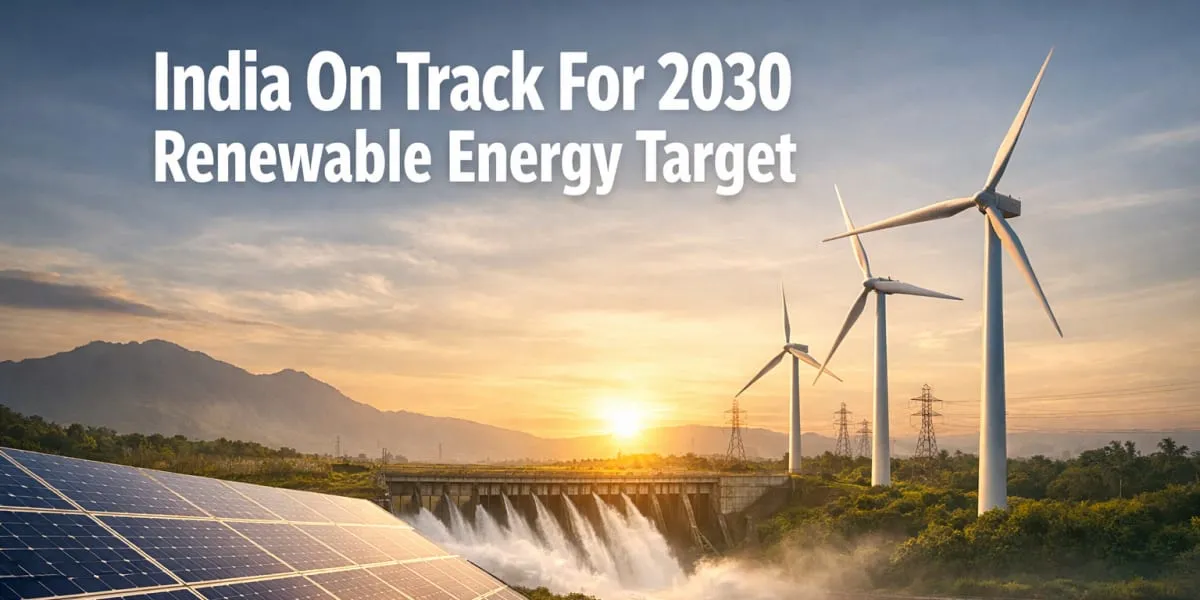
India has achieved its target of 50 per cent installed electricity capacity from non-fossil fuel sources five years ahead of the 2030 deadline, the Union Minister of State for New and Renewable Energy and Power, Shripad Yesso Naik, said in the Lok Sabha on Wednesday. He said that as of June 30, 2026 the country had installed 297.36 gigawatt (GW) of non-fossil fuel based electricity capacity and 288.58 GW of renewable energy capacity. The minister was replying to a question from Cuddalore Member of Parliament M. Vishnu Prasad and provided a breakdown of capacity by source. The statement reflects government data on the expanding share of clean energy in the generation mix.

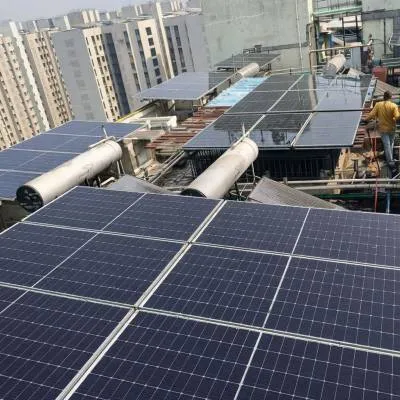
Solar power accounted for the largest share at 162.15 GW, followed by wind power at 57.44 GW, large hydro power at 52.06 GW, bio power at 11.75 GW and small hydro power at 5.18 GW, the minister said. The figures underline the dominant role of solar in recent capacity additions and the sustained contribution of large hydro and wind. Officials cited the expansion of utility scale projects and distributed generation as drivers of the growth. Policy incentives and declining technology costs were noted as continuing enablers of deployment.

The minister noted that meeting the 50 per cent threshold early reflects investments in grid infrastructure and efforts to integrate intermittent sources. Steps to strengthen transmission, upgrade balancing mechanisms and expand energy storage capacity were cited as necessary to maintain reliability. Sector regulators are coordinating to manage seasonal and regional variability.

Government projections will track additions and refine policy to ensure targets translate into firm generation and emissions reductions. Continued support for rooftop solar, manufacturing capacity and finance mechanisms was highlighted as central to the transition. Stakeholders were urged to maintain momentum as the country advances towards its 2030 goals.

India has achieved its target of 50 per cent installed electricity capacity from non-fossil fuel sources five years ahead of the 2030 deadline, the Union Minister of State for New and Renewable Energy and Power, Shripad Yesso Naik, said in the Lok Sabha on Wednesday. He said that as of June 30, 2026 the country had installed 297.36 gigawatt (GW) of non-fossil fuel based electricity capacity and 288.58 GW of renewable energy capacity. The minister was replying to a question from Cuddalore Member of Parliament M. Vishnu Prasad and provided a breakdown of capacity by source. The statement reflects government data on the expanding share of clean energy in the generation mix. Solar power accounted for the largest share at 162.15 GW, followed by wind power at 57.44 GW, large hydro power at 52.06 GW, bio power at 11.75 GW and small hydro power at 5.18 GW, the minister said. The figures underline the dominant role of solar in recent capacity additions and the sustained contribution of large hydro and wind. Officials cited the expansion of utility scale projects and distributed generation as drivers of the growth. Policy incentives and declining technology costs were noted as continuing enablers of deployment. The minister noted that meeting the 50 per cent threshold early reflects investments in grid infrastructure and efforts to integrate intermittent sources. Steps to strengthen transmission, upgrade balancing mechanisms and expand energy storage capacity were cited as necessary to maintain reliability. Sector regulators are coordinating to manage seasonal and regional variability. Government projections will track additions and refine policy to ensure targets translate into firm generation and emissions reductions. Continued support for rooftop solar, manufacturing capacity and finance mechanisms was highlighted as central to the transition. Stakeholders were urged to maintain momentum as the country advances towards its 2030 goals.

Related Stories

Gold Stories

Next Story
Infrastructure Transport

Mumbai-Ahmedabad Bullet Train’s Surat-Vapi Section Set for 2027

The first section of the Mumbai-Ahmedabad Bullet Train corridor, linking Surat and Vapi, is targeted to begin services in 2027. Construction is expected to be completed by December 2026, while Railway Minister Ashwini Vaishnaw has indicated that an inauguration could take place around the middle of 2027. The National High Speed Rail Corporation (NHSRCL) said the train being manufactured in India is expected to reach the tracks around April or May 2027. The train will undergo extensive testing before the section is opened for passenger services. The project began construction in 2021 and includ..

Next Story
Infrastructure Transport

Indian Railways Approves Four Projects Worth Rs. 7.36 bn Across Four States

Indian Railways has approved four projects with a combined value of Rs. 7.36 bn across Uttar Pradesh, Maharashtra, Andhra Pradesh and Gujarat. The programme covers train protection, signalling, electric traction supply and a road overbridge, with each project assigned to a different railway zone. In Uttar Pradesh, Rs. 2.52 bn has been approved to extend the Kavach 4.0 automatic train protection system across 607.7 km in the Lucknow Division of North Eastern Railway. The system monitors train movements and can apply the brakes if a driver fails to observe a signal or exceeds a safe speed. The w..

Next Story
Infrastructure Urban

Chandru Raheja Sells 1.49% Stake in Mindspace REIT for Rs. 5 bn

Billionaire Chandru Lachmandas Raheja has sold a 1.49 per cent holding in Mindspace Business Parks REIT for Rs. 5 bn through a bulk deal on the BSE. The transaction involved 9.9 mn units and was executed at an average price of Rs. 505 per unit, according to exchange data. Following the sale, units of Mindspace Business Parks REIT were trading 0.18 per cent lower at Rs. 504.05 on Tuesday. Exchange data did not identify the buyers involved in the transaction. Raheja is the chairman of real estate company K Raheja Corp. The sale involved 99,00,990 units, representing 1.49 per cent of the Mumbai-b..

Advertisement

Subscribe to Our Newsletter

Get daily newsletters around different themes from Construction world.

STAY CONNECTED

Advertisement

SPECIAL OFFER
QR Code