India Showcases Clean Energy Leadership at WEF 2026
POWER & RENEWABLE ENERGY

India Showcases Clean Energy Leadership at WEF 2026

Union Minister for New and Renewable Energy Pralhad Joshi held a series of high-level engagements at the World Economic Forum (WEF) Annual Meeting 2026 in Davos, reinforcing India’s leadership in driving a just, affordable and inclusive global energy transition.

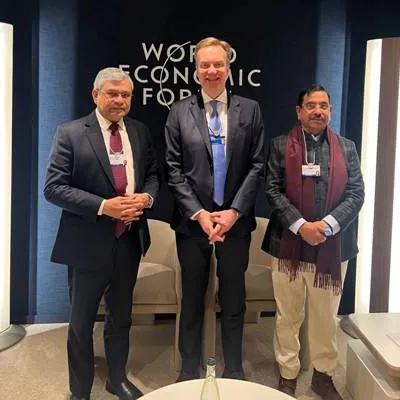
Joshi held discussions with Børge Brende, President and CEO, World Economic Forum, along with Union Minister for Railways, Electronics & IT and Information & Broadcasting Ashwini Vaishnaw. The interaction underscored the importance of global cooperation, multilateral platforms and sustained engagement between governments, industry and stakeholders to advance sustainable and resilient growth across energy and development sectors.

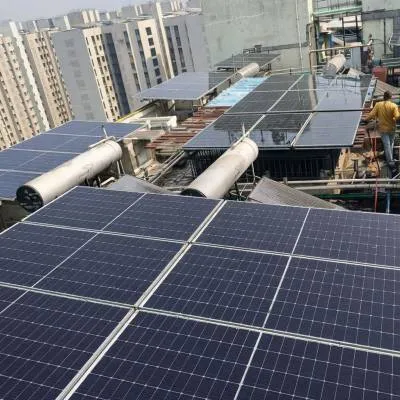
At a WEF roundtable, the Union Minister shared India’s experience in rapidly scaling rooftop, agricultural and decentralised renewable energy solutions, highlighting their relevance for the Global South. He outlined flagship initiatives such as PM Surya Ghar Muft Bijli Yojana and PM-KUSUM, which are expanding clean energy access for households and farmers while reducing costs. The discussion also highlighted the role of decentralised systems and mini-grids in improving reliability in remote and weak-grid regions.

Addressing a session on de-risking utility-scale energy transition, Joshi stated that India’s renewable energy progress is being driven strongly by reform-oriented States. He cited Madhya Pradesh as a leading example, noting its competitive solar tariffs, battery storage costs and globally competitive green hydrogen pricing.

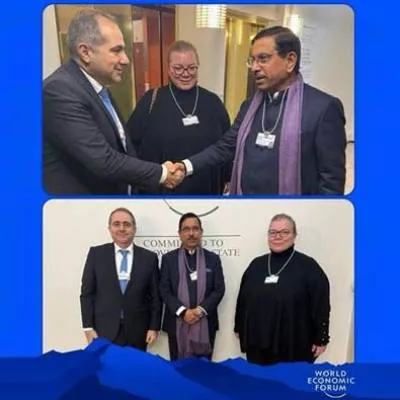
On the sidelines of WEF 2026, the Union Minister met Guillaume Vermersch, Group Chief Financial Officer, Mercuria Group, to explore collaboration in renewable energy, carbon markets, climate finance, green hydrogen, biofuels and energy storage. Mercuria Group’s interest in India’s clean energy ecosystem and its commitment to increase green energy investments were welcomed.

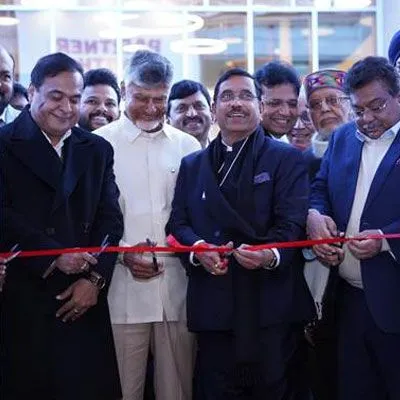
Joshi also presented India’s Country Strategy Dialogue at the Congress Centre, highlighting an almost 80 per cent decline in solar tariffs, expansion of renewable energy manufacturing capacity to 144 GW, and India’s emergence as a global clean energy manufacturing and investment hub aligned with the vision of Viksit Bharat 2047.

In a keynote address on the Global Mission on AI for Energy, the Union Minister highlighted the role of artificial intelligence in improving forecasting, reducing losses, lowering costs and strengthening grid reliability. He also outlined India’s shift towards platform-based deployment through Digital Public Infrastructure for Energy, enabling large-scale adoption of AI-driven solutions.


Union Minister for New and Renewable Energy Pralhad Joshi held a series of high-level engagements at the World Economic Forum (WEF) Annual Meeting 2026 in Davos, reinforcing India’s leadership in driving a just, affordable and inclusive global energy transition.Joshi held discussions with Børge Brende, President and CEO, World Economic Forum, along with Union Minister for Railways, Electronics & IT and Information & Broadcasting Ashwini Vaishnaw. The interaction underscored the importance of global cooperation, multilateral platforms and sustained engagement between governments, industry and stakeholders to advance sustainable and resilient growth across energy and development sectors.At a WEF roundtable, the Union Minister shared India’s experience in rapidly scaling rooftop, agricultural and decentralised renewable energy solutions, highlighting their relevance for the Global South. He outlined flagship initiatives such as PM Surya Ghar Muft Bijli Yojana and PM-KUSUM, which are expanding clean energy access for households and farmers while reducing costs. The discussion also highlighted the role of decentralised systems and mini-grids in improving reliability in remote and weak-grid regions.Addressing a session on de-risking utility-scale energy transition, Joshi stated that India’s renewable energy progress is being driven strongly by reform-oriented States. He cited Madhya Pradesh as a leading example, noting its competitive solar tariffs, battery storage costs and globally competitive green hydrogen pricing.On the sidelines of WEF 2026, the Union Minister met Guillaume Vermersch, Group Chief Financial Officer, Mercuria Group, to explore collaboration in renewable energy, carbon markets, climate finance, green hydrogen, biofuels and energy storage. Mercuria Group’s interest in India’s clean energy ecosystem and its commitment to increase green energy investments were welcomed.Joshi also presented India’s Country Strategy Dialogue at the Congress Centre, highlighting an almost 80 per cent decline in solar tariffs, expansion of renewable energy manufacturing capacity to 144 GW, and India’s emergence as a global clean energy manufacturing and investment hub aligned with the vision of Viksit Bharat 2047.In a keynote address on the Global Mission on AI for Energy, the Union Minister highlighted the role of artificial intelligence in improving forecasting, reducing losses, lowering costs and strengthening grid reliability. He also outlined India’s shift towards platform-based deployment through Digital Public Infrastructure for Energy, enabling large-scale adoption of AI-driven solutions.                                                                                                                                              

Next Story
Real Estate

A Paradigm Shift

The Indian real-estate and construction sector, which employs a significant number of organised and unorganised workers in the country, has embarked on a paradigm shift in its regulatory framework from an employment law perspective. With the four Labour Codes – the Code on Wages, 2019 (Wage Code); the Industrial Relations Code, 2020 (IR Code); the Code on Social Security, 2020 (SS Code) and the Occupational Safety, Health and Working Conditions Code, 2020 (OSH Code) – coming into effect in India from November 21, 2025, the industry is shifting away from a fragmented, contractor- driven com..

Next Story
Technology

We offer end-to-end traceability at scale

mjunction has evolved from an e-auction pioneer into a multi-vertical digital commerce platform with deep expertise in complex steel and coal supply chains. Its end-to-end, AI-led architecture focuses on price discovery, traceability, compliance and scalability, enabling transparent procurement, efficient logistics and data-driven decision-making across geographies. Vinaya Varma, MD, shares more about the company in conversation with CW.From a technology standpoint, what are the core USPs of mjunction today that differentiate it in steel and coal supply chains?mjunction has evolved b..

Next Story
Infrastructure Urban

Henkel, Rotary Recycle PoP Ganesha Idols Under Project HARMONY

Henkel India, in partnership with the Rotary Club of Navi Mumbai – Joy of Giving and with support from the Navi Mumbai Municipal Corporation (NMMC), has advanced circular sustainability through Project HARMONY by recycling Plaster of Paris (PoP) Ganesha idols into community learning assets. The initiative highlights an integrated approach to environmental restoration and social impact.As part of the project, materials collected after Ganesh Visarjan 2025 at Nerul were responsibly diverted from land and water bodies and processed at an authorised recycling facility, with on-ground execution s..

Advertisement

Subscribe to Our Newsletter

Get daily newsletters around different themes from Construction world.

STAY CONNECTED

Advertisement

Advertisement

Advertisement

Advertisement

Open In App