MNRE Clarifies ALMM Cell Norms For Rooftop Solar Projects
POWER & RENEWABLE ENERGY

MNRE Clarifies ALMM Cell Norms For Rooftop Solar Projects

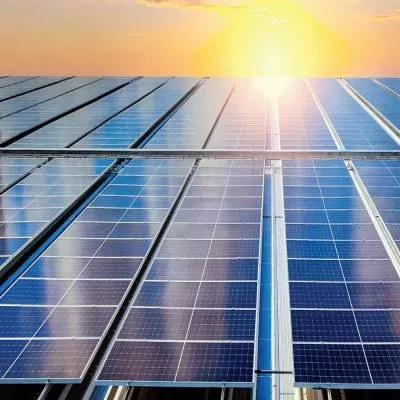
The Ministry of New and Renewable Energy issued an Office Memorandum dated July six, 2026 clarifying applicability of the Approved List of Models and Manufacturers (ALMM) List-II for solar photovoltaic (PV) cells to rooftop solar projects on government buildings. The memorandum links ALMM List-II applicability to the date of bid submission for competitively awarded projects and to commissioning status for projects under-net-metering or open access. The move followed multiple representations seeking clarity.

For competitively awarded projects the ministry set four categories based on the last date of bid submission. Projects with the last date on or before December nine, 2024 remain exempt from ALMM List-II requirements for solar photovoltaic (PV) cells. Projects with the last date between December nine, 2024 and July 28, 2025 will be governed by provisions in their tender documents regarding ALMM List-II.

The memorandum states that projects with the last date between July 28, 2025 and August 31, 2025 will be exempt from the requirement to use ALMM List-II enlisted solar photovoltaic (PV) cells, while those with the last date after August 31, 2025 must comply with ALMM List-II. The distinction aims to provide certainty for bidders and contracting authorities.

For rooftop projects implemented under-net-metering or open access the ministry clarified that projects commissioned before June one, 2026 remain exempt from ALMM List-II. Projects commissioned after that date may still avail an exemption if granted an extension under the ministry's Office Memorandum dated May 25, 2026 subject to approval by the competent authority. Projects commissioned after June one, 2026 without such an exemption must source solar photovoltaic (PV) cells from manufacturers enlisted under ALMM List-II. The clarification builds on earlier notifications including the original framework issued on December nine, 2024 the amendment of July 28, 2025 and the first ALMM List-II released on July 31, 2025.

The Ministry of New and Renewable Energy issued an Office Memorandum dated July six, 2026 clarifying applicability of the Approved List of Models and Manufacturers (ALMM) List-II for solar photovoltaic (PV) cells to rooftop solar projects on government buildings. The memorandum links ALMM List-II applicability to the date of bid submission for competitively awarded projects and to commissioning status for projects under-net-metering or open access. The move followed multiple representations seeking clarity. For competitively awarded projects the ministry set four categories based on the last date of bid submission. Projects with the last date on or before December nine, 2024 remain exempt from ALMM List-II requirements for solar photovoltaic (PV) cells. Projects with the last date between December nine, 2024 and July 28, 2025 will be governed by provisions in their tender documents regarding ALMM List-II. The memorandum states that projects with the last date between July 28, 2025 and August 31, 2025 will be exempt from the requirement to use ALMM List-II enlisted solar photovoltaic (PV) cells, while those with the last date after August 31, 2025 must comply with ALMM List-II. The distinction aims to provide certainty for bidders and contracting authorities. For rooftop projects implemented under-net-metering or open access the ministry clarified that projects commissioned before June one, 2026 remain exempt from ALMM List-II. Projects commissioned after that date may still avail an exemption if granted an extension under the ministry's Office Memorandum dated May 25, 2026 subject to approval by the competent authority. Projects commissioned after June one, 2026 without such an exemption must source solar photovoltaic (PV) cells from manufacturers enlisted under ALMM List-II. The clarification builds on earlier notifications including the original framework issued on December nine, 2024 the amendment of July 28, 2025 and the first ALMM List-II released on July 31, 2025.

Next Story
Infrastructure Transport

Surya Roshni delivers customised lighting for NCRTC RRTS stations

Surya Roshni has supplied customised indoor lighting solutions for 18 elevated stations on the National Capital Region Transport Corporation's (NCRTC) Rapid Rail Transit System (RRTS), strengthening its presence in India's infrastructure lighting segment.The project involved the design and deployment of lighting systems for platforms, concourses, foot overbridges (FOBs) and back-of-house (BOH) areas. According to the company, the luminaires were developed specifically to meet NCRTC's design, operational and performance requirements rather than using standard products.Surya introduced two custo..

Next Story
Real Estate

Hilton debuts Tapestry Collection brand in Vietnam

Hilton has opened NHAAN Resort & Spa Hoi An, Tapestry Collection by Hilton, marking the debut of the Tapestry Collection brand in Vietnam and expanding its lifestyle hospitality portfolio in Southeast Asia.Located along the Co Co River in Cam Thanh village, the 174-key resort provides access to Hoi An Ancient Town, Cua Dai Beach and the Cam Thanh Nipa Forest. The property has been designed by Vietnamese architect Vo Trong Nghia, incorporating biophilic architecture, locally sourced materials and riverfront landscapes.The resort offers a mix of guest rooms and suites, including family-frien..

Next Story
Building Material

Electrent expands lithium energy storage system portfolio

Electrent Energy has expanded its lithium-based energy storage portfolio with the launch of the ESS 850 and ESS 1050, targeting compact and maintenance-free power backup solutions for Indian homes.The new systems integrate a Home UPS and a LiFePO4 lithium battery into a single unit, extending the company's product range following the launch of its ESS 1350 and ESS 2500 models.Designed for apartments and smaller homes, the ESS 850 provides up to 1 hour 15 minutes of backup, while the ESS 1050 offers up to 1 hour 45 minutes on a typical 400 W household load. The systems can power essential appli..

Advertisement

Subscribe to Our Newsletter

Get daily newsletters around different themes from Construction world.

STAY CONNECTED

Advertisement

Advertisement

Advertisement