+
NTPC Signs Non Binding MoU With EDF On Nuclear Cooperation
POWER & RENEWABLE ENERGY

NTPC Signs Non Binding MoU With EDF On Nuclear Cooperation

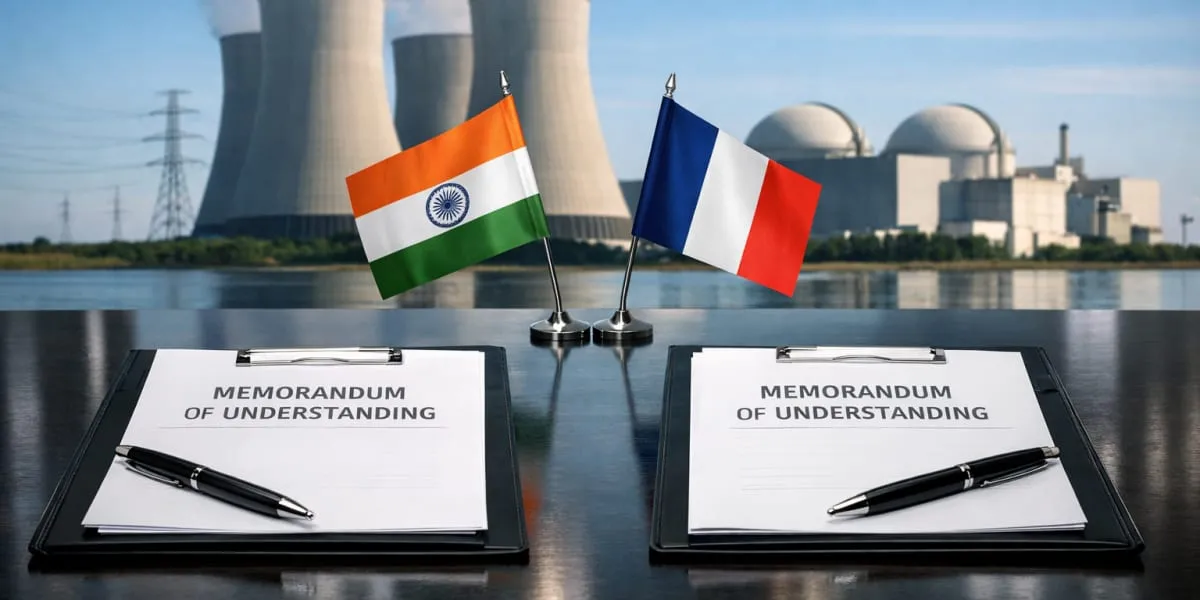
NTPC Limited (NTPC) has signed a non-binding memorandum of understanding with Électricité de France (EDF) to explore cooperation in developing new nuclear power projects in India, following approval from the concerned ministries and departments of the Government of India. The agreement was signed on the eighth April 2026 by Arnada Prasad Samal, chief general manager of the nuclear cell at NTPC, and Vakisasi Ramany, senior vice president for international nuclear development at EDF. The MoU establishes a joint framework to assess feasibility and define an approach for collaboration.

The framework includes efforts to understand EDF's EPR technology and its suitability for Indian requirements, to explore opportunities to maximise localisation for large-scale deployment, and to examine economic and tariff aspects. It also covers development of human resource capabilities through training programmes and evaluation of potential project sites. Technical support provisions will be considered as mutually agreed between the parties.

This initiative aligns with NTPC's strategy to expand into clean and reliable energy and to contribute to India's long-term energy security. NTPC's strategic plan includes a balanced mix of thermal, hydro, solar and wind power plants to ensure supply of reliable, affordable and sustainable electricity. The collaboration with EDF is intended to complement ongoing efforts in new business areas such as e-mobility, battery storage, pumped hydro storage, waste-to-energy, nuclear power and green hydrogen solutions.

NTPC Limited, India's largest integrated power utility, currently operates more than 89 gigawatt (GW) of installed capacity, with a further 32 GW under construction. The company has set a target to reach 149 GW of total capacity by 2032, including 60 GW from renewable energy sources. The MoU is non binding and does not by itself create any binding legal obligations but provides a mechanism to progress joint studies and assessments.

NTPC Limited (NTPC) has signed a non-binding memorandum of understanding with Électricité de France (EDF) to explore cooperation in developing new nuclear power projects in India, following approval from the concerned ministries and departments of the Government of India. The agreement was signed on the eighth April 2026 by Arnada Prasad Samal, chief general manager of the nuclear cell at NTPC, and Vakisasi Ramany, senior vice president for international nuclear development at EDF. The MoU establishes a joint framework to assess feasibility and define an approach for collaboration. The framework includes efforts to understand EDF's EPR technology and its suitability for Indian requirements, to explore opportunities to maximise localisation for large-scale deployment, and to examine economic and tariff aspects. It also covers development of human resource capabilities through training programmes and evaluation of potential project sites. Technical support provisions will be considered as mutually agreed between the parties. This initiative aligns with NTPC's strategy to expand into clean and reliable energy and to contribute to India's long-term energy security. NTPC's strategic plan includes a balanced mix of thermal, hydro, solar and wind power plants to ensure supply of reliable, affordable and sustainable electricity. The collaboration with EDF is intended to complement ongoing efforts in new business areas such as e-mobility, battery storage, pumped hydro storage, waste-to-energy, nuclear power and green hydrogen solutions. NTPC Limited, India's largest integrated power utility, currently operates more than 89 gigawatt (GW) of installed capacity, with a further 32 GW under construction. The company has set a target to reach 149 GW of total capacity by 2032, including 60 GW from renewable energy sources. The MoU is non binding and does not by itself create any binding legal obligations but provides a mechanism to progress joint studies and assessments.

Related Stories

Gold Stories

Next Story
Infrastructure Urban

Infrastructure Opportunity Outlook by IMPACCT.Info

India’s infrastructure pipeline is witnessing dynamic activity across stages — from immediate bidding to future planning. IMPACCT segments these into three categories: Immediate, 3–6 Month, and Future Opportunities, enabling businesses to identify, prepare, and participate in high-value tenders and projects across sectors.To read full article Click Here ..

Next Story
Real Estate

Glass, Reframed!

Glass façades, quintessential aesthetic building envelopes globally, have been widely adopted in India as well. But when the focus is high-performance building systems that deliver energy efficiency, comfort and architectural identity, glass isn’t the only preference. Combination solutions, involving glass and some other material, improve façade outcomes. Some combinations come at comparable prices, some at a higher price. Here is a selection of performance-oriented solutions...To read the full story Click Here ..

Next Story
Infrastructure Urban

Beyond Building Faster

India’s cities are expanding at an unprecedented pace, bringing new infrastructure and development opportunities while also intensifying challenges around mobility, public spaces, liveability and supporting infrastructure. The question, therefore, is not simply whether India can build faster, but whether it can build cities that work better.At a CW webinar, Are We Designing Better Cities – or Just Building Faster?, moderator Ar. Samir Shaikh, Founding Principal, AR&UD Studio, brought together perspectives from design, development, master planning and technology...To read the full artic..

Advertisement

Subscribe to Our Newsletter

Get daily newsletters around different themes from Construction world.

STAY CONNECTED

Advertisement

SPECIAL OFFER
QR Code