+
Tata Power Renewable Commissions 100.8 MW Wind Project in Maharashtra
POWER & RENEWABLE ENERGY

Tata Power Renewable Commissions 100.8 MW Wind Project in Maharashtra

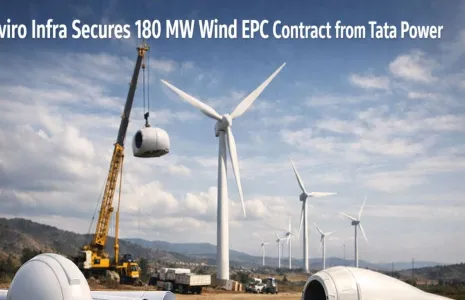
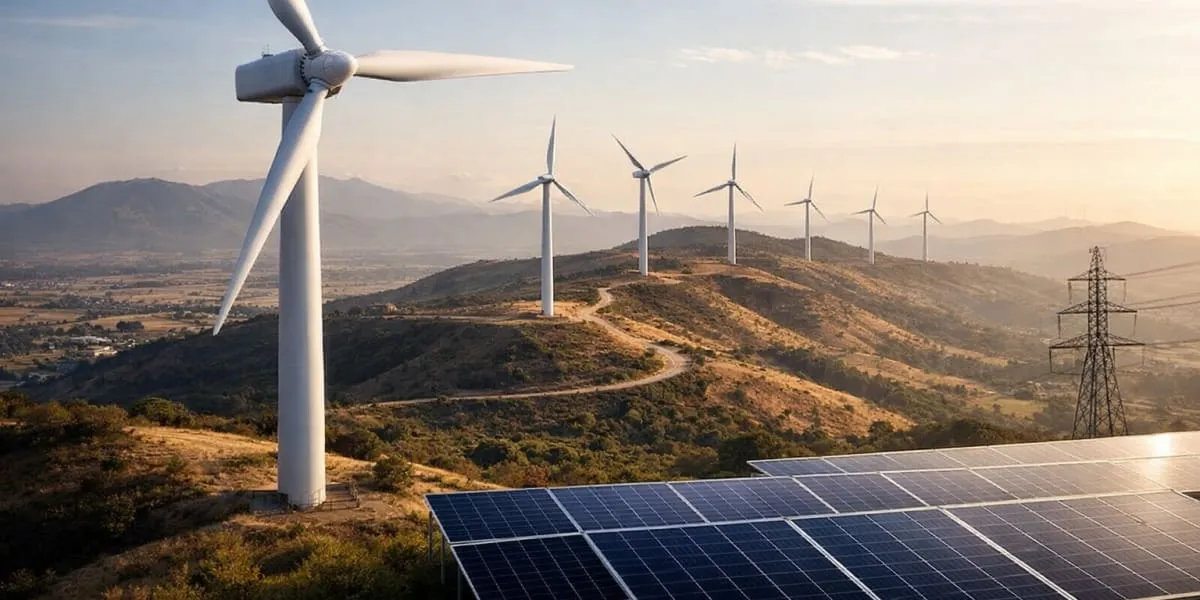
Tata Power Renewable Energy Ltd has commissioned the 100.8 Megawatt (MW) Jewali wind project in Dharashiv district in Maharashtra, raising its total renewable utility capacity to 11.6 gigawatt (GW).

The project comprises 28 SG 3.6-145 wind turbine generators based on advanced horizontal-axis wind turbine technology and will supply electricity to Tata Power Mumbai Distribution to help the company meet its Renewable Purchase Obligation targets and support the transition to a more sustainable and environmentally responsible utility.

The plant is expected to generate approximately 299 million units of electricity annually, or 299 mn kWh, and to reduce emissions by roughly 0.82 kilogram (kg) of carbon dioxide per unit of electricity produced. This implies an annual emissions offset of nearly 245 million kilogram of carbon dioxide, or 245 mn kg, representing a material contribution to the group's decarbonisation efforts and strengthening the reliability of renewable supply for its distribution arm.

With the commissioning, Tata Power Renewable's wind portfolio now exceeds 3.9 gigawatt, including more than 1.3 gigawatt of operational wind capacity, while the balance remains under development across Rajasthan, Gujarat, Maharashtra, Andhra Pradesh, Karnataka and Tamil Nadu. The group's total renewable capacity has reached 11.6 gigawatt, of which 6.7 gigawatt is operational, comprising 5.4 gigawatt of solar and 1.3 gigawatt of wind, and 4.9 gigawatt is under implementation. The under-construction portfolio comprises about 2.1 gigawatt of solar, 2.6 gigawatt of wind and 0.2 gigawatt of battery energy storage systems.

The company said the additions align with its long-term aim of achieving 100 per cent clean energy generation by 2045 and that remaining projects are expected to be commissioned in phases over the next six to 24 months. The firm described the Jewali installation as a strategic step in expanding its clean energy portfolio and meeting regulatory obligations, and indicated the commissioning will support the group's operational renewable mix.

Tata Power Renewable Energy Ltd has commissioned the 100.8 Megawatt (MW) Jewali wind project in Dharashiv district in Maharashtra, raising its total renewable utility capacity to 11.6 gigawatt (GW). The project comprises 28 SG 3.6-145 wind turbine generators based on advanced horizontal-axis wind turbine technology and will supply electricity to Tata Power Mumbai Distribution to help the company meet its Renewable Purchase Obligation targets and support the transition to a more sustainable and environmentally responsible utility. The plant is expected to generate approximately 299 million units of electricity annually, or 299 mn kWh, and to reduce emissions by roughly 0.82 kilogram (kg) of carbon dioxide per unit of electricity produced. This implies an annual emissions offset of nearly 245 million kilogram of carbon dioxide, or 245 mn kg, representing a material contribution to the group's decarbonisation efforts and strengthening the reliability of renewable supply for its distribution arm. With the commissioning, Tata Power Renewable's wind portfolio now exceeds 3.9 gigawatt, including more than 1.3 gigawatt of operational wind capacity, while the balance remains under development across Rajasthan, Gujarat, Maharashtra, Andhra Pradesh, Karnataka and Tamil Nadu. The group's total renewable capacity has reached 11.6 gigawatt, of which 6.7 gigawatt is operational, comprising 5.4 gigawatt of solar and 1.3 gigawatt of wind, and 4.9 gigawatt is under implementation. The under-construction portfolio comprises about 2.1 gigawatt of solar, 2.6 gigawatt of wind and 0.2 gigawatt of battery energy storage systems. The company said the additions align with its long-term aim of achieving 100 per cent clean energy generation by 2045 and that remaining projects are expected to be commissioned in phases over the next six to 24 months. The firm described the Jewali installation as a strategic step in expanding its clean energy portfolio and meeting regulatory obligations, and indicated the commissioning will support the group's operational renewable mix.

Related Stories

Gold Stories

Next Story
Technology

KBE, Vigyanlabs Launch Indigenous FEMTO AI Platform

KBE and Vigyanlabs Innovations have launched FEMTO, an indigenous sovereign AI and high-performance computing platform, at JSS College of Pharmacy in Mysuru.The platform was launched through Kasvin, a joint venture involving KBE subsidiary Krishnaa Advance Systems (KAS) and Vigyanlabs. Dr S. Somanath, former Chairman of the Indian Space Research Organisation (ISRO), formally launched the platform.The partners have planned an investment of ₹1 billion over the coming year towards the deployment of FEMTO-based AI infrastructure.FEMTO is a modular computing platform integrating computing, storag..

Next Story
Infrastructure Transport

MMRDA Targets Completion of Projects by December 2028

The Mumbai Metropolitan Region Development Authority (MMRDA) is targeting the completion of all its ongoing infrastructure projects by December 2028, a year ahead of its December 2029 deadline, Metropolitan Commissioner Dr Sanjay Mukherjee has said.Speaking at the sixth edition of the Real Estate & Infrastructure Investors' Summit (REIIS) 2026 in Mumbai, Mukherjee said the authority was developing an integrated network of roads, tunnels, sea links and Metro corridors under its broader vision of “Mumbai in 59 Minutes”.The objective is to improve east-west and north-south connectivity an..

Next Story
Building Material

High-Performance Façades Gain Ground in Indian Buildings

High-performance façades are gaining greater importance in Indian architecture as developers and architects increasingly focus on energy efficiency, thermal comfort and building performance, according to Shankar Fenestrations & Glasses.The company said modern façade systems are increasingly being considered as part of a building's overall performance strategy rather than being used primarily as aesthetic elements.High-performance glass, curtain wall systems and structural glazing can contribute to thermal regulation, solar control, daylight management and indoor comfort. Their growing ad..

Advertisement

Subscribe to Our Newsletter

Get daily newsletters around different themes from Construction world.

STAY CONNECTED

Advertisement

SPECIAL OFFER
QR Code