Uttarakhand Crosses One GW Solar Capacity Milestone
POWER & RENEWABLE ENERGY

Uttarakhand Crosses One GW Solar Capacity Milestone

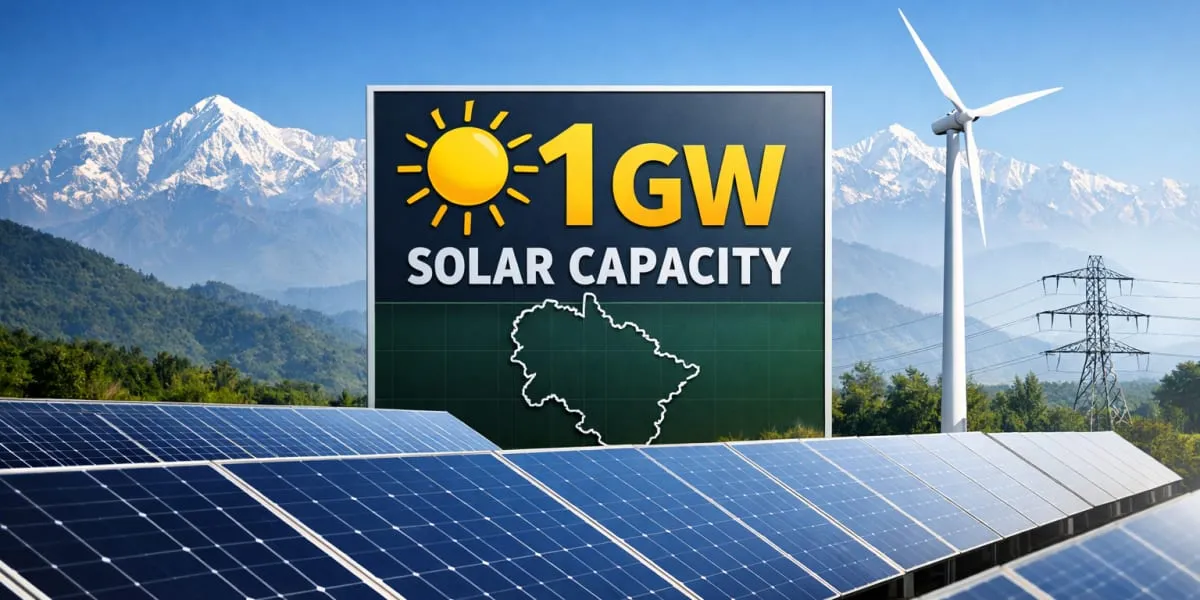
Uttarakhand has surpassed one gigawatt (GW) of installed solar power capacity, a milestone that reinforces the state’s transition to clean energy and energy self?reliance. The state’s total installed solar capacity now stands at over 1,027.87 megawatts (MW), underscoring sustained progress in renewable deployment.

Chief Minister Pushkar Singh Dhami said that the achievement reflected the central government’s policy thrust on renewable energy and the vision of Atmanirbhar Bharat, and that emphasis on green growth had encouraged adoption of solar power as a people?centric movement while generating local employment. Authorities described the milestone as a result of coordinated central and state support.

The milestone was achieved through a combination of grid?connected rooftop systems, ground?mounted plants, canal?top projects and solar pumps, creating a diversified portfolio across domestic, commercial and industrial segments. Of the total capacity, 397 MW has come from ground?mounted projects and 241 MW from rooftop installations under the PM Surya Ghar scheme, while 137 MW has been installed under the Chief Minister Solar Self?Employment Scheme.

Commercial net metering accounted for 110 MW, captive solar plants supplied 51 MW, canal?top and canal?bank projects contributed 37 MW and government buildings added 26 MW to the tally. Officials reported that coordinated implementation of central and state schemes has created self?employment opportunities for youth and entrepreneurs, with more than 100 MW currently under installation through the Chief Minister programme.

The Uttarakhand Renewable Energy Development Agency (UREDA) has played a central role by providing technical support, awareness campaigns and assistance for project execution, and simplified approvals, subsidies and incentives for private investment have accelerated growth. The state government has set further targets to expand solar capacity, deepen outreach in remote areas and increase public participation and private investment to consolidate Uttarakhand’s position among India’s leading solar energy states while advancing long?term sustainability objectives.

Uttarakhand has surpassed one gigawatt (GW) of installed solar power capacity, a milestone that reinforces the state’s transition to clean energy and energy self?reliance. The state’s total installed solar capacity now stands at over 1,027.87 megawatts (MW), underscoring sustained progress in renewable deployment. Chief Minister Pushkar Singh Dhami said that the achievement reflected the central government’s policy thrust on renewable energy and the vision of Atmanirbhar Bharat, and that emphasis on green growth had encouraged adoption of solar power as a people?centric movement while generating local employment. Authorities described the milestone as a result of coordinated central and state support. The milestone was achieved through a combination of grid?connected rooftop systems, ground?mounted plants, canal?top projects and solar pumps, creating a diversified portfolio across domestic, commercial and industrial segments. Of the total capacity, 397 MW has come from ground?mounted projects and 241 MW from rooftop installations under the PM Surya Ghar scheme, while 137 MW has been installed under the Chief Minister Solar Self?Employment Scheme. Commercial net metering accounted for 110 MW, captive solar plants supplied 51 MW, canal?top and canal?bank projects contributed 37 MW and government buildings added 26 MW to the tally. Officials reported that coordinated implementation of central and state schemes has created self?employment opportunities for youth and entrepreneurs, with more than 100 MW currently under installation through the Chief Minister programme. The Uttarakhand Renewable Energy Development Agency (UREDA) has played a central role by providing technical support, awareness campaigns and assistance for project execution, and simplified approvals, subsidies and incentives for private investment have accelerated growth. The state government has set further targets to expand solar capacity, deepen outreach in remote areas and increase public participation and private investment to consolidate Uttarakhand’s position among India’s leading solar energy states while advancing long?term sustainability objectives.

Next Story
Equipment

Doosan Bobcat Drives Skills with Loader Training Push

Doosan Bobcat India has launched a comprehensive Skid Steer Loader Operator Training Programme to address the growing shortage of skilled operators and support faster adoption of compact equipment across India’s expanding infrastructure sector.The structured two-month programme is being conducted in partnership with Industrial Training Institute Bharathmatha Educational Trust, Annur. It combines classroom-based theoretical instruction with intensive hands-on practical training using advanced skid steer loaders. Participants will gain knowledge of safe machine handling, routine maintenance, e..

Next Story
Infrastructure Urban

Centre Examines Duty Relief Under MOOWR For Battery Storage Imports

The finance ministry is examining whether to continue customs warehousing benefits under the Manufacture and Other Operations in Warehouse Regulations, 2019 framework for imported battery energy storage systems. It plans consultations with the ministries of power and new and renewable energy to decide on the future scope of duty and GST deferment for such imports. The review follows concerns from the renewable energy sector that the current approach is creating an uneven playing field. Under the regulations, companies may import goods without paying customs duty or goods and services tax upfro..

Next Story
Infrastructure Urban

Jamshedpur MP Seeks Rs 4,820 Million Plan For Tatanagar Platforms

Member of Parliament Bidyut Baran Mahato held a meeting with Vikas Jain, Executive Director (Public Grievances) of the Railway Board, following a special session of Parliament to press for accelerated rail infrastructure work around Jamshedpur and Tatanagar. The discussions addressed a range of projects that the ministry is prioritising for the area. Final Location Surveys for the construction of the fourth and fifth railway lines between Pandrasali and Kandra and for the development of a satellite station near Tatanagar have already been approved, clearing the way for detailed planning. Mahat..

Advertisement

Subscribe to Our Newsletter

Get daily newsletters around different themes from Construction world.

STAY CONNECTED

Advertisement

Advertisement

Advertisement