Uttarakhand Sees Nearly 10-Fold Rise in Solar Capacity Since 2024
POWER & RENEWABLE ENERGY

Uttarakhand Sees Nearly 10-Fold Rise in Solar Capacity Since 2024

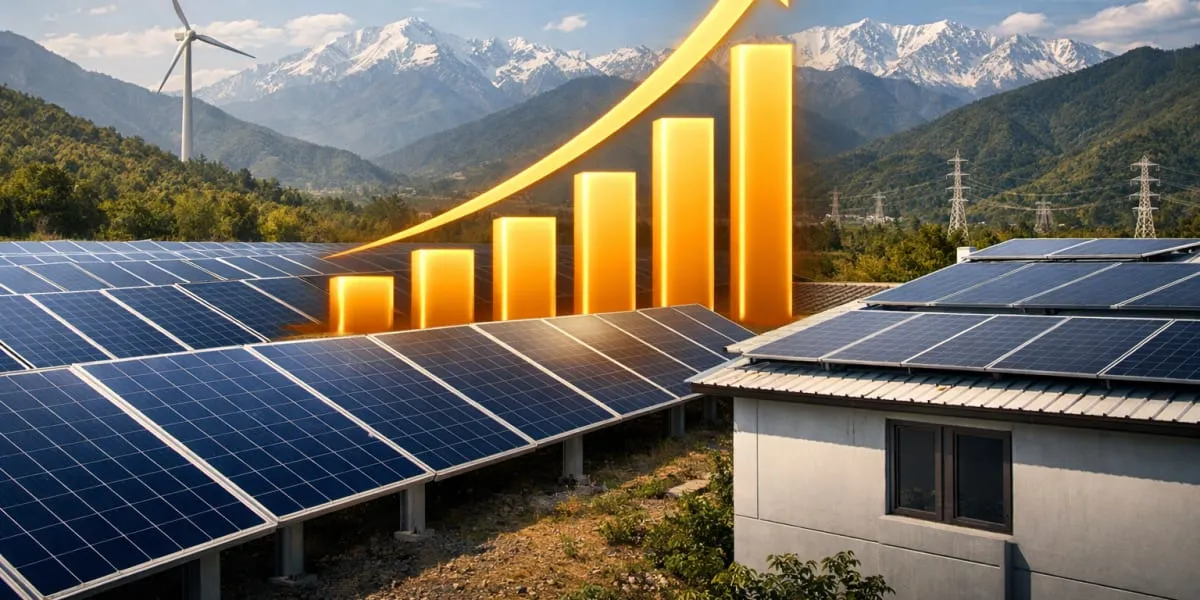
Uttarakhand has recorded a nearly 10-fold rise in solar energy capacity since 2024, the chief minister Pushkar Singh Dhami said, signalling a marked acceleration in the state's renewable energy build?out. The increase was described by the government as driven by a combination of policy support, private investment and expanded deployment of rooftop and ground?mounted solar projects. Authorities attributed the development to streamlined approvals and targeted incentives for developers and consumers.

The state administration reported that installations now span multiple districts, encompassing both utility-scale arrays and distributed generation on residential and commercial rooftops. Officials noted that grid upgrades and improved transmission planning accompanied capacity additions to facilitate integration of variable solar generation. The government highlighted partnerships with central agencies and private firms as instrumental in mobilising financing and technical expertise. Officials said the rollout prioritised high-insolation zones and reflected district-level planning to accelerate project delivery across the state.

The expansion has, according to official statements, strengthened local clean power supply and reduced the need for fossil fuel generation during peak daylight hours. The administration emphasised ancillary benefits including local employment in construction and operations and increased energy access in remote areas. Observers welcomed the progress while underlining the importance of sustained maintenance and long?term planning. The government reported improvements in local supply reliability and reductions in peak demand from thermal plants.

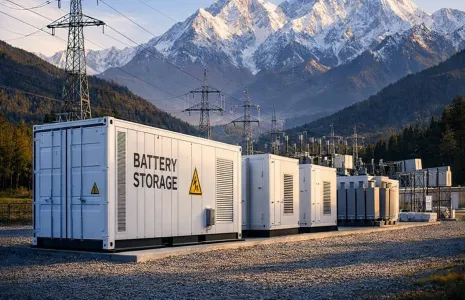
Looking ahead, the state government indicated plans to continue deployment of renewable projects and to enhance storage and grid management to maintain reliability as solar capacity grows. Officials said measures would focus on system resilience, billing and metering reforms and capacity building for local agencies. The chief minister framed the achievements as part of a broader strategy to transition the state towards cleaner energy sources. They also mentioned steps to streamline land acquisition and environmental clearances to speed construction timelines.

Uttarakhand has recorded a nearly 10-fold rise in solar energy capacity since 2024, the chief minister Pushkar Singh Dhami said, signalling a marked acceleration in the state's renewable energy build?out. The increase was described by the government as driven by a combination of policy support, private investment and expanded deployment of rooftop and ground?mounted solar projects. Authorities attributed the development to streamlined approvals and targeted incentives for developers and consumers. The state administration reported that installations now span multiple districts, encompassing both utility-scale arrays and distributed generation on residential and commercial rooftops. Officials noted that grid upgrades and improved transmission planning accompanied capacity additions to facilitate integration of variable solar generation. The government highlighted partnerships with central agencies and private firms as instrumental in mobilising financing and technical expertise. Officials said the rollout prioritised high-insolation zones and reflected district-level planning to accelerate project delivery across the state. The expansion has, according to official statements, strengthened local clean power supply and reduced the need for fossil fuel generation during peak daylight hours. The administration emphasised ancillary benefits including local employment in construction and operations and increased energy access in remote areas. Observers welcomed the progress while underlining the importance of sustained maintenance and long?term planning. The government reported improvements in local supply reliability and reductions in peak demand from thermal plants. Looking ahead, the state government indicated plans to continue deployment of renewable projects and to enhance storage and grid management to maintain reliability as solar capacity grows. Officials said measures would focus on system resilience, billing and metering reforms and capacity building for local agencies. The chief minister framed the achievements as part of a broader strategy to transition the state towards cleaner energy sources. They also mentioned steps to streamline land acquisition and environmental clearances to speed construction timelines.

Next Story
Infrastructure Transport

MMRDA advances 250 m on Orange Gate–Marine Drive tunnel

The Mumbai Metropolitan Region Development Authority (MMRDA) has completed 250 m of underground tunnelling for the Orange Gate–Marine Drive Urban Road Tunnel using India’s largest slurry shield tunnel boring machine (TBM) deployed for an urban road project.The project involves twin tunnels extending over 7 km beneath critical transport corridors, including Central Railway, Western Railway and Metro Line 3. The work requires high-precision engineering to navigate densely developed urban infrastructure.Once completed, the tunnel is expected to reduce travel time between Orange Gate and Marin..

Next Story
Infrastructure Urban

Hindustan Zinc Pays Rs 188.46 Billion in FY26

Hindustan Zinc contributed Rs 188.46 billion to the public exchequer in FY 2025-26, according to its 9th Tax Transparency Report. The contribution, equivalent to 46 per cent of the company’s revenue, included direct and indirect taxes, government royalties, dividends to the Government of India, withholding taxes and other statutory levies.The company’s five-year cumulative contribution to the exchequer stood at Rs 915.72 billion. In FY26, Hindustan Zinc reported revenue of Rs 408.44 billion, EBITDA of Rs 221.62 billion and profit after tax of Rs 138.32 billion. It also achieved its highest..

Next Story
Infrastructure Urban

World of Concrete India 2026 Opens in Mumbai

Informa Markets in India will host the 12th edition of World of Concrete India 2026 from 3–5 June 2026 at the Bombay Exhibition Centre, Mumbai. The specialised B2B exhibition will bring together manufacturers, suppliers, contractors, developers, architects, consultants, infrastructure companies, project leaders and government stakeholders.The event is expected to feature over 350 brands and more than 18,000 trade professionals. It will cover concrete and cement, dry mortar, precast technologies, formwork, construction chemicals, industrial and commercial flooring, scaffolding, safety solutio..

Advertisement

Subscribe to Our Newsletter

Get daily newsletters around different themes from Construction world.

STAY CONNECTED

Advertisement

Advertisement

Advertisement

-->