Real Estate

"Guide to Creating Concise Titles: Less Than 70 Characters"

Having been cooped up indoors for over two years, employees and business owners are looking to transition back to working from the premises or follow a hybrid working model. “Now we see people returning to the office as work from home has entirely lost its lustre,” says Yuvraj Rajan, Director, R...

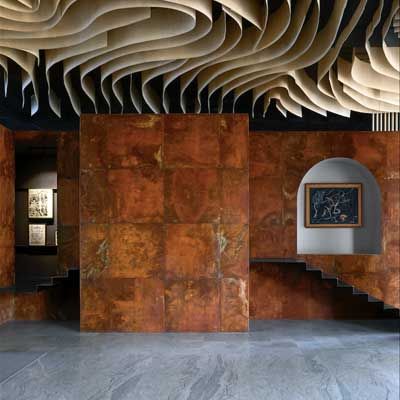
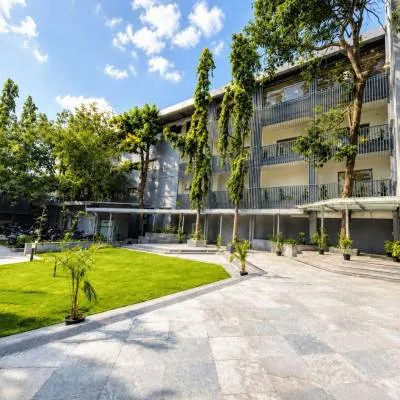
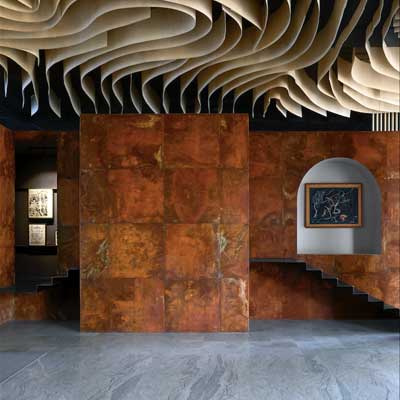
Having been cooped up indoors for over two years, employees and business owners are looking to transition back to working from the premises or follow a hybrid working model. “Now we see people returning to the office as work from home has entirely lost its lustre,” says Yuvraj Rajan, Director, Raiaskaran Group, as he shares more on how their recently LEED-certified tech park has been leveraging this rising trend. The brief and design approach Established in 2001 with an objective to provide a complete environment for business that comprises more than four walls, Raiaskaran Tech Park (RTP)’s cutting-edge structures have been engineered to last long. The tech park houses an art gallery in the lobby that displays work from globally renowned artists and has a significant amount of natural landscape surrounding the structure, making it appear submerged in greenery. Additionally, in recent times, office spaces have made a conscious effort to cater to employee wellness and comfort. Towards that, many of our clients have incorporated amenities such as gymnasiums with personal training, yoga and wellness sessions, and spaces for interactive activities such as gaming. Our credo is the foundation for all design at Raiaskaran. All our projects, irrespective of offices, homes, retail or commercial, follow this. Our brand ethos individually defines Art, Indian Luxury and Sustainability as the three pillars on which we design our structures. The design brief was to make a campus that was sustainable and environment-friendly as well as easy to maintain with a carbon-zero footprint. At its full capacity, our facility can house around 11,000 personnel. Material selection and sustainability We have always been conscious of the materials used in construction. One of the key materials we used at the very beginning was LOW-E glass, which considerably reduces heat gains and, therefore, requirements for cooling. In the interiors, other choices such as automatic faucets for the bathroom have been made. In every space, we have been conscious of resources used. RTP has been awarded the LEED Platinum certification. We have strived not only to maintain balance but give more than we take from nature. Material selection was one of the critical aspects in procuring a LEED certification. Thus, we ensured that our raw material was purchased from the sources closest to us. Data collection and technology RTP has implemented real-time data collection and constant monitoring. This helps maintainall the strict parameters we set priorly. We have managed to collect data for the IT park since 2006 on waste management, electrical panels and HVAC operations. This data is updated into our database on either a six-monthor quarterly basis. RTP has also invested in the best and extremely efficient cooling and water recycling systems. For instance, we have an online monitoring system for our chillers that tells us the energy consumption for the past few years. The data provides details about consumption, losses incurred and output. Optimising air quality We have incorporated a variety of vegetation, right from actual plantations and caring of trees to a multitude of plants. In fact, we have several nurseries open for our clients and employees to learn and grow. These contribute to maintaining an optimum air quality index within the park’s ecosystem, increasing the amount of oxygen in the air and assisting with purifying the overall air health in the tech park. In the interiors, the air-cooling systems work to ensure good air quality. Conserving water Today, everyone around the globe is actively attempting to live more sustainably. We meet the demand for water by harvesting rainwater. We also have a 500 kld STP plant, operational since 2006. The purified water is utilised for gardening and landscape upkeep. So, we only bring in fresh water for potable use, lowering our water consumption drastically in comparison to other tech parks. Additionally, the project incorporates a drip irrigation system for vegetation that promotes optimal soil moisture and plant development along with water efficiency. In conclusion Developers are increasingly leaning towards green real-estate development to cut their carbon footprint and create more energy-efficient homes. Residents also take notice of immediate savings on their water and electricity bills. The progress is slow, but we believe that with more government intervention and realisation of the benefits, real estate can move towards being recognised as a positively impacting sector.

Next Story
Infrastructure Urban

Implementation Status of Jal Jeevan Mission

Since August 2019 the Government has implemented Jal Jeevan Mission to provide assured potable water through household tap connections in rural India. At the start of the mission only 32.3 million (mn) rural households, representing 16.7 per cent, were reported to have tap water connections. States and union territories have reported that 125.8 mn additional rural households have since been provided with tap connections. As a result, of about 193.6 mn rural households roughly 158.2 mn, or 81.71 per cent, are reported to have tap water supply at home.\n\nThe State, district and village level st..

Next Story
Infrastructure Urban

Jal Jeevan Mission Reaches Eighty One Per Cent Rural Coverage

The Government reported substantial progress under the Jal Jeevan Mission, launched in August 2019 to provide tap water to every rural household. At launch only 32.3 million (mn) rural households had tap connections and states and Union territories reported provision of 125.8 mn additional households by March 2026. Consequently, out of about 193.6 mn rural households around 158.2 mn, or 81.71 per cent, are reported to have tap water at home. The Finance Minister announced extension of the mission until 2028 in the 2025-26 budget speech. The Swachh Bharat Mission Grameen, launched in October 20..

Next Story
Infrastructure Urban

Empowering Local Governance for Sustainable Rural Water Supply

The Ministry of Jal Shakti has aligned the Jal Jeevan Mission (JJM) with the 73rd Amendment to strengthen village level planning and community ownership of water supply. Gram Panchayats, village water and sanitation committees and Pani Samitis are to plan, implement, manage and maintain piped water systems, with gram sabha processes formalising handover and oversight. Implementation support agencies including non government organisations, community based organisations and self help groups have been empanelled to train local committees and promote women participation. Under JJM, the department ..

Advertisement

Subscribe to Our Newsletter

Get daily newsletters around different themes from Construction world.

STAY CONNECTED

Advertisement

Advertisement

Advertisement